


A CIO’s Perspective on the Agentic Enterprise
By 2025, the novelty of “chatting” with software has worn off. For technology leaders overseeing the complex web of enterprise systems the CIOs, CTOs, and Heads of Infrastructure the question is no longer “Can AI write an email?” The question is “Can AI do the work?”
We are witnessing a structural break in how the back office functions. The era of reactive ticketing systems is giving way to the era of Artificial Intelligence in HR. But this isn’t about better FAQs or smoother onboarding emails. It is about a fundamental shift in architecture: moving from systems of record to systems of agency.
For the technology executive, this transition from “digital assistance” to “autonomous action” is the defining challenge and opportunity of the next three years. Here is how you should be thinking about the evolution of Artificial Intelligence in HR and its role in the modern enterprise stack.
From Advisory to Agency: The New Standard
In 2023 and 2024, the industry was obsessed with “Co-pilots.” The metaphor was comforting: the human is the pilot; the AI sits in the passenger seat, offering maps and suggestions.
In 2025, that model is proving insufficient for the scale of enterprise operations. A Co-pilot still requires a human to initiate, review, and execute every single interaction. It doesn’t solve the core problem of the modern back office: the sheer volume of low-complexity, high-frequency transactions that clog our ticketing queues.
The market is moving toward Agentic AI in HR. Unlike a Co-pilot, an Agent doesn’t just suggest; it acts.
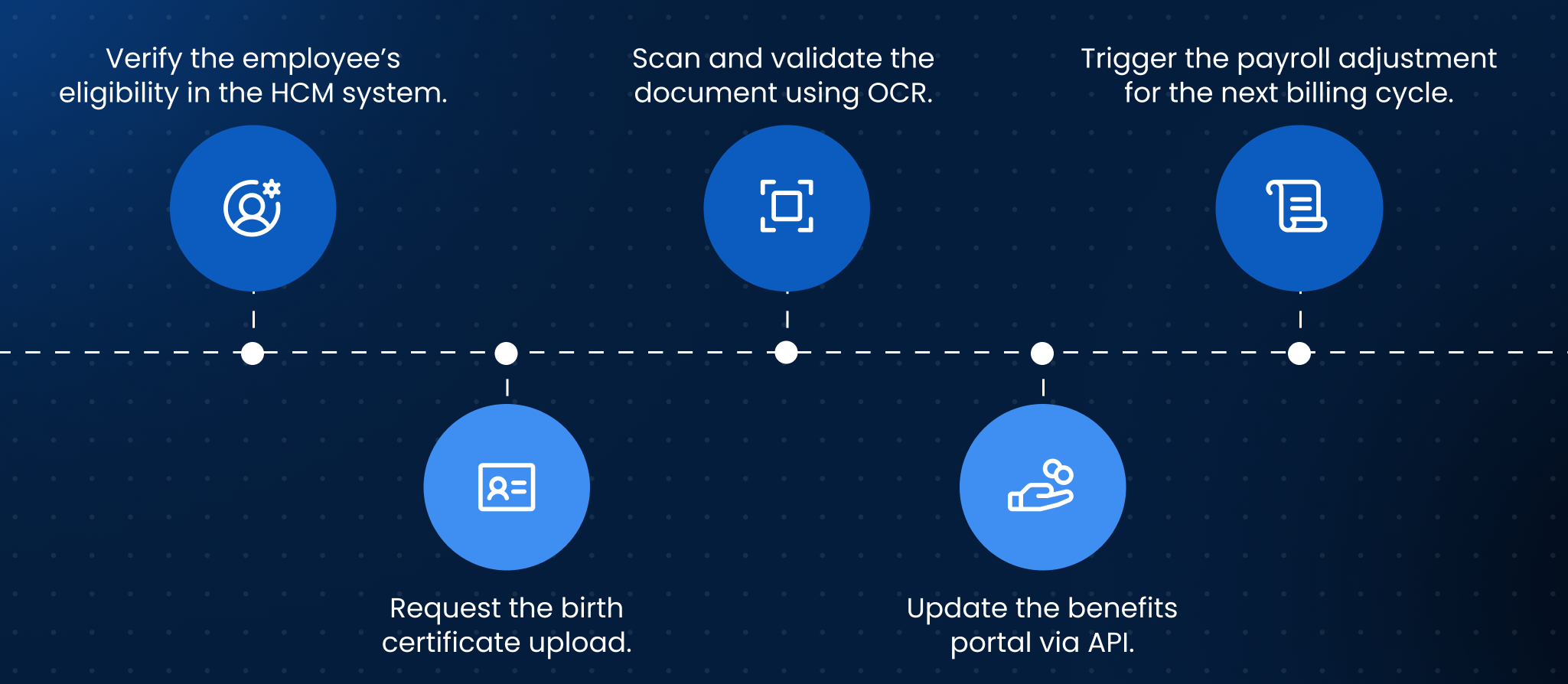
When an employee asks, “I need to add my newborn to my insurance plan,” a Co-pilot pulls up a PDF of the policy. An Agent, however, is authorized to:
- Verify the employee’s eligibility in the HCM (Human Capital Management) system.
- Request the birth certificate upload.
- Scan and validate the document using OCR.
- Update the benefits portal via API.
- Trigger the payroll adjustment for the next billing cycle.
This is Autonomous HR Systems in practice. For the CIO, this means the metric of success changes from “accuracy of response” to “rate of resolution.” It is the difference between a search engine and a service worker.
The Convergence of IT and HR Architecture
Historically, HR and IT were treated as separate fiefdoms. HR bought the HCM (Workday, SAP SuccessFactors); IT bought the ITSM (ServiceNow, Jira).
Enterprise AI for HR is forcing a “Great Unification.” Employees do not see their problems as “HR problems” or “IT problems” they just see obstacles to their work. If an employee is locked out of their benefits portal, is that an HR issue (policy) or an IT issue (access)?
For the technology head, Artificial Intelligence in HR acts as the orchestration layer that sits above these silos. It decouples the user experience from the underlying system of record. This allows you to swap out, upgrade, or migrate backend systems (e.g., moving from Oracle to Workday) without disrupting the employee interface.
The strategic value here is immense. By implementing a unified agentic layer, you are not just buying an HR tool; you are building an “Intelligent Fabric” for the enterprise. This fabric standardizes governance, security logging, and user experience across every back-office function.
The Data Layer: Fueling AI-Driven Decision Making in HR
The byproduct of these autonomous interactions is data but not the kind of static data sitting in your data warehouse today.
AI-Driven Decision Making in HR relies on behavioral data. Traditional HR reports tell you who left the company last month. Agentic systems tell you who is frustrated today.
Imagine a dashboard that doesn’t just show ticket volume, but correlates “payroll inquiry spikes” with “employee sentiment drops” in real-time. If an agent detects a 30% increase in questions about “vesting schedules” from your engineering team, it signals a retention risk long before resignation letters land on desks.
For the CTO, the challenge is infrastructure. These systems require a modern data pipeline that can ingest unstructured conversational data, sanitize it for PII (Personally Identifiable Information), and feed it into analytical models safely. This shifts HR technology from a compliance necessity to a strategic radar system.
Trust and The “Human in the Loop”
The biggest friction point in adopting Artificial Intelligence in HR is not technical; it is psychological.
We call this the need for Human-Centered AI in HR. Automation without empathy is alienation. If an AI agent denies a bereavement leave request because of a “formatting error,” you haven’t just failed a transaction; you have damaged the employer brand.
The CIO’s role is to enforce “Guardrails of Empathy.” This means designing systems that know when to stop being autonomous. A well-architected agent knows exactly when a request requires human nuance such as harassment complaints or complex medical leave and seamlessly hands off the context to a human HR partner.
This “human-in-the-loop” architecture is non-negotiable. It protects the enterprise from liability and ensures that technology serves the culture, rather than defining it.
Leena AI: Agentic AI Colleagues for the Enterprise
At Leena AI, we don’t just build chatbots; we build AI Colleagues.
We recognized early that for a CIO, the goal isn’t “better tickets” it’s zero tickets. We built our proprietary large language model, WorkLM, specifically for the nuance of enterprise operations.
Unlike generic models that hallucinate policy, WorkLM is grounded in your enterprise’s specific truth your handbooks, your historic tickets, and your secure knowledge base.
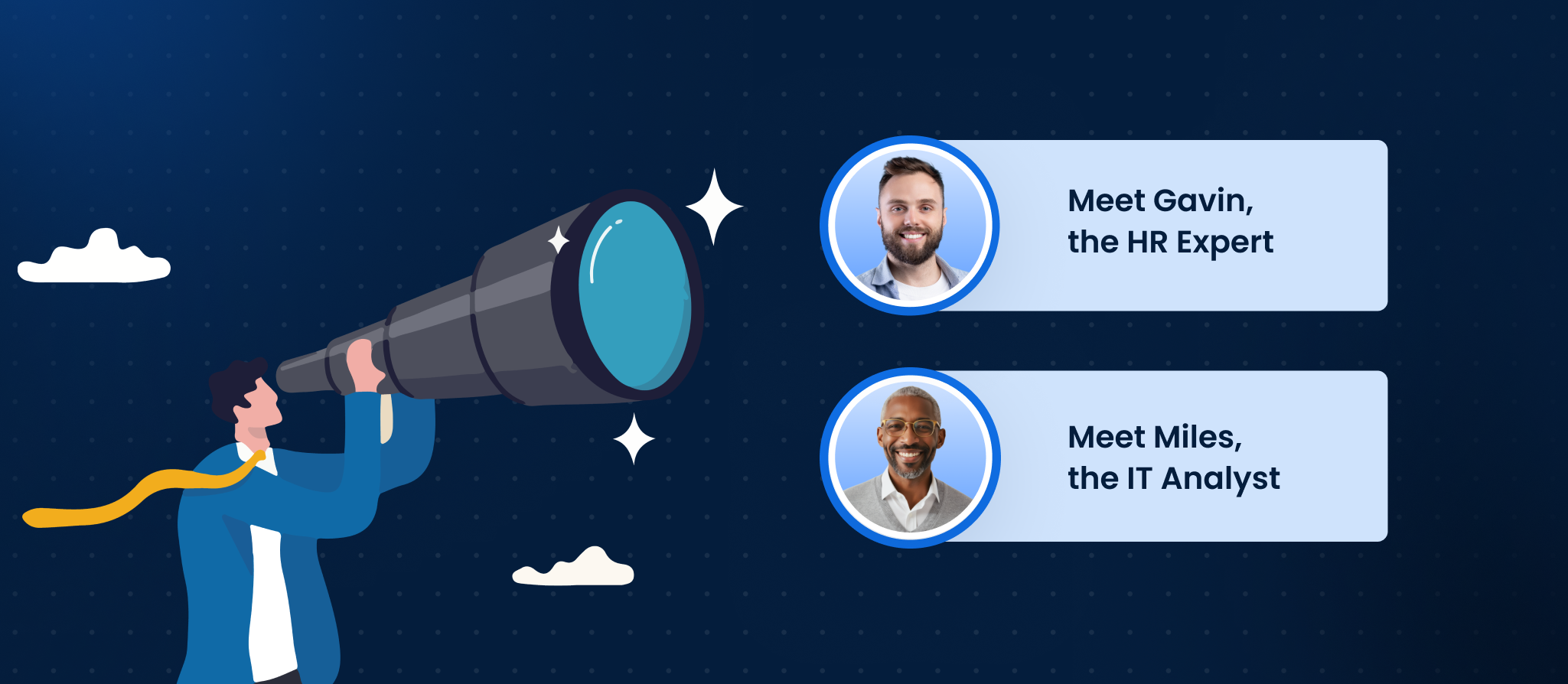
- Meet Gavin, the HR Expert: He doesn’t just answer FAQs. He integrates deeply with Workday, ADP, and SAP to execute transfers, generate letters, and manage leave balances autonomously.
- Meet Miles, the IT Analyst: He resets passwords, provisions software licenses, and troubleshoots VPN issues without waking up a sysadmin.
For the technology leader, Leena AI offers a path to the Autonomous Enterprise. We provide the security certifications (SOC2 Type II, ISO 27001), the seamless integrations, and the “Agentic RAG” capabilities that allow you to deploy safe, powerful AI without a massive internal R&D lift.We turn the promise of Artificial Intelligence in HR into a measurable reduction in TCO and a tangible upgrade in employee happiness.
Frequently Asked Questions
What is the difference between Generative AI and Agentic AI in HR?
Generative AI creates content (text, images, summaries). Agentic AI in HR performs actions. While Generative AI can draft a response about leave policy, Agentic AI can log into the system, apply the leave, and notify the manager.
How does Autonomous HR Systems impact data security?
Security is paramount. Enterprise-grade agentic systems operate within your existing security perimeter. They use Role-Based Access Control (RBAC) to ensure the AI agent only “sees” and “does” what a human with similar clearance could do. Data is processed, not stored, ensuring compliance with GDPR and CCPA.
Will AI replace the HR department?
No. Artificial Intelligence in HR removes the administrative drudgery the password resets, the policy lookups, the form filling. This liberates HR professionals to focus on “human” work: culture, strategy, conflict resolution, and talent development.
How difficult is the integration for Enterprise AI for HR?
Modern platforms like Leena AI use pre-built connectors for major systems (ServiceNow, Workday, SAP, Oracle). For a CIO, this means “time to value” is measured in weeks, not months. The AI layer sits on top via API, requiring minimal changes to your core backend infrastructure.
What is the ROI of implementing AI-Driven Decision Making in HR?
The ROI comes from two sources: Hard savings from ticket deflection (often reducing Tier 1 support costs by 40-60%) and soft savings from improved employee retention and productivity. Faster resolution means employees get back to work sooner.
Why is Human-Centered AI in HR critical for adoption?
If employees don’t trust the system, they won’t use it. Human-Centered AI in HR ensures the interface is natural, conversational, and empathetic. High adoption is the only way to achieve the data density needed for the system to learn and improve.
Can these systems handle multi-national compliance?
Yes. Advanced Autonomous HR Systems are aware of geo-specific policies. An agent knows that “Maternity Leave” rules differ between your California office and your London office, and will apply the correct policy based on the employee’s location data.