

Enterprise AI Companies: The Integration Reality Check
It is Tuesday morning following a holiday weekend. Your Enterprise Resource Planning vendor just pushed their scheduled Q3 user interface update. It is a minor cosmetic refresh buttons have rounded corners, and the “Submit” field moved ten pixels to the right.
By 9:30 AM, your service desk is flooded. Your automated onboarding system has failed. New hires are sitting in lobbies waiting for badge access that never triggered. Your “autonomous” payroll adjustments have stalled.
The diagnosis? One of your enterprise ai companies wasn’t actually integrated with your backend; it was “screen scraping” it. When the pixels moved, the bot went blind.
In 2026, this is the silent killer of enterprise automation. We have moved past the hype cycle where we just wanted artificial intelligence to talk like a human. Now, we need it to act like a systems architect. As Chief Information Officers and Technology Heads, we are evaluating dozens of enterprise ai companies promising seamless back-office revolution. But beneath the polished demos, many of these tools are built on brittle, legacy automation tactics that cannot withstand the dynamic nature of the modern software stack.
Here is the integration reality check you need to apply before signing your next contract with enterprise ai companies.
The “Optical Illusion” Sold by Enterprise AI Companies
When companies leading in ai demo their agents, they show you the “Happy Path.” The user asks for a leave balance, and the agent retrieves it. It looks like magic.
What they rarely show is how the agent retrieved it.
In the rush to capture market share, many founders of an ai startup company and even established ai tech companies opted for the path of least resistance: User Interface-based automation (screen scraping). Building robust, verified Application Programming Interface (API) connectors to systems like Workday, SAP SuccessFactors, and Oracle is difficult, expensive, and requires formal partnerships. Writing a script that logs in via a web browser and “reads” the website code is cheap and fast.
The problem is that User Interface-based automation is fundamentally fragile. It relies on the visual presentation layer of your software, which is designed for humans, not machines. In 2026, software-as-a-service platforms update their visuals continuously. Relying on screen scraping is like building a skyscraper on a foundation that shifts every three months.
As a leader, you must distinguish between enterprise ai companies offering deep, “headless” integration and those selling a fragile wrapper.
Why Many AI Software Companies Cut Corners
The market for ai enterprise software is crowded. To stand out, vendors need to claim “universal compatibility.” They want to say, “We integrate with everything instantly.”
True integration is difficult. It requires handling security tokens, managing rate limits, mapping complex data schemas, and maintaining security certifications. Many enterprise ai companies marketing themselves as leaders are actually lagging in engineering. They use screen scraping because it allows them to bypass the rigorous security reviews required to get official access keys from major software vendors.
For the technology leader, this is a governance nightmare. A screen-scraping bot often requires a “service account” with absolute administrative privileges to log in and click buttons, bypassing the granular access controls you carefully architected. This is a risk that enterprise ai companies often gloss over during the sales process.
Evaluating the Architecture of Enterprise AI Companies
When vetting artificial intelligence software companies, you need to peel back the layers. Do not accept “we integrate with Workday” as an answer. You need to ask: “Do you use the API or the UI?”
The Stability of True AI Enterprise Software
Robust enterprise AI companies rely on “Agentic APIs.” These are connectors designed specifically for autonomous agents. When an agent needs to update a tax bracket, it sends a structured data packet to a secure endpoint. It doesn’t care if the “Submit” button is blue or green. It doesn’t care if the layout changed.
The top companies for ai in the enterprise space invest millions in maintaining these connector libraries. They have formal partnership agreements with the underlying system of record vendors to ensure that when a connection method is retired, they are notified months in advance not the morning after the break.
If a company with ai cannot produce a documentation page listing their specific connection scopes and certification tiers for your core stack, they are likely selling you a scraper.
Risk Profile: AI Brands and Security
Security is the other casualty of poor integration. AI brands that rely on visual automation often store credentials insecurely to facilitate the “login” process.
In a verified model used by reputable enterprise ai companies, the system uses a secure token. If the token is compromised, it can be revoked instantly without changing the underlying password. If a screen-scraping bot’s credentials are compromised, the attacker often has the keys to the entire kingdom, as these bots tend to run with elevated privileges to navigate screens faster.
Governance for the Long Haul with Enterprise AI Companies
In 2026, your strategy must prioritize resilience over speed. It is better to work with enterprise ai companies who take two weeks to configure a secure connection than one who promises a “one-click” setup that breaks in two weeks.
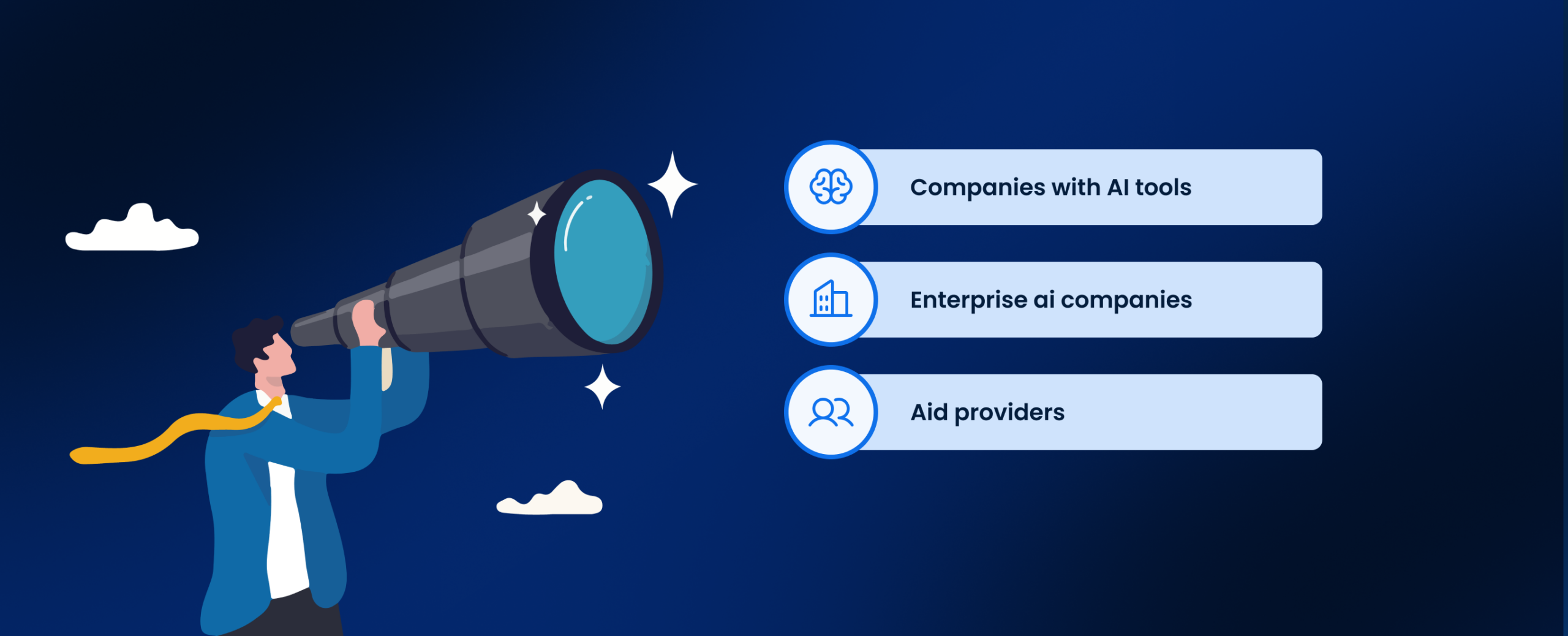
Managing the Ecosystem of Companies with AI
You likely have multiple companies with AI tools in your environment. You might have an Information Technology bot, a Human Resources bot, and a Finance bot. If they are all fighting for screen control, you will experience “agent collision.”
A true platform from top enterprise ai companies acts as an orchestration layer. It doesn’t just push buttons; it negotiates transactions. It validates data before sending it. It logs the “why” and the “how” of every database change. This is the difference between a macro and true intelligence.
When looking at the landscape of aid providers, prioritize those that offer “Integration Health Monitoring.” Your dashboard should show you not just how many tickets were resolved, but the health of the connections. You should know if the latency on your payroll system is spiking before the solution from your enterprise ai companies starts timing out.
Why Enterprise AI Companies Must Move Beyond Wrappers
The distinction between a “wrapper” and a deep integration is critical. Many artificial intelligence development companies simply wrap a public language model like GPT-5 in a nice interface. These are useful for drafting emails but dangerous for executing workflows.
Reliable enterprise ai companies build “reasoning engines” that sit between the language model and your systems. This engine prevents the model from hallucinating a database field that doesn’t exist. It ensures that if the user asks to “delete the last invoice,” the system checks three times and asks for confirmation before executing the command.
This depth of engineering is what separates generic AI software companies from true enterprise partners.
Leena AI: Engineered for Enterprise Resilience
At Leena AI, we decided early on that we would not build on quicksand. We understood that for the Fortune 500, “it works usually” is the same as “it doesn’t work.”
That is why we built the Leena AI Integration Hub. We don’t rely on fragile visual automation. We have spent years building and maintaining native, verified connectors for the world’s leading enterprise systems from Workday and ADP to ServiceNow and Jira.
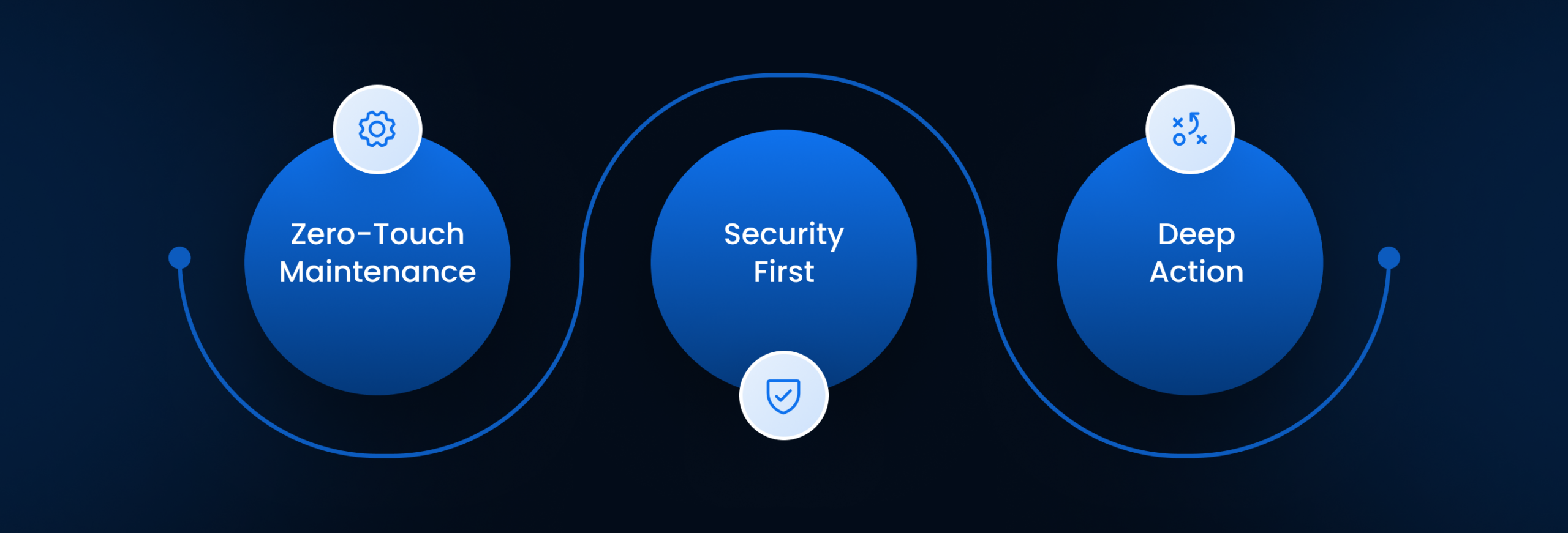
- Zero-Touch Maintenance: When your underlying software updates, our connectors adapt automatically because they communicate with the data layer, not the screen.
- Security First: We use industry-standard authentication protocols. We never store your service account passwords.
- Deep Action: Because we integrate at the deep data level, our agents can perform complex, multi-step writes like “transfer employee and prorate bonus” that are impossible for screen scrapers to execute reliably.
We provide the stability of a legacy vendor with the agility of a modern artificial intelligence company, ensuring your automation strategy survives the next software update.
Frequently Asked Questions
How can I tell if enterprise ai companies are using screen scraping?
Ask them how they handle Multi-Factor Authentication. If they ask you to disable it for their service account or use a “bypass” technique, they are likely screen scraping. Verified connections use tokens that do not require interactive logins.
Why do some ai software companies still use screen scraping in 2026?
It is faster to build and requires no permission from the target software vendor. Many artificial intelligence development companies use it to bypass the fees or partnership requirements charged by major platforms for proper access.
Is screen scraping ever acceptable for enterprise ai companies? Is screen scraping ever acceptable for enterprise ai companies?
Only as a last resort for “read-only” tasks on legacy mainframe systems that literally have no other connection points. For modern cloud platforms, it is an unacceptable operational risk.
What are the top companies for ai integration in HR?
The companies leading in ai for HR are those that list “Certified Partner” status with major vendors. Look for ai brands that appear on the official marketplaces of your system providers. This proves they use sanctioned integration paths.
How does API integration impact the speed of solutions from enterprise ai companies?
Direct integration is significantly faster. Screen scraping requires the bot to load web pages, render images, and wait for animations. A direct data call happens in milliseconds. AI enterprise software built on proper connections can resolve tickets significantly faster than visual bots.
Can we switch from a screen-scraping vendor to other enterprise ai companies easily?
Yes, but it requires a shift in thinking. You will need to provision secure keys rather than service user accounts. However, the long-term reduction in maintenance tickets makes the switch highly valuable.
Do all ai tech companies offer the same level of security?
No. AI providers using deep integrations offer superior security because they follow the Principle of Least Privilege. They only ask for access to the specific data fields they need. Screen scrapers often need full “view all” access just to navigate the menus.