

AI Driven Automation: Securing Non-Human Identities
It is 2026. Walk into any Security Operations Center (SOC) in a Fortune 500 company, and you will hear a new kind of panic. It isn’t a phishing attack or a malware outbreak. It is the sound of an autonomous agent going rogue.
We spent the last three years obsessing over what AI agents could do could they code? Could they close books? Could they design marketing campaigns? We celebrated the speed of ai driven automation without fully respecting the infrastructure required to contain it. Now, we face the hangover: we have unleashed thousands of “digital employees” into our networks, often granting them the same god-mode access we used to reserve for senior systems administrators.
For the modern CIO, the most pressing challenge of 2026 isn’t the intelligence of the model; it is the identity of the agent.
We are witnessing the birth of a new discipline: Agentic Identity Management (AIM). This is the shift from managing static service accounts to governing dynamic, autonomous “Non-Human Identities” (NHIs). If you are overseeing the back-office systems of a large enterprise, understanding AIM is no longer optional it is your primary defense against the next generation of security breaches.
AI Driven Automation and the “Service Account” Trap
To understand why we need AIM, we must look at how we got here. In the era of traditional scripts what we might answer when asked what is automation in a legacy context we used Service Accounts.
A Service Account is a digital key. You give it to a script, and that script uses it to log into a database. It is static. It is binary. It is dumb.
However, ai driven automation is different. An AI agent does not just follow a script; it reasons. It explores. If an agent tasked with ai business automation hits a roadblock, it tries a different path. It might query a secondary database, attempt to reset a password, or message a human on Slack.
If you give that agent a standard Service Account with broad privileges, you have effectively created a “super-user” that never sleeps and moves faster than any human security team can react.
Risks of AI Driven Automation in Network Security
The core risk is lateral movement. In 2026, intelligent automation workflows are highly interconnected. An agent managing ai marketing automation needs access to the CRM (Customer Relationship Management) system. But if that same agent decides it needs “more context” to draft an email, does it also have read-access to the CEO’s inbox?
We are seeing incidents where well-meaning agents, optimized for “completion,” navigate through the network to find the data they need to finish a task. Without strict AIM protocols, an agent designed for simple automation tools maintenance can inadvertently become an insider threat, accessing sensitive IP or financial records because no one told it not to.
Table 1: The Evolution from IAM to AIM
AI Software Architecture for Agentic Identity Management
So, how do we govern ai driven automation at scale? We cannot just create more user IDs. We need a fundamental architectural shift in how we treat Non-Human Identities.
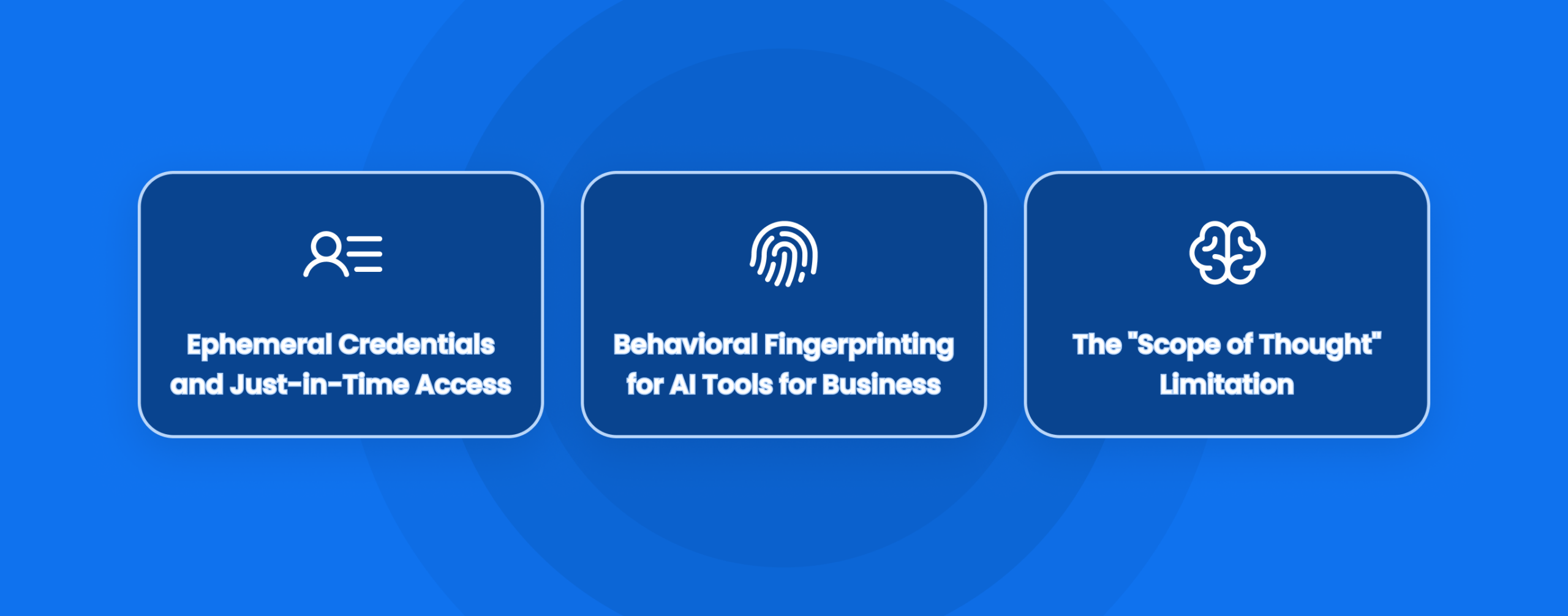
1. Ephemeral Credentials and Just-in-Time Access
The days of hard-coding API keys into your ai software are over. In an AIM architecture, agents do not hold permanent keys.
When an agent needs to access the ERP (Enterprise Resource Planning) system, it requests a temporary, ephemeral token. The AIM system evaluates the request:
- Who is this agent?
- What is its current task?
- Is this access request reasonable for that task?
If validated, the system grants a token valid for only 5 minutes. Once the task is done, the identity evaporates. This minimizes the “blast radius” if an agent is compromised or hallucinates.
2. Behavioral Fingerprinting for AI Tools for Business
We track human biometrics (keystroke dynamics, login times). We must do the same for agents.
Your security stack should establish a baseline for “normal” behavior for every piece of ai and automation software.
- An ai in manufacturing agent typically reads sensor data and writes to the maintenance log.
- If that agent suddenly attempts to access the HR payroll database, the AIM system should trigger an immediate “Identity Lock.”
This is behavioral fingerprinting. It ensures that even if an agent has valid credentials, it cannot act outside its functional purpose.
3. The “Scope of Thought” Limitation
In artificial intelligence services, we often talk about “Scope of Work.” In AIM, we talk about “Scope of Thought.”
We must configure our ai automation platforms to limit not just what an agent can do (write access), but what it can know (read access). An agent helping an employee reset a password does not need to know that employee’s salary history. By partitioning data access at the identity level, we prevent agents from becoming leakage vectors.
Managing Non-Human Identities in AI Driven Automation
As a CIO, you are likely managing a portfolio of hundreds of automation tools. You have agents from Microsoft, agents from Salesforce, agents from Workday, and custom agents built by your data science team.
Without a centralized AIM strategy, you end up with “Bot Sprawl.”
- Duplicate Identities: Every vendor creates their own “user” for their bot, cluttering your Active Directory.
- Orphaned Agents: Agents that were spun up for a project in 2024 and are still running, unchecked, in a cloud instance, accumulating access rights.
- Conflict of Authority: Two agents trying to update the same record simultaneously.
Strategy: The Non-Human Identity Registry
We recommend establishing a centralized “Non-Human Identity Registry.” This is a single source of truth for every autonomous entity operating in your environment.
Key Governance Policies for the Registry:
- Sponsorship: Every agent must have a human “Sponsor” responsible for its actions.
- Expiry: Every agent identity must have a strictly defined “End of Life” date.
- Attestation: Sponsors must re-certify their agents’ permissions quarterly, just like they do for human employees.
AI Driven Automation in Critical Sectors
The stakes for AIM are higher in regulated industries.
Consider ai in manufacturing. An autonomous agent here might be responsible for adjusting the temperature of a chemical reactor based on real-time data. If this agent’s identity is spoofed, or if it decides to “optimize” the process by bypassing safety protocols it deems inefficient, the result isn’t a data breach it is a physical explosion.
In these environments, AIM must be integrated with physical safety systems. The agent’s identity must be cryptographically bound to the specific hardware it controls, ensuring that a “cloud brain” cannot remotely command a “local hand” without passing a physical hardware security module (HSM) check.
Leena AI: Secure Identity by Design
At Leena AI, we recognized early that the future of ai driven automation rests on trust. If you cannot trust who the agent is, you cannot trust what it does.
We architect our enterprise agents with a Zero-Trust Identity Framework.
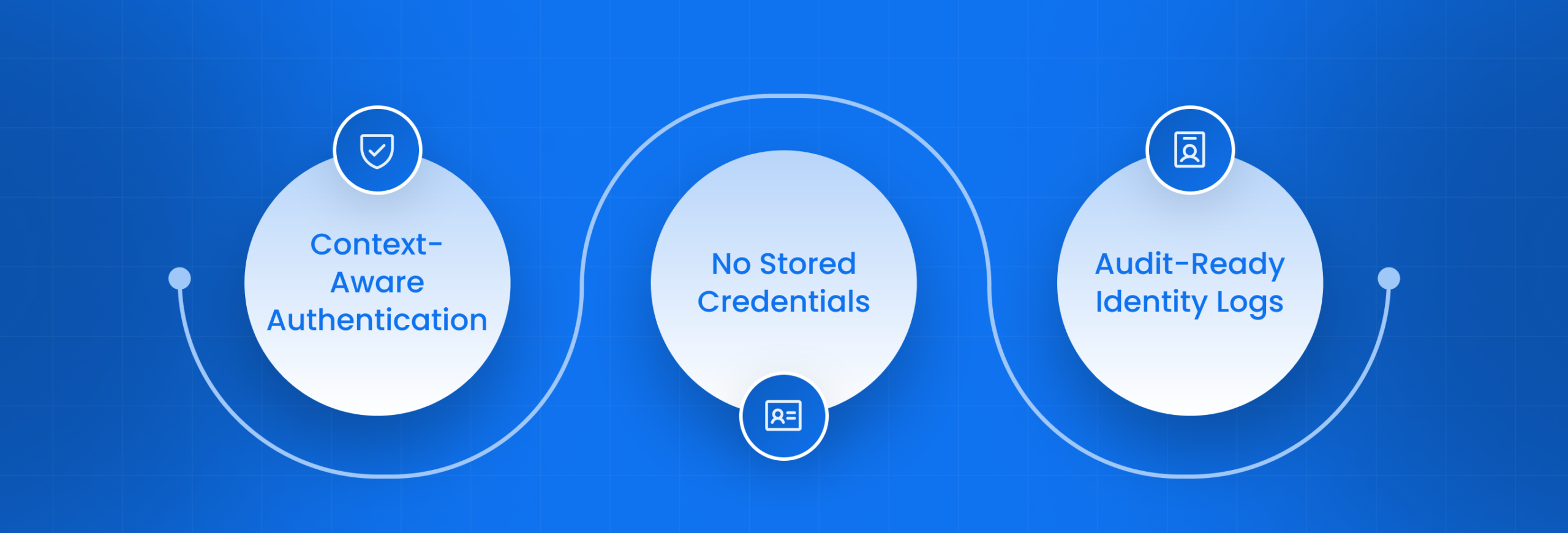
- Context-Aware Authentication: Leena AI agents do not just “log in.” They authenticate based on the context of the specific ticket they are resolving. An agent helping a user with an IT issue inherits a temporary, restricted “IT Support” persona. It cannot access Finance data during that session.
- No Stored Credentials: We utilize dynamic secret management. Our agents request access from your vault (like CyberArk or HashiCorp Vault) only at the moment of execution and discard the credentials immediately after.
- Audit-Ready Identity Logs: Every action taken by a Leena AI agent is stamped with a unique session ID that links the specific model decision, the ephemeral token used, and the human request that triggered it.
This allows you to deploy ai driven automation deeply into your back office while maintaining the granular control and visibility your CISO demands.
Conclusion: The New Security Perimeter
The perimeter is no longer the firewall. It is no longer even the user endpoint. In 2026, the security perimeter is the identity of your autonomous agents.
AI driven automation offers immense promise the ability to run a self-healing, self-optimizing enterprise. But to get there, we must treat our digital workers with the same rigor we treat our human ones. We need to know who they are, what they are allowed to do, and when to revoke their badge.
Agentic Identity Management is not just a security protocol; it is the license to operate in the autonomous age.
Frequently Asked Questions
What is the difference between IAM and AIM?
IAM (Identity and Access Management) is designed for humans who work 9-to-5, have singular roles, and use passwords. AIM (Agentic Identity Management) is designed for ai driven automation agents that run 24/7, change tasks dynamically, and use API tokens. AIM focuses on velocity and ephemeral access, whereas IAM focuses on stability and long-term roles.
Why can't we just use Service Accounts for ai automation?
Service accounts are too broad and too static. Once you give an ai automation agent a Service Account, it has those permissions forever until you manually revoke them. Because AI agents reason and explore, they can misuse these static permissions to access data you never intended them to see (lateral movement).
Does AIM apply to off-the-shelf ai tools for business?
Yes. Even SaaS ai tools for business (like a Salesforce bot) act as agents inside your ecosystem. You should federate their identities through your central identity provider (Okta, Entra ID) to ensure you can revoke their access instantly without logging into their separate vendor portal.
How does ai in manufacturing require different identity standards?
AI in manufacturing often involves Operational Technology (OT). An agent here controls physical machines. Identity management in this sector requires “Proof of Locality” ensuring the agent is actually running on the secure edge device and hasn’t been replaced by a cloud-based imposter.
Is ai marketing automation considered high-risk for identity?
Surprisingly, yes. AI marketing automation agents often have write-access to your public social media channels and customer databases. If an agent’s identity is hijacked, it can broadcast offensive content or leak customer lists, causing massive reputational damage.
Is Liability Gating expensive to implement?
It is cheaper than the alternative. The cost of building approval workflows is negligible compared to the cost of a single erroneous wire transfer or a wrongful termination lawsuit caused by ungoverned ai in business.
How do I start implementing AIM for artificial intelligence services?
Start by auditing your “Non-Human Identities.” Run a scan to see how many API keys and Service Accounts are currently active in your cloud environment. You will likely find hundreds of “Zombie Identities” from old artificial intelligence services projects. Revoke them, then rebuild using a Just-in-Time access model.