

AI in Supply Chain: Secure Collaboration with Clean Rooms
It is the third quarter of 2026. You are the Chief Information Officer of a major consumer electronics manufacturer. Your flagship product is flying off the shelves in the Northeast, depleting your inventory in New York faster than anticipated. Meanwhile, your largest competitor is sitting on a surplus of similar components in a warehouse just ten miles away in New Jersey, paying storage fees on dead stock.
In the old world, this was a stalemate. You could not call them to buy their excess inventory because it would reveal your demand data, signaling weakness. They would not sell to you because they feared enabling your market share growth. So, you expedite shipping from China at triple the cost, and they eventually write off their inventory. Everyone loses.
This is the classic “Prisoner’s Dilemma” of logistics. But today, AI in Supply Chain is breaking this deadlock.
We are witnessing a shift from “Supply Chain Management” to “Supply Network Collaboration.” The catalyst is a new architectural pattern: the AI Clean Room. This technology allows your AI for supply chain agents to enter a neutral, cryptographically secure digital space, negotiate inventory rebalancing with a competitor’s AI, and execute the trade all without ever exposing your proprietary pricing, demand forecasts, or customer lists.
If you lead technology for a large US enterprise, this is the next frontier. It is not just about optimizing your own warehouse; it is about optimizing the entire ecosystem. Here is how AI in Supply Chain is evolving to make “frenemies” your most valuable logistics partners.
The Evolution of AI in Supply Chain Collaboration
Historically, supply chain automation was an internal game. We bought software to optimize our own routes, forecast our own demand, and manage our own warehouses. We treated our data as a fortress.
However, the volatility of the mid-2020s taught us that resilience requires redundancy. The problem is that redundancy is expensive. The only way to lower the cost of resilience is to share it.
AI in Supply Chain is now moving into a “Federated” model. In this model, intelligent agents represent your interests in a broader network. These agents are not just programmed to follow rules; they are programmed to negotiate.
Beyond Internal Supply Chain Automation
The limitation of traditional supply chain automation was that it stopped at your firewall. It could tell you that you were running low on stock, but it could not fix the problem if your primary suppliers were also dry.
AI in Supply Chain systems in 2026 use “Agentic Protocols” to look outside the walls. They ping a decentralized ledger of inventory availability. But unlike a public marketplace where prices are visible, this ledger is opaque. It requires a “handshake” to view.
This is where the “Clean Room” comes in. It is a secure computing enclave where two parties can compute on data without seeing the data. Your agent says, “I need 5,000 units of Component X.” The competitor’s agent says, “I have 5,000 units of Component X.” The Clean Room verifies the match and calculates a fair transfer price based on a neutral third-party index, plus a handling fee. The deal is presented to humans for approval (or auto-executed if low value), and the physical goods move. The proprietary contract price you pay your original supplier remains hidden.
The Mechanics of AI Supply Chain Software in Clean Rooms
To operationalize this, CIOs are deploying specialized ai supply chain software that prioritizes privacy-preserving computation.
The Role of Generative AI Supply Chain Agents
The negotiation process is nuanced. It is not just “Price” and “Quantity.” It is “Timing,” “Quality Certification,” and “freight Responsibility.”
Generative AI supply chain models are essential here. A rigid script cannot negotiate a contract exception. A Large Language Model (LLM) trained on logistics contracts can.
In a Clean Room scenario, your Generative AI agent converses with the counterparty’s agent.
- Your Agent: “We require delivery by Tuesday. Can you expedite?”
- Their Agent: “Expedited shipping increases the cost basis by 4%. However, we can release the goods for pickup at our dock immediately.”
This conversation happens in milliseconds. The generative ai supply chain capability allows the agents to draft a micro-contract that covers liabilities and transfer of title, which is then legally binding once the transaction clears.
Table 1: Traditional EDI vs. AI Clean Room Collaboration
Strategic Risks: AI and Supply Chain Antitrust
As a technology leader, you might be reading this and thinking: “This sounds like price-fixing.”
You are right to be cautious. The governance of AI in Supply Chain requires strict “Antitrust Guardrails.” If two competitors use ai and supply chain algorithms to automatically set prices or divide markets, that is illegal collusion, even if robots are doing it.
Governing Supply Chain AI for Compliance
To mitigate this, supply chain ai Clean Rooms must be designed with “blindness” as a feature.
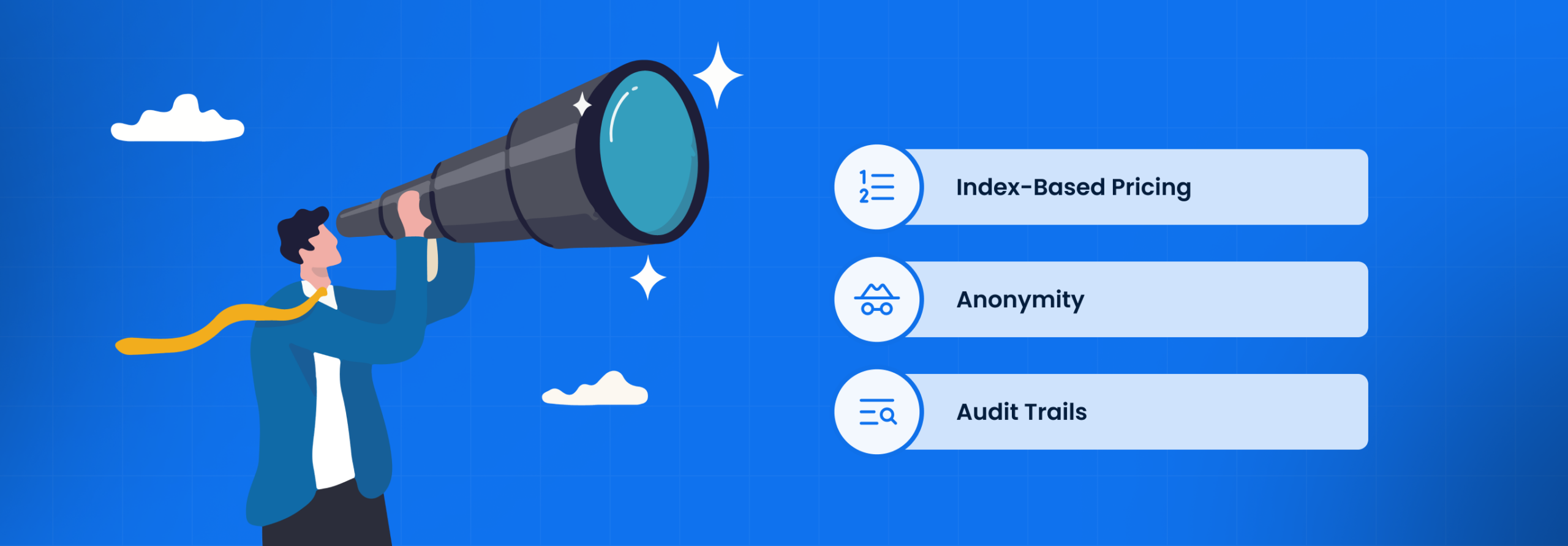
- Index-Based Pricing: Agents should never negotiate price directly based on their internal margins. They should trade based on public indices (e.g., “Market Spot Rate – 5%”). This prevents the agents from signaling their private cost structures.
- Anonymity: In many Clean Room networks, the identity of the counterparty is masked until the transaction is agreed upon. You know you are buying from a “Certified Tier 1 Peer,” but you don’t know if it is Competitor A or Competitor B until the release order is cut.
- Audit Trails: Every decision made by your ai in supply chain management agent must be logged immutably. You need to be able to prove to a regulator that your agent acted independently to solve a shortage, not to rig the market.
Selecting AI Supply Chain Software for 2026
The market for ai supply chain software is crowded. When evaluating vendors, look for “Confidential Computing” capabilities.
If a vendor wants to ingest all your data into their public cloud to train their model, that is a non-starter for inter-enterprise collaboration. You need ai for supply chain solutions that support “Federated Learning” or “Trusted Execution Environments” (TEEs).
Key Evaluation Criteria:
- Protocol Neutrality: Does the software speak the standard protocols (like GS1 or the latest Digital Product Passport standards)?
- Identity Management: Can the system verify the identity of external agents? (See our previous discussion on Agentic Identity Management).
- Latency: Can the supply chain automation software handle real-time negotiation during a demand spike?
Leena AI: The Secure Interface for Supply Chain Decisions
At Leena AI, we understand that the complexity of AI in Supply Chain can be overwhelming for the human workforce. While backend agents negotiate in Clean Rooms, your human supply chain managers need a simple way to oversee these interactions.
We position our AI Colleagues as the “Human Interface” to this complex network.
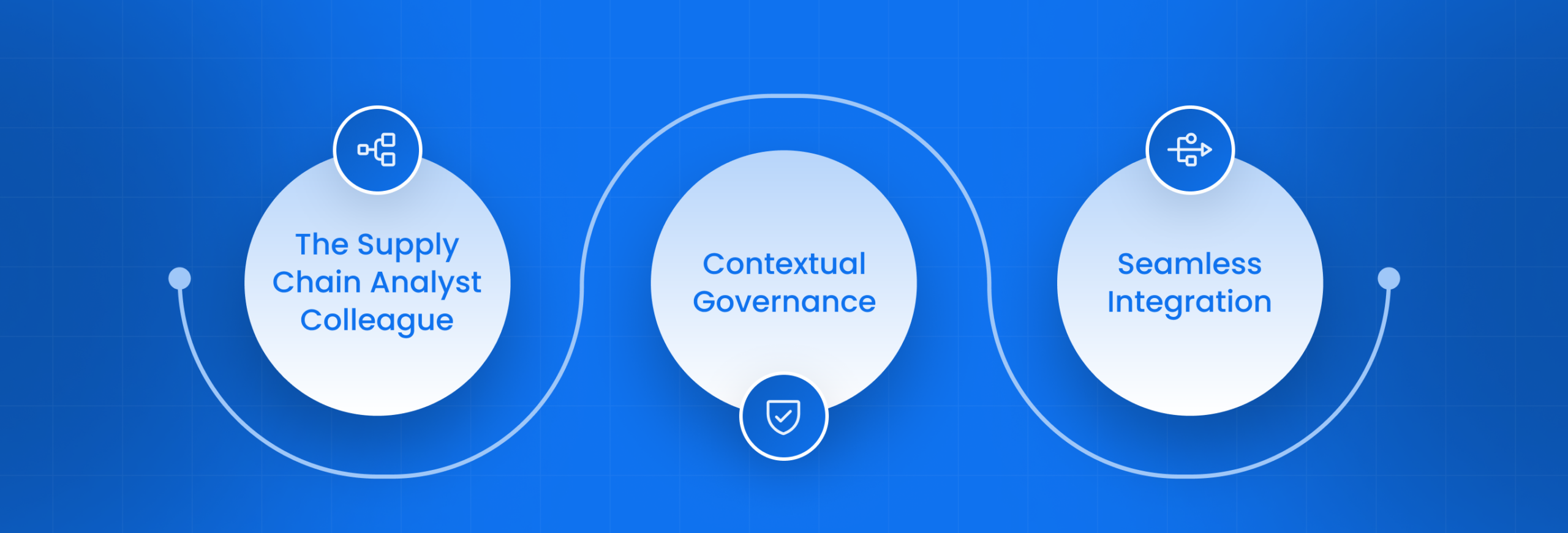
- The Supply Chain Analyst Colleague: Instead of logging into a complex Clean Room dashboard, your Supply Chain VP can simply ask their Leena AI colleague, “Do we have any opportunities to offload the excess copper inventory?”
- Contextual Governance: The Leena AI agent checks the Clean Room status, summarizes the offers negotiated by the backend bots, and presents a plain-English decision card: “Yes, we have a bid from an anonymous peer for 2 tons at $4.50/lb. This is 2% above our holding cost. Shall I approve?”
- Seamless Integration: We integrate with the major backend ERPs (SAP, Oracle) to execute the write-back once the human says “Yes,” closing the loop between the high-speed autonomous network and your internal system of record.
We make the “Clean Room” accessible, ensuring that AI in Supply Chain remains a tool for human empowerment, not just machine efficiency.
The Future of AI in Supply Chain Management
The “Clean Room” is just the beginning. As AI in Supply Chain Management matures, we will see the emergence of “Self-Healing Networks.”
Imagine a hurricane disrupts a port in Florida. In 2024, this meant weeks of chaos. In 2026, AI in Supply Chain networks detect the disruption instantly. Agents across the network from retailers to raw material suppliers automatically re-route shipments, swap inventory positions, and adjust production schedules in a synchronized ballet of efficiency.
For the CIO, the mandate is clear. You can no longer build a supply chain in isolation. You must build a supply chain that plugs into the world. The technology is here. The supply chain automation tools are ready. The only question is whether you trust your agents enough to let them shake hands with the competition.
Frequently Asked Questions
Is sharing data in an AI Clean Room safe for our IP?
Yes, if architected correctly. The core principle of AI in Supply Chain Clean Rooms is that data is never “shared” in raw form. Only the insights or outcomes (e.g., “Deal Approved”) leave the room. The proprietary data (pricing, customer names) remains encrypted in use within the secure enclave.
How does Generative AI Supply Chain technology help with contracts?
Generative AI supply chain models can draft and review standard purchasing contracts instantly. They ensure that the specific terms negotiated by the agents (delivery windows, penalties) are accurately reflected in the final legal text, reducing legal review bottlenecks.
Can small enterprises participate in these AI Supply Chain networks?
Absolutely. In fact, ai for supply chain levels the playing field. Smaller players can plug their agents into the same network as giants, allowing them to monetize their agility or excess inventory without needing massive sales teams.
What is the biggest barrier to adopting AI in Supply Chain Clean Rooms?
The biggest barrier is legal and cultural, not technical. Lawyers are often uncomfortable with “black box” negotiations. CIOs must work with legal teams to establish the “parameters of autonomy” for their supply chain ai agents.
Does Supply Chain Automation Software replace procurement teams?
No. It frees them from tactical drudgery. Instead of calling warehouses to find parts, procurement teams focus on strategic vendor relationships, innovation partnerships, and managing the governance parameters of the ai supply chain software.
How does AI and Supply Chain integration handle international borders?
Advanced agents are programmed with customs and tariff logic. They can calculate the “Landed Cost” (including duties and taxes) in real-time negotiation, ensuring that a domestic trade isn’t accidentally swapped for a more expensive international one.
What happens if the AI Supply Chain agent makes a bad trade?
This is why “Liability Gating” (discussed in other contexts) is crucial. You set hard limits. For example, “Agent cannot sell inventory below X% margin” or “Agent cannot transact more than $50k without human approval.” This keeps the ai in supply chain system safe.