


The Unspoken Challenge Facing Today’s Technology Leader
It is 3 PM on a Tuesday. As a technology head, your attention is split. On one hand, you are tasked with leading critical, forward-looking strategic projects that will define your company’s market position for the next decade. On the other, your top-tier engineers, analysts, and managers are bogged down in the quicksand of transactional back-office work: resetting passwords, fielding “how-to” questions, and manually verifying expense reports.
This is the central paradox of enterprise operations today. You have a world-class team, yet a significant portion of their potential is wasted on repetitive, low-value tasks. Your team is burning out, costs are rising, and the customer (the employee) is waiting. The current systems are simply not autonomous enough to solve problems end-to-end.
The solution isn’t more automation; it’s smarter, more independent automation. The answer for 2026 is Agentic AI.
The Transformative Power of Agentic AI for Enterprise Back Office
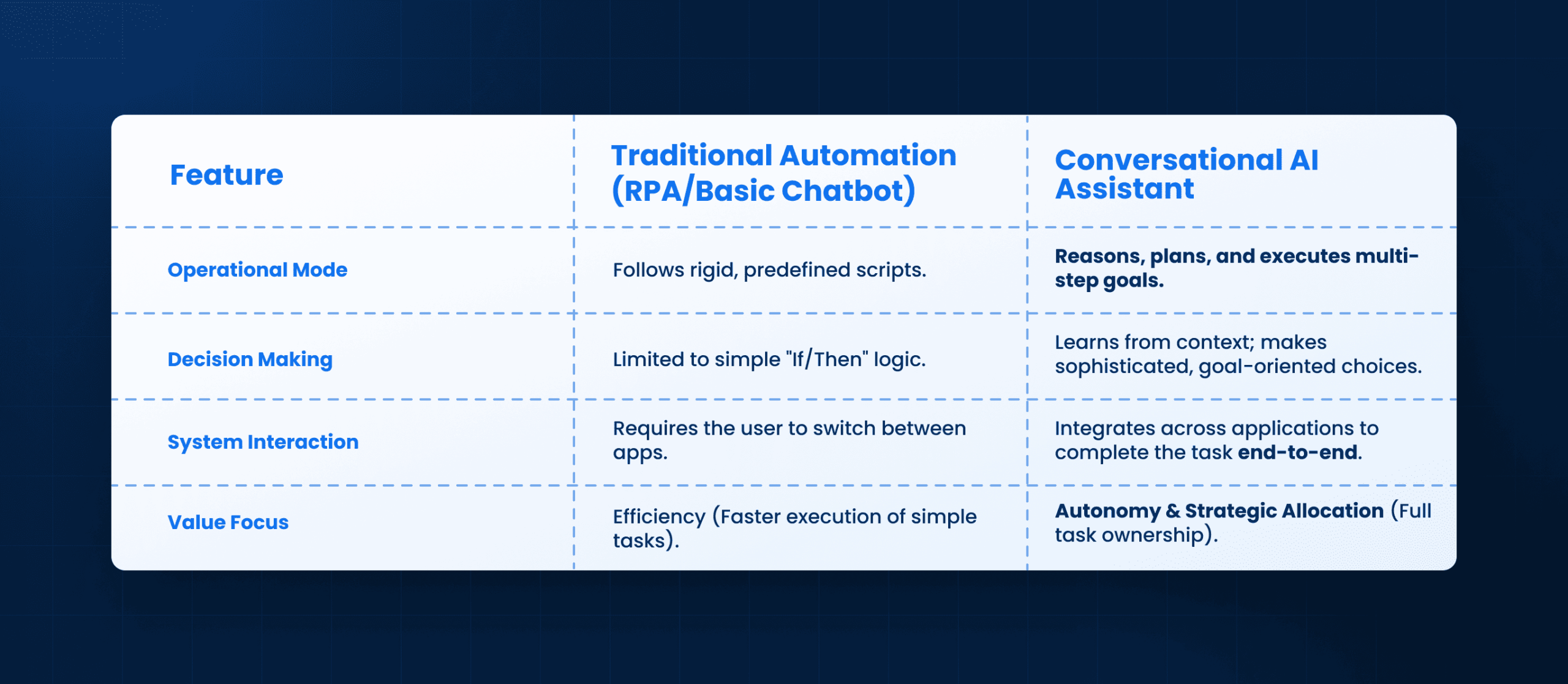
For years, automation meant setting up a rigid set of instructions: if A happens, do B. This generation of technology can only follow a script. Agentic AI, however, represents a fundamental leap forward. It refers to a new class of artificial intelligence that can operate independently toward a defined goal. Like a trusted human colleague, an Agentic AI system can reason, plan multi-step solutions, execute tasks across different applications, and even learn from failure, all without constant human oversight.
What is Agentic AI? A Simple Definition
At its core, what is Agentic AI? It is an AI system defined by its capacity for agency. Consider the difference between a simple chatbot and an Agentic AI colleague. A chatbot might respond to a question like, “How do I get a new laptop?” An Agentic AI colleague, in contrast, doesn’t just respond; it acts. It can initiate the ticket, verify the user’s role and budget approval with Finance, place the order via the procurement system, update the employee in real-time, and notify IT for setup—all autonomously. The intelligence isn’t just in the conversation; it is in the goal-oriented execution. This is the new gold standard for back-office performance.
The distinction is not about speed, but about autonomy and planning.
Driving Unprecedented ROI with Agentic AI in 2026
For the technology leader focused on the bottom line, the appeal of Agentic AI is clear: it’s a direct path to profound operational cost reduction and a rapid return on investment. In 2026, the strategic imperative will shift from simply cutting costs to reallocating human potential.
The greatest cost in back-office operations isn’t the software license; it’s the time spent by highly paid knowledge workers on routine work. An effective Agentic AI implementation can automate 60% or more of Tier-1 and Tier-2 requests across IT, HR, and Finance. This massive offload allows you to freeze hiring, reduce outsourcing, and, most importantly, empower your existing staff.
The return on investment calculation moves from efficiency gains to strategic gains. Your top HR team members can now focus on talent strategy instead of payroll exceptions. Your best Finance analysts can focus on market forecasting instead of invoice tracking. Agentic AI is not a cost center; it is a force multiplier for your most valuable human assets.
Agentic AI Definition: Moving Beyond Simple Automation
Understanding the agentic AI definition is crucial to capturing this value. This technology is defined by its ability to orchestrate complex actions across your disparate enterprise systems. It’s not a robotic process automation (RPA) tool that simply mimics mouse clicks; it’s a sophisticated “digital colleague” that understands context and intent.
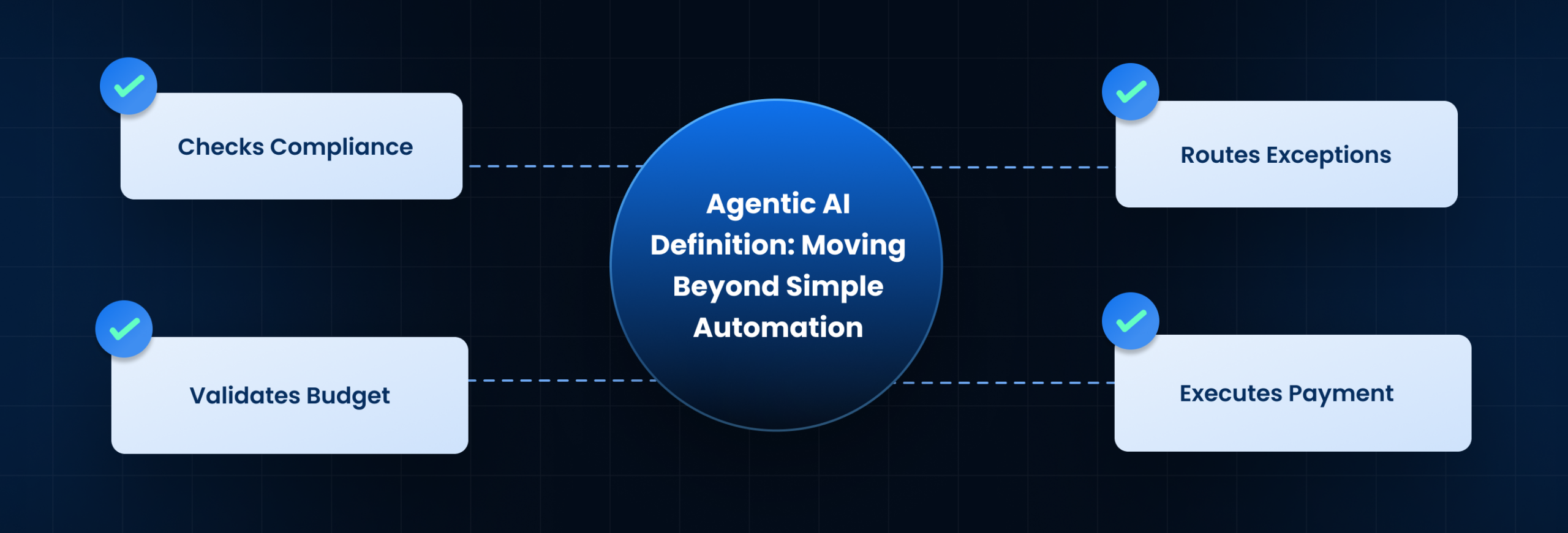
For instance, in a major financial operation, the Agentic AI system doesn’t just process a vendor invoice; it performs a complex, multi-step validation cycle:
- Checks Compliance: Verifies the purchase order system for compliance against internal policies.
- Validates Budget: Confirms the expense against the appropriate budget ledger in the ERP.
- Routes Exceptions: Automatically identifies and routes complex, high-dollar, or unusual invoices to a human for exception handling.
- Executes Payment: Initiates and tracks the final payment—logging every step for a perfect audit trail.
This level of comprehensive, decision-making automation is why the agentic AI definition is synonymous with true business transformation.
The New Standard for Operational Resilience: Agentic AI
When your internal teams rely on your back-office systems, operational resilience is paramount. If IT support is slow, the entire company slows down. If Finance processes lag, vendors get frustrated. Agentic AI ensures your enterprise is always running at peak performance, offering a level of speed and availability that human-only operations cannot match.
In 2026, employee expectations—shaped by consumer-grade experiences—demand immediate resolution. Agentic AI operates 24/7, providing instant support regardless of time zone or workload. Furthermore, its ability to proactively monitor systems and pre-emptively fix issues (like identifying a common network issue and autonomously initiating a fix) minimizes disruption before it impacts thousands of employees. This proactive, always-on capability transforms your service model from reactive firefighting to predictive maintenance.
Agentic Definition in Practice: The Concept of AI Colleagues
The operational realization of the agentic definition is the concept of the “AI Colleague.” This is not merely a metaphor; it describes an autonomous entity integrated into your teams, handling the full lifecycle of a task.
The benefits of deploying AI Colleagues powered by Agentic AI include:
- 24/7/365 Availability: Support and operations never pause, serving a dispersed global workforce instantly.
- Error Reduction: Eliminates human error in repetitive, multi-step data entry and verification processes.
- Rapid Scale: Easily handles sudden spikes in demand (e.g., during benefits open enrollment or financial quarter-close).
- Proactive Issue Resolution: Monitors systems to identify and resolve issues before they result in a ticket, a core capability of true Agentic AI.
Imagine your “AI Finance Colleague” independently closing the books each month by pulling data from multiple ERP systems, flagging anomalies, and generating preliminary reports—all while your team sleeps. This level of deep, end-to-end task ownership is what sets Agentic AI apart. It moves the technology from being a mere tool to a true, intelligent contributor to the business.
Leena AI: Pioneering Agentic AI for AI Colleagues
Leena AI is at the forefront of this revolution, providing enterprise-grade Agentic AI solutions that act as AI Colleagues, automating the back office for large US companies. Our platform is purpose-built to navigate the complexity of IT, HR, and Finance processes, delivering tangible value from day one.
Our approach centers on empowering these AI Colleagues with the agency to act decisively within your ecosystem:
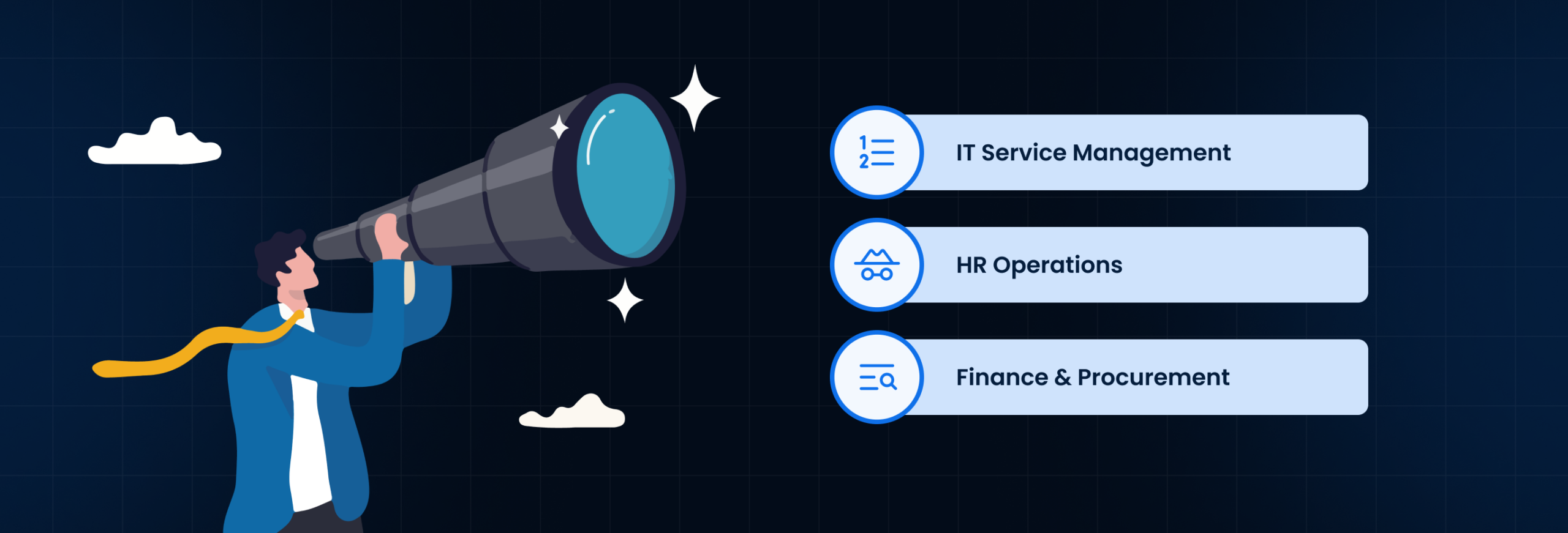
- IT Service Management: The AI Colleague doesn’t just log a ticket for a printer issue; it runs diagnostics, checks the connection status, verifies the driver version, and executes the necessary fix, often resolving the issue before a human agent even sees the alert.
- HR Operations: For a new employee onboarding request, the AI Colleague autonomously creates accounts across multiple systems (e.g., benefits, payroll, learning), initiates background checks, sends personalized welcome information, and answers the new hire’s unique questions about benefits enrollment.
- Finance & Procurement: The AI Colleague manages invoice resolution by cross-referencing vendor contracts, validating goods receipt notes, and escalating only complex or fraudulent cases to a human specialist, ensuring compliance and rapid cash flow management.
Leena AI is focused on making the deployment of Agentic AI seamless, integrated, and governed, ensuring your AI Colleagues are productive, secure, and compliant partners in your enterprise transformation.
Security, Governance, and the Future of Agentic AI Adoption
As technology leaders, your primary concern when adopting powerful, autonomous systems like Agentic AI must be governance. The capability of a machine to act autonomously requires an equally robust framework for security, auditing, and control. This is the Agentic AI reality check for 2026.
For 2026, successful deployment hinges on systems that offer key governance pillars:
- Auditable Transparency: Every action taken by the Agentic AI system must be logged, explained, and verifiable, ensuring you can meet regulatory and internal compliance standards, especially in highly sensitive areas like Finance and HR.
- Fine-Grained Access Control: The AI Colleague must adhere to the same—or stricter—access permissions as any human employee, ensuring it can only execute tasks within its defined scope and role.
- Human-in-the-Loop Integration: The system must be designed to automatically recognize tasks that require nuanced human judgment and seamlessly hand them off, ensuring strategic oversight remains with your leadership team.
- Continuous Monitoring: Robust tools must be in place to monitor the Agentic AI performance, ensuring its decision-making remains aligned with business policies and ethical guidelines, preventing “workslop” (inefficiency from poorly designed agent workflows).
The future of the back office is undoubtedly Agentic AI. By embracing this technology, you are not just buying software; you are investing in a more resilient, cost-effective, and strategically focused enterprise operation.
Frequently Asked Questions
What is Agentic AI and how is it different from traditional automation?
Agentic AI is fundamentally different because it possesses agency—the ability to act autonomously to achieve a goal. Traditional automation (like RPA) follows a rigid script. Agentic AI, however, can reason, plan, and adjust its execution across multiple systems without constant human input, making it a true problem-solver, or “AI Colleague.”
Why should a CIO prioritize Agentic AI over other AI technologies in 2026?
The primary benefit for a CIO is the immediate, measurable return on investment. Agentic AI directly addresses the largest enterprise cost center—transactional back-office work in IT, HR, and Finance—by automating end-to-end resolution. It frees up expensive human talent to focus on innovation and strategy.
What is the agentic definition and how does it apply to my back office?
The agentic definition refers to an AI system’s capability to take independent, goal-directed action. In your back office, this means a system can autonomously resolve an IT ticket, process a complex expense report, or complete an employee transfer request, acting as a fully empowered AI Colleague who interacts with systems, not just a passive tool.
How does Agentic AI handle data security and compliance for HR and Finance tasks?
Responsible Agentic AI platforms are built with enterprise security first. They adhere to the strictest role-based access controls, ensuring the AI Colleague only accesses data it is authorized to use. Crucially, every decision and action taken by the Agentic AI is logged and auditable, ensuring full compliance with internal and external regulations.
How will Agentic AI impact my current staff? Will it replace them?
Agentic AI will not replace your strategic staff; it will redefine their roles. By offloading 60%+ of transactional work, your skilled human employees are elevated from ticket-takers to strategists, focusing on high-value initiatives, exception management, and deep human interactions where critical judgment is required.
Where can I find a clear agentic AI definition for my leadership team?
The simplest agentic AI definition for a leadership team is: “An autonomous AI that can reason, plan, execute, and learn across systems to achieve complex business goals, acting as a productive member of your workforce.” It’s the difference between a helper and a colleague.
Why are legacy system integrations a major challenge for scaling Agentic AI?
Legacy enterprise systems were not built for real-time, autonomous interactions. They often lack the modular APIs and robust identity management that a true Agentic AI platform needs to securely and reliably execute complex, multi-step workflows across the entire enterprise. Modern, open platforms are essential to scale Agentic AI.