

Bots and AI: Retiring the “Chatbot Sprawl” Strategy
The Operational Bottleneck: The “15-Bot” Problem
In 2026, the average US enterprise does not suffer from a lack of automation; it suffers from automation fragmentation. You likely have a deployed “Intelligent Assistant” for every major SaaS platform in your stack.
When an employee needs to reset a password, they go to the IT Portal bot. When they need to check a pay stub, they go to the Payroll bot. When they need to update a CRM opportunity, they talk to the Sales bot.
This environment, often described as “Chatbot Sprawl,” creates a disjointed employee experience. The friction of remembering which bot handles which task negates the efficiency gains of the automation itself. Employees stop using them entirely, reverting to email or submitting generic helpdesk tickets just to get a human to route them.
The challenge for the CIO is no longer simply deploying bots and AI tools; it is orchestrating them. The goal is to move from a landscape of isolated vendor islands to a unified “Meta-Bot” architecture where the employee has a single entry point for any request, regardless of the backend system executing it.
The Architecture of Bots and AI Fragmentation
To solve the sprawl, you must first map the ecosystem. The current state of bots and AI in the enterprise is driven by SaaS vendor bundling. Every vendor now includes a “free” AI chatbot with their license.
This creates specific failure modes at scale:
- Vendor Lock-in: The ServiceNow bot is excellent at IT workflows but cannot read Workday PTO balances.
- Siloed Context: The Salesforce AI chat bot knows the customer’s name, but not the Sales Rep’s expense limit for taking that customer to dinner.
- Competing Roadmaps: Human Resources buys a specialized best AI chatbot for benefits, while IT buys a different AI chatbot platform for support.
Technical Dependencies:
- API Availability: Vendor bots must have open APIs to allow an orchestration layer to pass messages to them (often called “headless mode”).
- Identity Federation: A single Single Sign-On (SSO) token must authenticate the user across all underlying bot platforms simultaneously, avoiding repeated login prompts.
Operational Failure Points:
- “Tennis Match” UX: The orchestration layer passes the user to a sub-bot, and the sub-bot gets stuck, forcing the user to restart the conversation.
- Context Loss: The user tells the main bot their location, but the sub-bot asks for it again because the variable wasn’t passed during the hand-off.
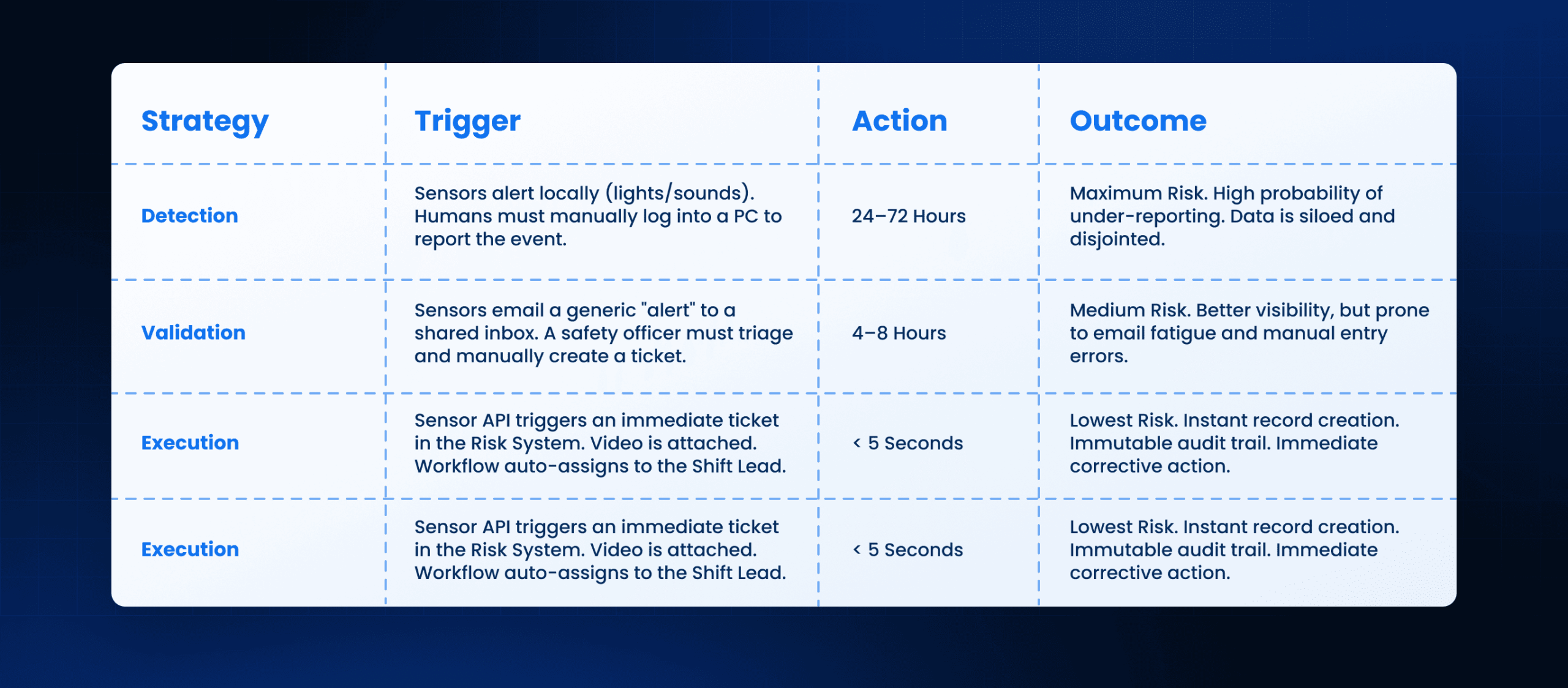
Table: The Cost of Fragmentation
Bots and AI — The Orchestration Layer
The solution is not to rip and replace every vendor bot. That is technically impossible and contractually expensive. The solution is to place an orchestration layer on top of them.
This layer acts as the traffic controller. It ingests the user’s intent, determines which backend system is best suited to handle it, and routes the request accordingly.
Operational Steps to Unify:
- Inventory Audit: List every active AI chatbot running in the environment.
- Intent Classification: Map specific intents (e.g., “Change Address”) to specific backend owners (e.g., Workday).
- API Wrapper: Wrap the vendor bots in a standardized API container that allows the Orchestrator to send and receive text.
- UI Consolidation: Deprecate the individual chat widgets on the intranet and replace them with the single Orchestrator widget.
Dependencies:
- Middleware (e.g., MuleSoft, Workato, or a custom Python layer) to handle the routing logic.
- Cooperation from SaaS vendors to expose their bot logic via API.
Failure Points:
- Latency: If the Orchestrator takes 2 seconds to think, and the vendor bot takes 2 seconds to respond, the user experiences a 4-second delay.
Vendor Updates: If a vendor changes their API schema, the connection breaks immediately.
Defining the Difference: AI Agent vs Chatbot
In this unified architecture, understanding the distinction between an AI agent vs chatbot is critical for routing.
- Chatbot: A rigid, script-based tool that retrieves information (e.g., “What is the policy?”).
- AI Agent: An autonomous system that performs actions (e.g., “Revoke access for User X”).
Routing Logic:
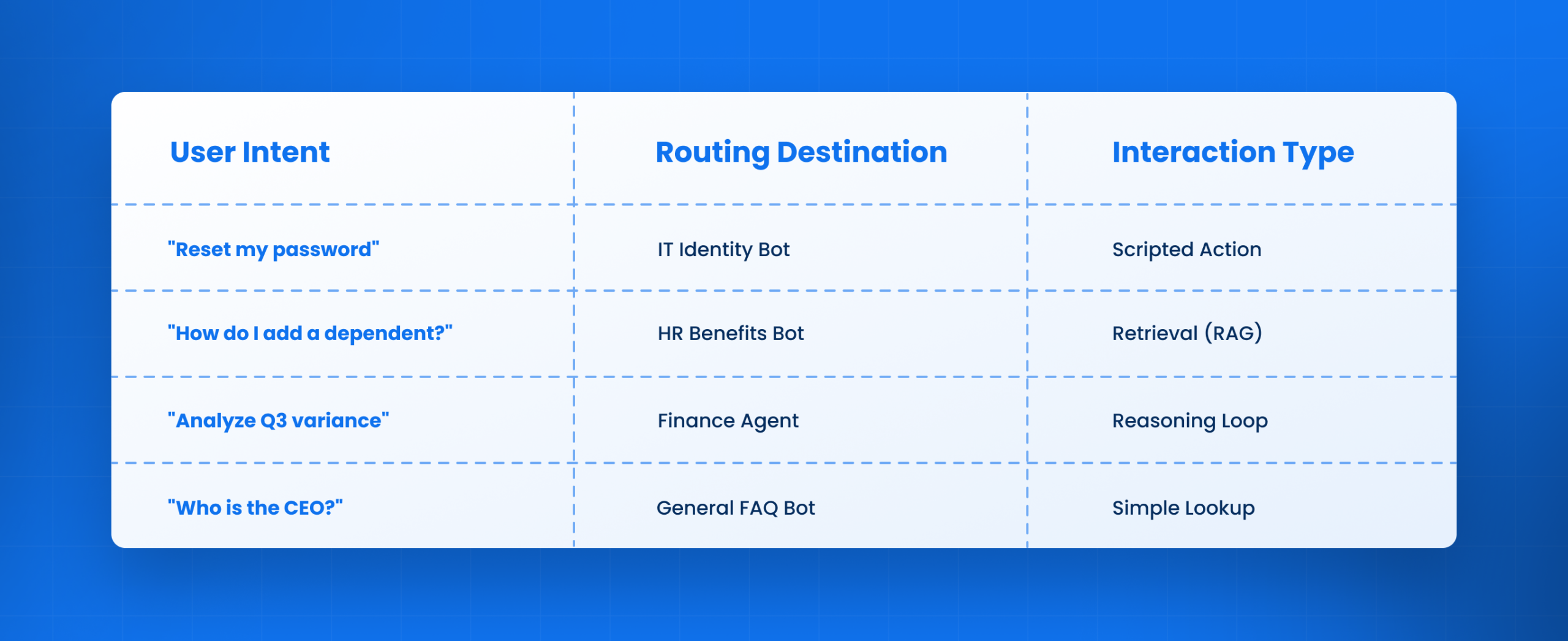
- If the user asks a FAQ, route to the Knowledge Base AI chatbot.
- If the user requests a complex workflow, route to the Transactional AI Agent.
Table: Routing Logic for Bots and AI
Managing the “Best AI Apps” Ecosystem
Your employees are already using the best AI apps in their personal lives. They expect the same fluidity at work. If your enterprise bots and AI strategy feels clunky, they will bypass it.
The “Shadow Bot” Risk:
If the official Orchestrator is too slow or limited, business units will sign up for their own best AI chatbot tools on credit cards. This creates “Shadow AI”—ungoverned data silos.
Operational Mitigation:
- Feedback Loop: Integrate a “Thumbs Down” button that alerts the IT team when a specific routing failed.
- Gap Analysis: Review the “Fallbacks” (where the bot said “I don’t know”) weekly to identify which vendor bot is missing critical knowledge.
Examples of AI Chatbots in the Enterprise Context:
- The “HR Concierge”: Wraps Workday and ServiceNow HRSD.
- The “IT Support Twin”: Wraps Jira, ServiceNow, and Azure AD.
- The “Sales Sidekick”: Wraps Salesforce, Gong, and Outreach.
Governance of the Unified Interface
When you unify bots and AI under one umbrella, you create a single point of failure and a single point of liability. Governance becomes the primary operational concern.
Governance Checklist:
- Tone Consistency: Ensure the Orchestrator rewrites the responses from different vendor bots so they sound like one cohesive voice.
- Privacy Filtering: The Orchestrator must redact PII (Personal Identifiable Information) before passing a query to a third-party vendor bot.
- Session Management: If a user logs out, the Orchestrator must ensure all downstream vendor bot sessions are also terminated.
Selecting an AI Chatbot Platform for Orchestration
When selecting the AI chatbot platform that will serve as the “Manager of Bots,” prioritize open integration over native features. You do not need the platform to have the best NLP; you need it to have the best API connectors. The value is in the routing, not the generation.
How Leena AI Operationalizes Integration
At Leena AI, we do not add to the noise; we solve the “Chatbot Sprawl.” We serve as the intelligent orchestration layer that sits above your fragmented vendor bots, providing a single pane of glass for the employee.
Our Operational Approach:
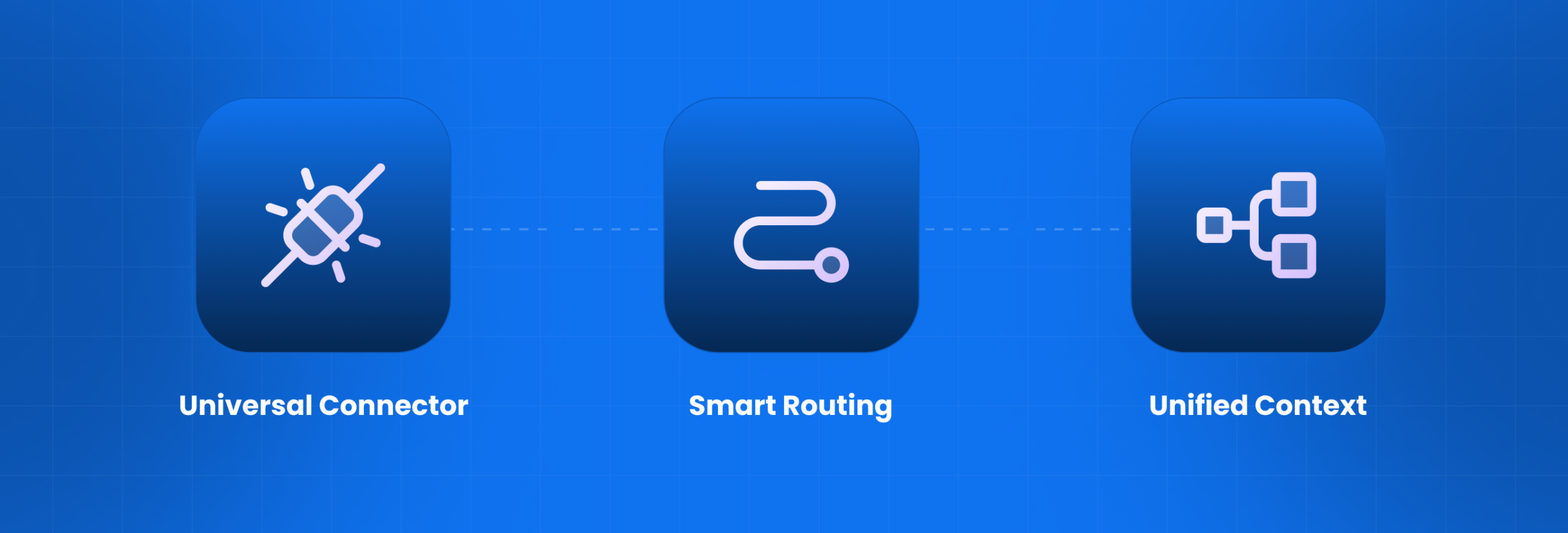
- Universal Connector: We integrate with your existing backend systems (Workday, ServiceNow, SAP) and their native bots, acting as the primary interface.
- Smart Routing: Our proprietary intent engine determines the correct system of record for every query, handling the hand-off invisibly.
- Unified Context: We maintain the user’s context (Role, Location, Department) across all interactions, so the user never has to repeat themselves.
Operational State Before vs. After Leena AI
Conclusion: Execution Outcomes
The era of “one bot per app” is ending. It is operationally unsustainable and creates a poor employee experience. By shifting your strategy to orchestration, you regain control over the bots and AI landscape.
Monday Morning Next Steps:
- Audit the Sprawl: List every active chat widget currently live on your intranet.
- Map the Intents: Identify the top 20 questions employees ask and pin them to a single system of record.
- Pilot the Router: Build a simple front-end that routes just two domains (e.g., IT and HR) to prove the value of a unified entry point.
Your employees do not care about your tech stack. They just want their problem solved. Give them one place to do it.
Frequently Asked Questions
What is the difference between standard automation and agentic bots and AI?
Standard automation follows a fixed script (If X, then Y), while bots and AI with agentic capabilities can reason, plan, and handle exceptions without pre-written scripts. This allows them to solve complex problems rather than just retrieving answers.
Why should we orchestrate instead of buying one super bot?
There is no single AI chatbot that does everything perfectly. Salesforce is best for CRM; ServiceNow is best for IT. Orchestration allows you to keep the “best of breed” engines while unifying the interface for the employee.
What are the best examples of AI chatbots for enterprise?
Effective examples include IT Service Desk bots that auto-resolve tickets, HR benefits bots that personalize enrollment, and Finance bots that automate expense auditing. These tools reduce human workload by handling high-volume, repetitive tasks.
Is it better to build or buy an AI chatbot platform?
For orchestration, buying is usually better. Building a custom router that maintains API connections to 50 SaaS tools is a massive maintenance burden. Buying a platform allows you to focus on strategy rather than integration maintenance.
How do we secure an AI chat bot orchestration layer?
Use strict OAuth 2.0 token exchange. The orchestrator should never store user credentials; it should pass the user’s authenticated token to the downstream system to ensure permissions are respected.
What is the biggest failure point in AI agent vs chatbot integration?
The biggest risk is a “False Positive” where the automation aggressively “fixes” a machine that wasn’t broken, potentially closing applications that the user was using intentionally.