
What is AI-Powered Service Management?
AI-Powered Service Management (AISM) is the application of artificial intelligence specifically machine learning, Natural Language Processing (NLP), and predictive analytics to the entire lifecycle of enterprise service delivery.
Unlike a standard [AI Service Desk] which focuses on fixing individual user problems, AISM optimizes the broader “Service Backbone.” It uses AI to assess the risk of software changes, predict hardware asset failures, and identify the “Root Cause” of recurring problems across IT, HR, and Facilities.
Simple Definition: Traditional Service Management is like fighting fires you run to wherever there is smoke.
AI-Powered Service Management is like fire prevention. It scans the building heat map, identifies faulty wiring before it sparks, and automatically schedules an electrician to fix it.
Key Features
To classify as true AISM, a platform must go beyond a simple chatbot and offer these five strategic capabilities:
- Predictive Problem Management: It identifies that 50 seemingly unrelated tickets (e.g., slow WiFi, printer offline) all stem from one failing switch, alerting engineers to the root cause.
- Intelligent Change Risk Assessment: Before IT deploys new code, the AI analyzes thousands of past deployments to predict the “Success Probability” and warns if the change is high-risk.
- Proactive Outage Prevention: It monitors service health scores and warns, “Email Service is degrading,” allowing IT to fix it before users even notice.
- Smart Asset Management: It predicts when employee laptops will need replacement based on performance degradation, ordering new devices automatically before the old ones crash.
- Sentiment-Based SLA: It prioritizes tickets not just by time (First-In-First-Out) but by user frustration levels detected in their language.
AISM vs. Traditional ITSM
The shift is defined by moving from SLA (Service Level Agreements) to XLA (Experience Level Agreements).
| Feature | Traditional ITSM | AI-Powered Service Management (AISM) |
| Philosophy | Reactive: Fix it when it breaks. | Proactive: Fix it before it impacts. |
| Change Management | Manual: Human CAB meetings approve changes. | Automated: AI approves low-risk changes instantly. |
| Metrics | Volume: How many tickets did we close? | Value: How much downtime did we prevent? |
| Scope | IT Department only. | Enterprise-wide (IT, HR, Legal, Finance). |
How It Works (The Value Chain)
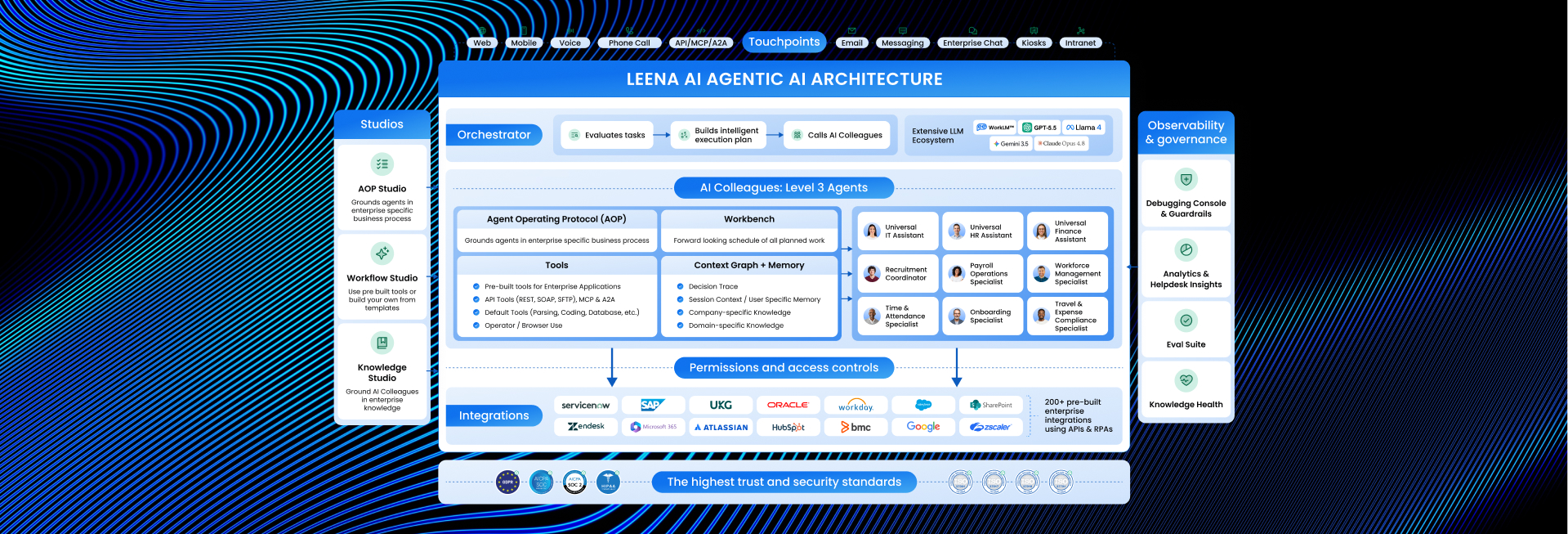
AISM operates as an intelligence layer across the entire service ecosystem:
- Ingest (Listen): The system collects data not just from tickets, but from [Observability Tools], change logs, and asset databases.
- Correlate (Think): It connects the dots. It sees that a “High CPU Alert” (Ops) matches a “Slow PC Ticket” (Service Desk) and links them to a recent “Software Update” (Change Mgmt).
- Optimize (Act):
- For Change: It auto-approves the rollback of the bad update.
- For Assets: It flags the affected devices for maintenance.
- Advise (Learn): It suggests a permanent policy change to prevent this specific conflict from happening again.
Benefits for Enterprise
Strategic analysis from Gartner and Forrester highlights three primary drivers for AISM adoption in 2026:
- Deflection of “Bad Work”: By identifying root causes, AISM eliminates the need to fix the same issue 1,000 times.
- Risk Reduction: AI-driven Change Management reduces failed software deployments by up to 45% by flagging risky code patterns humans miss.
- Unified Enterprise Service: It allows HR and Legal to use the same sophisticated service tools as IT, creating a single “Service Portal” for employees to request anything from a laptop to a contract review.
Frequently Asked Questions
Is AISM the same as AIOps?
No. [AIOps] focuses on the technical infrastructure (servers, logs, uptime). AISM focuses on the business process of delivering service (tickets, changes, approvals). They usually work together.
Does it replace the IT Change Advisory Board (CAB)?
It optimizes it. AISM auto-approves standard, low-risk changes (like a routine server patch), allowing the human CAB to focus their energy only on high-risk, complex changes.
Can it work with non-IT departments?
Yes. This is called Enterprise Service Management (ESM). AISM can predict HR bottlenecks (like a surge in payroll questions in January) and auto-scale support resources accordingly.
How much historical data do I need?
For “Predictive” features, you typically need 6–12 months of historical ticket and change data. However, many features (like sentiment analysis) work immediately upon deployment.
What is the impact on Service Desk Agents?
It elevates them. Instead of being “Ticket Takers,” they become “Service Architects” who manage the AI rules and focus on improving the overall employee experience.
Is it difficult to integrate with legacy tools?
Modern AISM platforms act as a “wrapper.” They can pull data from legacy mainframes or old on-premise ERPs to make predictions, without requiring you to migrate those old systems to the cloud immediately.
Want To Know More?
Book a Demo