
What is Cognitive Architecture?
Cognitive Architecture is a blueprint for designing intelligent systems that models the structures and processes of the human mind. It attempts to create a unified framework where an Artificial Intelligence can not just perform isolated tasks (like recognizing a cat), but actually “think” integrating perception, memory, learning, and decision-making into a cohesive whole.
Unlike standard deep learning models (which are often “black boxes” focused on pattern matching), Cognitive Architectures are structural systems designed to produce general intelligence. They define how the AI stores knowledge, how it retrieves memories, and how it plans actions to achieve goals.
Simple Definition:
- Standard AI Model: Like a Calculus Book. It is incredibly good at solving specific math problems, but it doesn’t know why it is solving them or what to do with the answer.
- Cognitive Architecture: Like a Mathematician. It has the book (skills), but also has memory (experience), eyes (perception), and goals (motivation) to use the math to solve real-world engineering problems.
2. Key Components
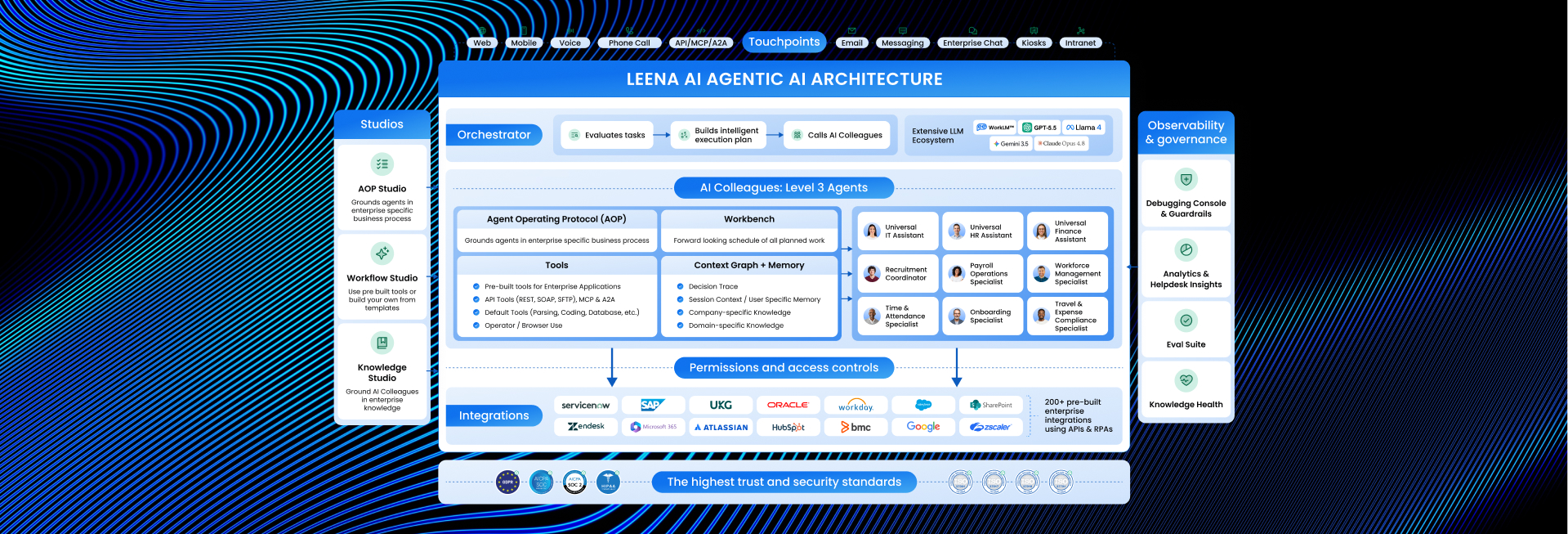
To emulate human cognition, the architecture must integrate these five distinct modules:
- Perception Module: The “Senses.” It takes raw input (pixels, audio) and converts it into symbolic representations (e.g., “I see a red light”).
- Working Memory: The “Short-term Brain.” It holds the current context (e.g., “I am currently driving”) and the active goals (e.g., “Stop at the light”).
- Long-Term Memory: The “Library.” It stores facts (Semantic Memory) and past experiences (Episodic Memory) that the system can recall to solve new problems.
- Procedural Memory: The “Skills.” It stores the “How-To” knowledge (e.g., rules for driving) that tells the system what actions are physically possible.
- Central Executive: The “Decision Maker.” It acts as the conductor, cycling through the memories to select the single best action to take right now.
3. Neural Net vs. Cognitive Architecture
This table compares how a standard Neural Network differs from a system built on Cognitive Architecture.
|
The Scenario |
Standard Neural Network (Specialized) |
Cognitive Architecture (Integrated) |
|
New, Unseen Problem |
Fails: If it hasn’t been trained on the specific data, it guesses randomly or errors out. |
Reasoning: It uses “analogy.” It pulls a similar past experience from memory and adapts the solution to the new problem. |
|
Multi-Step Planning |
Weak: Struggles to plan 10 steps ahead because it lacks a persistent state of “Goal.” |
Strong: Sets a high-level goal (“Cook Dinner”) and breaks it down into sub-goals (“Boil Water,” “Chop Veggies”). |
|
Explanation |
Opaque: Cannot explain why it classified an image a certain way. |
Transparent: Can trace the decision back through its memory retrieval process: “I chose X because rule Y applied.” |
|
Learning Speed |
Slow: Requires thousands of examples to learn a new concept. |
Fast: Can learn from a single instruction (“Don’t touch the stove”) by storing it immediately as a declarative rule. |
4. How It Works (The Cognitive Cycle)
Most architectures (like SOAR or ACT-R) follow a rapid “Recognize-Act” loop:
- Input: The system perceives the environment (e.g., “The user is asking for a refund”).
- Retrieval: It queries Long-Term Memory.
- Fact: “Refunds require a receipt.”
- Skill: “If no receipt, ask user to upload one.”
- Matching: The Central Executive matches the current state (“No receipt”) with the retrieved rule (“Ask for upload”).
- Selection: It selects the best rule to fire.
- Action: The system executes the action: “Please upload your receipt.”
- Learning: The result of this interaction is stored back into memory to reinforce the rule.
5. Benefits for Enterprise
While still advanced, Cognitive Architectures are the foundation for the next generation of Autonomous Agents arriving in 2026:
- Generalization: Systems can handle tasks they weren’t explicitly trained for by applying logic and rules, reducing the need for endless retraining.
- Human-Agent Teaming: Because the architecture mimics human thought, these agents are easier for humans to understand and collaborate with.
- Robustness: They are less brittle. If one data input is missing, the system can use logic to infer the missing piece rather than crashing.
Frequently Asked Questions
Is this the same as Generative AI (LLMs)?
No. LLMs (like GPT) are statistical predictors. Cognitive Architectures are logical structures. However, modern research is hybridizing them using LLMs as the “Memory” inside a Cognitive Architecture structure.
What are famous examples?
SOAR (State, Operator, And Result) and ACT-R (Adaptive Control of Thought-Rational) are the two most famous academic architectures used to study and build intelligent agents.
Is it used in business today?
It is emerging in complex robotics, defense simulations, and high-end autonomous customer service agents that need to follow strict regulatory procedures while acting naturally.
Can it learn on its own?
Yes. Through “Reinforcement Learning,” the architecture updates its Procedural Memory. If a rule works well, it gets stronger; if it fails, it gets weaker.
Why not just use Deep Learning?
Deep Learning is data-hungry and opaque. Cognitive Architecture is data-efficient and transparent. For regulated industries (Banking, Healthcare), transparency is critical.
Is this AGI (Artificial General Intelligence)?
It is the path to AGI. Cognitive Architecture is the leading theory on how we might eventually build machines that possess true, human-like general intelligence.
Want To Know More?
Book a Demo