
What is a Digital Employee?
A Digital Employee (sometimes called a Digital Worker) is a sophisticated software bot powered by Artificial Intelligence that is designed to perform a specific job function, much like a human employee. Unlike a simple script that just “moves data,” a Digital Employee has a persona, a role (e.g., “IT Service Desk Agent”), and a set of skills that allow it to converse, reason, and execute complex workflows.
They are typically given names (like “Amelia” or “Coleman”) and are treated as part of the workforce. They don’t just answer FAQs; they access systems, process transactions, and make decisions within their scope.
Simple Definition:
- Software Bot (RPA): Like a Power Tool. A human has to hold it and press the button for it to work. It does one repetitive thing very fast.
- Digital Employee: Like an Apprentice. You give them a job description (“Manage Invoices”), teach them the systems once, and they do the work independently, asking for help only when stuck.
Key Features
To classify as a “Digital Employee” rather than just a chatbot, the system must possess these five anthropomorphic capabilities:
- Persona & Identity: It has a name, a voice, and a consistent personality (e.g., “Professional,” “Friendly”) that represents the brand.
- Multi-Skill Architecture: It can switch between different tasks seamlessly (e.g., stopping a password reset to check a leave balance) just like a human multi-tasking.
- System Access: It has its own user credentials to log into the ERP, CRM, or HRIS systems to read and write data.
- Semantic Memory: It remembers facts about the company and the user, retaining context from previous days or weeks.
- Continuous Learning: It observes human colleagues. If it escalates a ticket and sees how the human fixed it, it learns to fix itself next time.
Human Workforce vs. Digital Workforce
This table compares the operational characteristics of biological employees versus digital ones.
| Characteristic | Human Employee (Creative Force) | Digital Employee (Scalable Force) |
| Availability | Limited: Works 8 hours/day. I need weekends, holidays, and sleep. | Continuous: Works 24/7/365. No breaks, no sleep, no sick days. |
| Scaling | Slow: Hiring and training a new team takes months. | Instant: You can “copy-paste” a digital employee to handle a 1000% spike in traffic instantly. |
| Error Rate | Variable: Prone to fatigue, distraction, and typo errors after long shifts. | Zero: Executes processes exactly as defined, with 100% consistency every time. |
| Best Use Case | Empathy & Strategy: Negotiation, complex problem solving, emotional support. | Volume & Repetition: Data entry, scheduling, status checks, compliance audits. |
| Cost Model | Fixed/Salary: High overhead (Benefits, Insurance, Office Space). | Consumption: Pay per transaction or per “agent” license. |
How It Works (The Anatomy)
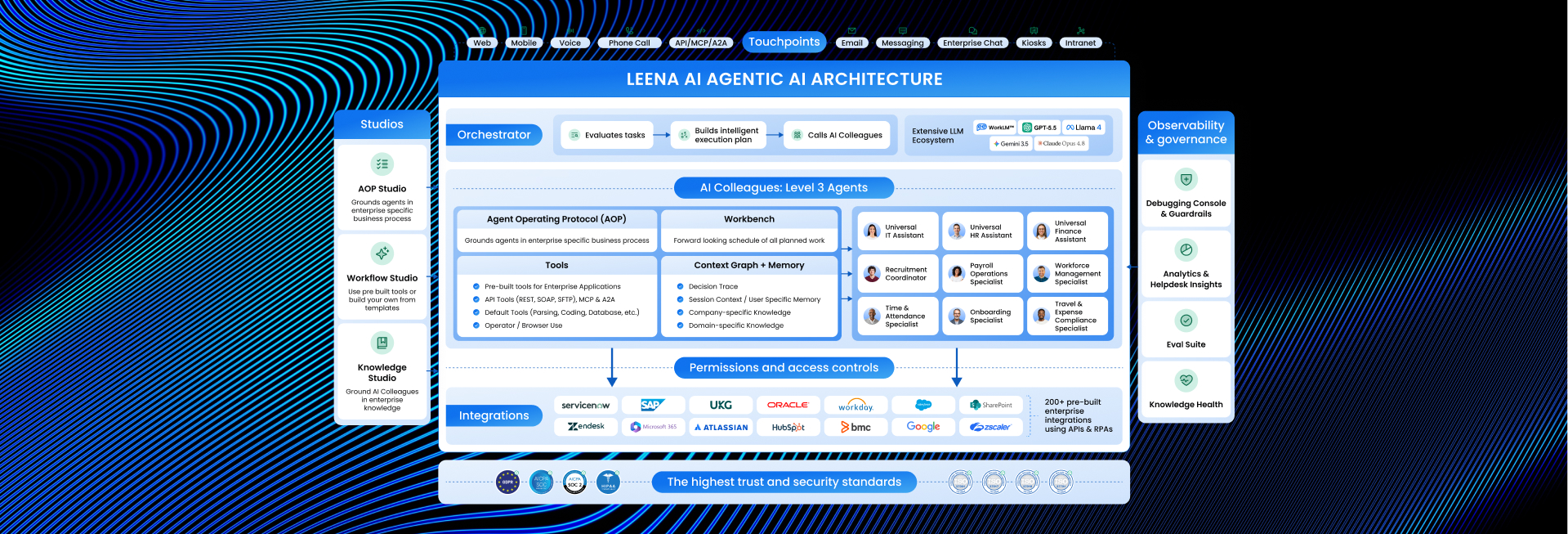
A Digital Employee is built on a layered architecture that mimics a human brain:
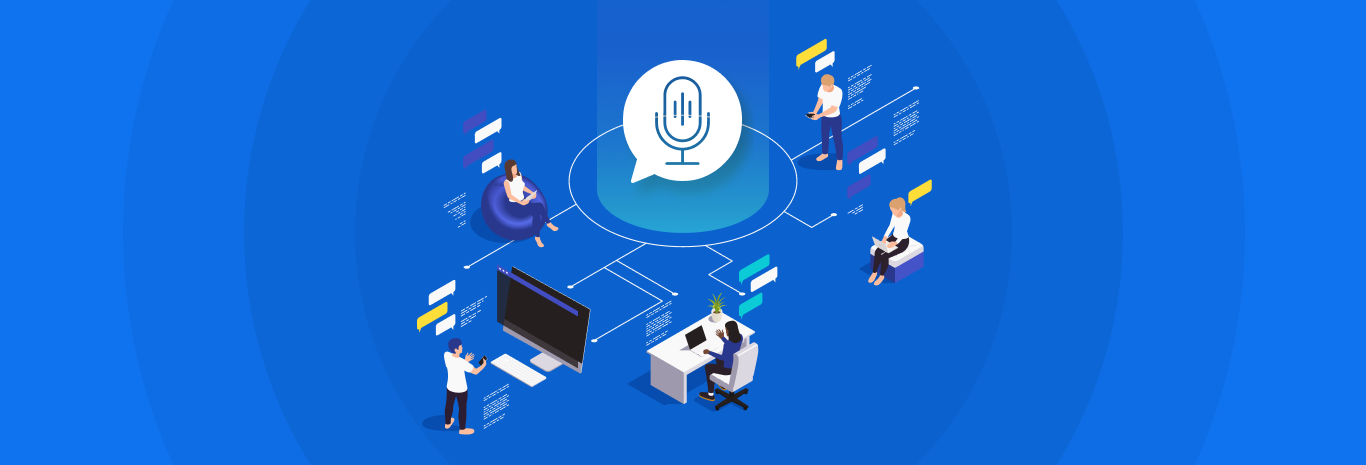
- The Interface (Ears/Mouth): Connects to chat apps, voice lines, or email to communicate with humans.
- The Brain (Cognitive Core): Uses NLU (Natural Language Understanding) to decipher intent and Sentiment Analysis to gauge emotion.
- The Memory (Context): Stores the history of the user and the company policies.
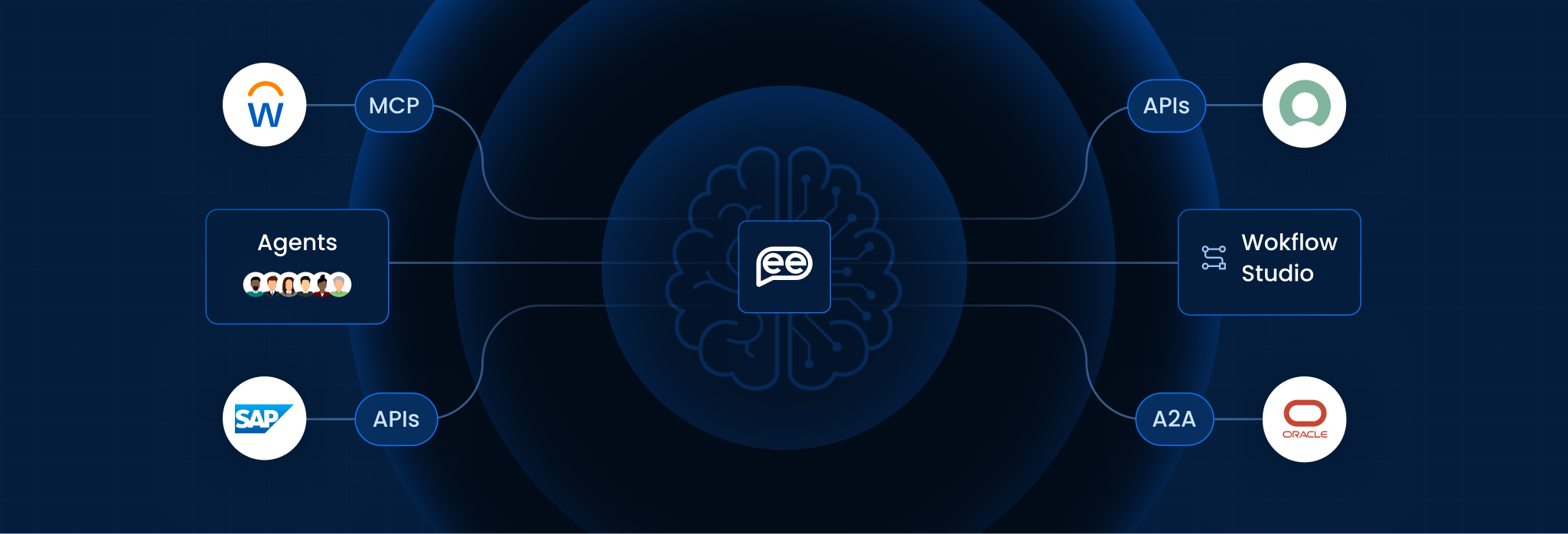
- The Hands (RPA/APIs): The “skills” layer. This is where it connects to Salesforce or SAP to actually click buttons and move data.
- The Supervisor (Analytics): A dashboard where human managers review the Digital Employee’s work and performance.
Benefits for Enterprise
Strategic analysis from Gartner and Forrester predicts that “Hybrid Workforces” (Humans + AI) will define the top performing companies in 2026:
- Augmentation, Not Replacement: By taking over the dull, repetitive 20% of the workload, Digital Employees free human staff to focus on high-value client relationships.
- Employee Satisfaction: Humans burnout on data entry. Removing “robotic work” from humans leads to higher retention rates for real staff.
- Consistency of Service: A Digital Employee never has a “bad day.” It treats the 1st customer and the 10,000th customer with the exact same level of politeness and accuracy.
Frequently Asked Questions
Do they take jobs?
They take tasks, not necessarily jobs. They typically automate the parts of the job humans hate (filling forms), allowing the human to become a “Process Architect” who manages the bots.
How long does it take to train one?
Basic roles (like an IT Helpdesk Agent) come pre-trained and can be live in weeks. Custom roles for specific company processes might take 2-3 months to refine.
Can they talk to each other?
Yes. A “Sales” Digital Employee can talk to a “Finance” Digital Employee to check credit limits without any human involvement.
Are they secure?
Yes. They have strict “Least Privilege” access. Unlike a human who might snoop, a Digital Employee acts strictly within its coded boundaries.
What happens if they get stuck?
They use “Human-in-the-Loop.” If a request is too weird or emotional, the Digital Employee seamlessly transfers the chat to a human, passing along all the context.
Do they need an ID?
In many enterprises, yes. Digital Employees are often given an Active Directory ID and an email address so they can be audited just like a person.
Want To Know More?
Book a Demo