
What is Enterprise AI?
Enterprise AI refers to the specialized application of artificial intelligence (including Machine Learning, NLP, and Computer Vision) to large-scale business operations. Unlike consumer-grade AI (like a free chat bot), Enterprise AI is built to meet strict corporate standards for data privacy, security, regulatory compliance, and high-volume performance.
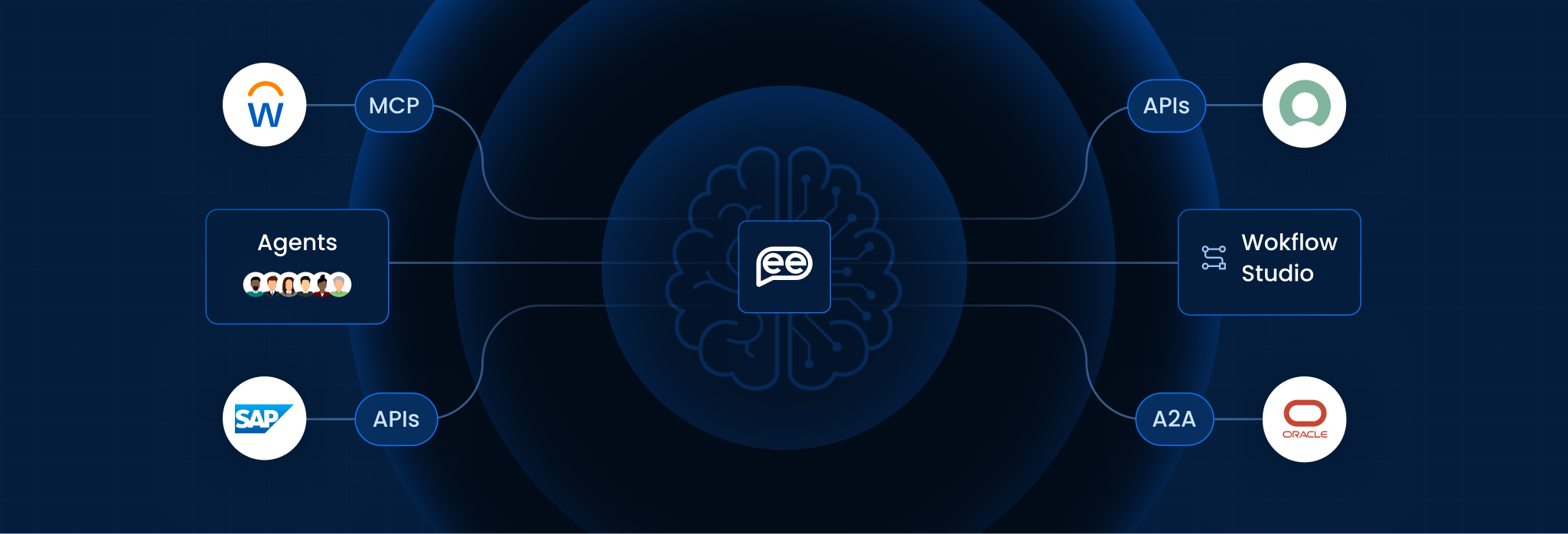
It is typically integrated directly into a company’s core infrastructure (ERP, CRM, and HRIS systems) to automate complex workflows, predict market trends, and enhance employee productivity. In an enterprise setting, the company usually “owns” the model and the data, ensuring their intellectual property never leaks into public training sets.
Simple Definition:
- Consumer AI: Like using a Public Library. It’s free and accessible to everyone, but you can’t store your private business secrets there, and you have no control over the books on the shelf.
- Enterprise AI: Like a Private Corporate Archive. It’s built just for your company, locked behind your security, and contains only the specific knowledge and tools your employees need to do their jobs.
Key Features
To be viable for a large corporation, the AI must possess these five architectural pillars:
- Data Sovereignty: Guarantees that the company’s data stays within its own cloud (or on-premise) and is never used to train the software provider’s public models.
- Role-Based Access Control (RBAC): The AI respects the company’s hierarchy; for example, a junior employee cannot ask the AI for the CEO’s salary or private financial reports.
- Explainability: Provides an audit trail. If the AI rejects a loan or flags a fraud case, it must be able to explain why to satisfy legal and regulatory requirements.
- Seamless Integration: It doesn’t live in a vacuum. It uses APIs to “talk” to existing tools like Salesforce, SAP, or Microsoft 365.
- Scalability: The system must be able to handle thousands of employees and millions of customer transactions simultaneously without crashing or slowing down.
Consumer AI vs. Enterprise AI
This table compares the flexible, open nature of consumer tools with the rigid, secure requirements of corporate systems.
|
Feature |
Consumer AI (e.g., Public ChatGPT) |
Enterprise AI (e.g., Azure AI / Custom) |
|
Data Privacy |
Shared: Your inputs may be used to train the next version of the model. |
Private: Your data is isolated and encrypted; it is never shared with others. |
|
Accuracy |
General: Can be creative but may “hallucinate” facts about your business. |
Grounded: Uses [Retrieval-Augmented Generation (RAG)] to answer based on your documents. |
|
Security |
Standard: Basic login and web encryption. |
Hardened: Includes [SSO], Data Loss Prevention (DLP), and [Deterministic Guardrails]. |
|
Liability |
None: Use at your own risk; no guarantees on uptime or correctness. |
SLA: Comes with Service Level Agreements (SLAs) and legal indemnification. |
|
Customization |
Low: You can prompt it, but you can’t change the “brain.” |
High: Can be [Fine-Tuned] on your proprietary industry data and internal jargon. |
How It Works (The Enterprise Stack)
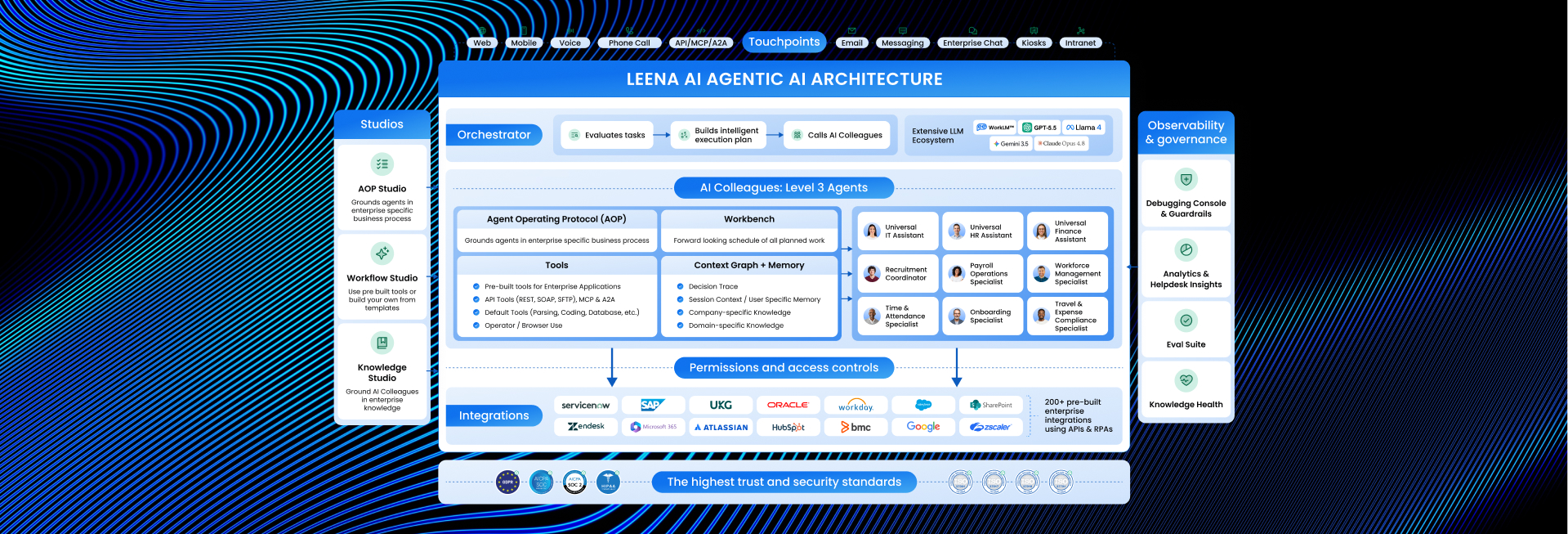
Enterprise AI functions as a layer between your messy data and your business outcomes:
- Data Layer: Connects to your “Truth” (PDFs, Databases, Emails).
- Orchestration Layer: Uses a “Brain” (LLM) to process the data but applies [Guardrails] to keep it safe.
- Application Layer: Where employees interact with it (a Slack bot, a Sidebar in Outlook, or an automated Finance dashboard).
- Monitoring Layer: Tracks every interaction for costs, accuracy, and compliance.
Benefits for Enterprise
Strategic analysis from Gartner and Forrester shows that Enterprise AI is no longer optional for maintaining a competitive edge:
- Operational Velocity: Automating “back-office” drudgery (like invoice matching or contract review) allows the company to move 5x-10x faster.
- Institutional Memory: It acts as a “Search Engine for the Brain.” A new employee can ask the AI, “How did we solve the server crash in 2022?” and get an instant answer.
- Cost Optimization: By predicting supply chain disruptions or equipment failures before they happen, companies save millions in emergency costs.
Frequently Asked Questions
Is Enterprise AI just a marketing term?
No. It refers to a specific technical architecture that includes “Enterprise-Grade” security, such as SOC2 compliance and end-to-end encryption, which consumer tools often lack.
Can small businesses use it?
Yes. While “Enterprise” implies large companies, many platforms now offer “Pro” versions that provide the same security and privacy for smaller teams.
Does it replace my current software?
Usually, no. It sits on top of it. It acts as the “Intelligence Layer” that makes your existing CRM or ERP much easier to use through natural language.
What is the biggest risk?
Shadow AI. This happens when employees use unapproved consumer AI tools for work, accidentally leaking company secrets into the public internet. Deploying official Enterprise AI prevents this.
How much does it cost?
Unlike free consumer tools, Enterprise AI is usually billed by “Tokens” (usage) or per “User/Month,” often with an initial setup fee for data integration.
What is Human-in-the-loop?
In Enterprise AI, humans are rarely removed entirely. The AI drafts the email or analyzes the risk, but a human employee provides the “Final Approval” before the action is taken.
Want To Know More?
Book a Demo