
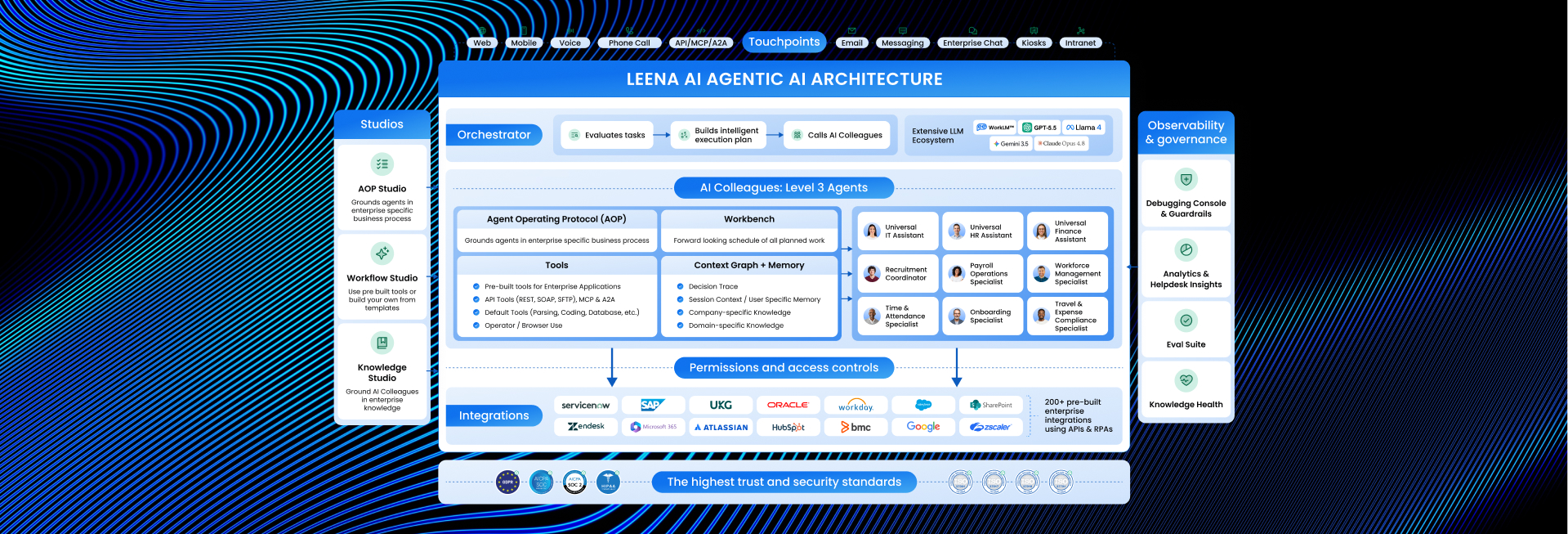
What is a Foundation Model?
A Foundation Model (FM) is a large-scale Artificial Intelligence model trained on a vast and diverse amount of data (usually through self-supervised learning) that can be adapted to a wide range of downstream tasks. Unlike traditional AI, which is built for a single purpose, a Foundation Model serves as a “base” or “starting point” for thousands of different applications.
The term was coined by the Stanford Institute for Human-Centered AI (HAI) to describe models that are “foundational” to the entire AI ecosystem. These models typically use Transformer architectures and possess emergent properties meaning they often develop skills (like coding or reasoning) that they weren’t explicitly programmed to do.
Simple Definition:
- Traditional AI: Like a Swiss Army Knife. It has specific tools for specific jobs (a saw, a blade, a corkscrew). If you need a hammer, you have to buy a different tool.
- Foundation Model: Like Play-Doh. It starts as a large, flexible mass of potential. You can shape it into a hammer, then squish it and shape it into a bowl, or even a statue. It is one “material” that can become almost anything.
Key Features
To act as the “base” for an enterprise, a Foundation Model relies on five defining characteristics:
- Massive Scale: Trained on trillions of tokens of data (text, images, sensor logs, etc.) and containing billions or trillions of parameters.
- Self-Supervised Learning: The model learns by finding patterns in unlabeled data (e.g., predicting the next word in a sentence) rather than requiring humans to manually label every data point.
- Multimodality: Modern foundation models (like GPT-4o or Gemini 1.5) can process and generate multiple types of data text, audio, image, and video simultaneously.
- Emergent Reasoning: The ability to solve complex, multi-step problems that the model was never specifically trained for, simply due to the sheer scale of its training.
- Transfer Learning: The capacity to take knowledge learned in one domain (e.g., Wikipedia) and apply it to a completely different domain (e.g., Writing Python code).
Traditional AI vs. Foundation Models
This table compares the “Narrow AI” era with the “Foundational AI” era.
|
Feature |
Traditional AI (Narrow) |
Foundation Models (General) |
|
Development |
From Scratch: You must build and train a new model for every single task. |
Adaptation: You start with a pre-trained model and simply “steer” it to your task. |
|
Data Requirement |
Labeled: Requires thousands of expensive, human-labeled examples. |
Unlabeled: Learns from raw, massive datasets without human labels. |
|
Versatility |
One-Trick Pony: A sentiment analysis model cannot summarize a document. |
Polymath: One model can summarize, translate, code, and chat. |
|
Training Time |
Months: Developing a custom model takes a long time and expert staff. |
Days/Hours: Deploying via API or [Fine-Tuning] is incredibly fast. |
|
Logic |
Pattern Matching: Excellent at specific classification. |
Reasoning: Capable of basic logic, planning, and multi-step deduction. |
How It Works (The Lifecycle)
Foundation models create a two-stage economy for AI:
- Upstream Pre-training: A major tech provider (OpenAI, Google, Meta) spends $100M+ to train a base model on a massive GPU cluster.
- The Base Model: The result is a “stateless” brain that understands language, logic, and patterns.
- Downstream Adaptation: An enterprise takes that brain and adapts it for a specific job via:
- Prompting: Giving it instructions in plain English.
- [Few-Shot Learning]: Giving it 3-5 examples of the job.
- [Fine-Tuning]: Slightly adjusting its internal weights with company data.
- Application: The model is deployed as a “Digital Employee,” a “Coding Assistant,” or a “Support Bot.”
Benefits for Enterprise
Strategic analysis for 2026 confirms that Foundation Models have lowered the “Barrier to Entry” for AI:
- Cost Efficiency: Instead of hiring 10 data scientists to build 10 different models, a company can use one Foundation Model to power 10 different departments.
- Rapid Prototyping: Businesses can build a “Proof of Concept” in an afternoon using a Foundation Model API, whereas traditional AI would take months.
- Future-Proofing: As the base model (e.g., Gemini or GPT) is updated by the provider, the enterprise’s applications automatically get smarter without any additional engineering.
Frequently Asked Questions
Is an LLM the same as a Foundation Model?
An LLM (Large Language Model) is the most common type of foundation model. However, there are also “Vision Foundation Models” (for images) and “Time-Series Foundation Models” (for financial forecasting)
Who owns the model?
If you use a “Closed” model (like OpenAI), you don’t own the brain, just the access. If you use an “Open” model (like Meta’s Llama), you can download the weights and own your specific instance of the brain.
Do I need to train my own Foundation Model?
Almost certainly no. It is too expensive. 99% of businesses will be “Model Consumers” or “Fine-Tuners,” not “Model Builders.”
What is Emergence?
It is when a model suddenly gains a skill it wasn’t taught. For example, some models learned to translate between two languages they were never specifically paired for, just by understanding the logic of language.
Are Foundation Models dangerous?
Because they are so powerful, they can be used to generate misinformation or malware. This is why enterprises use Deterministic Guardrails to control their outputs.
What are some examples in 2026?
- Text/General: GPT-5.2, Gemini 3 Flash, Llama 4.
- Time-Series/Forecasting: Amazon Chronos-2, Google TimesFM.
- Scientific: NASA Prithvi (for Geospatial data).
Want To Know More?
Book a Demo