

The “Green Dashboard” Paradox
It is a scenario every modern technology leader knows too well. You walk into a quarterly review, and the metrics on the screen are all green. Your new IT service management tool reports 99% uptime. Your HR portal shows a 90% ticket closure rate. Your finance automation bot is successfully processing thousands of invoices a week.
Yet, when you walk out of that meeting and talk to your actual workforce, the story is different.
Your engineers are still spending ten hours a week chasing approval emails. Your sales directors are manually cross-referencing data between the “automated” CRM and the “automated” contract system. The individual tools are working perfectly, but the work isn’t getting done any faster.
This is the “Green Dashboard Paradox.” You have successfully deployed ai and automation in silos, but you haven’t solved the operational friction. The problem isn’t a lack of tools; it is that your people are still acting as the “human glue” connecting them.
In the current enterprise landscape, the goal is no longer just to buy automation software. It is to distinguish between tools that merely manage tasks and intelligent systems that actually finish them.
The Reality of AI and Automation in the Enterprise
To understand why this paradox exists, we have to look at how artificial intelligence and automation have historically been sold to the enterprise.
For the last decade, automation was synonymous with “scripts.” You bought a Robotic Process Automation (RPA) bot, taught it to click a specific button when a specific form arrived, and called it a win. This is “Task Automation.” It is rigid, fragile, and requires constant maintenance. If a field name changes in your ERP, the bot breaks, and a human has to step in.
Today, ai and automation has evolved into something fundamentally different. We are moving from “Task Automation” to “Outcome Automation.”
Why Traditional Artificial Intelligence Automation Hits a Ceiling
The limitation of traditional automation is that it has no context. It doesn’t know why it is processing an invoice; it only knows how to process it.
Real operational efficiency requires artificial intelligence automation that understands intent. It needs to know that an “urgent” request from the CFO requires a different workflow than a standard request from a manager. It needs to know that if the API is down, it shouldn’t just crash it should retry or find an alternative route.
When technology leaders evaluate their current stack, they often find that 80% of their “automation” is actually just digitized bureaucracy. It moves the ticket from person A to person B faster, but it doesn’t actually resolve the issue.
The “Outcome” Litmus Test: Evaluating Your Stack
How do you tell the difference between a legacy script and a modern ai automation platform? You don’t need to look at the code. You just need to look at the result.
True artificial intelligence and automation solutions should be evaluated on their ability to handle “The Last Mile” of a process. This is the messy, complex part of a workflow where simple rules usually fail.
Moving Beyond Scripts with Artificial Intelligence and Automation
The shift here is subtle but critical. A script asks a human for help the moment it encounters a variable it doesn’t recognize. An ai and automation system uses reasoning to propose a solution.
For a CIO, this distinction is the difference between an IT helpdesk that is overwhelmed by “easy” tickets and one that is focused on strategic infrastructure. If your ai automation tool is still forcing your best engineers to intervene on routine password resets because of a “system error,” it is not true automation. It is just a very expensive form;
How AI Automation actually Creates Outcomes
When artificial intelligence and automation are correctly deployed, they don’t just speed up bad processes they eliminate the need for the process to exist in its current form.
Consider the “swivel chair” problem in HR. When an employee moves to a new city, they often have to update their address in the payroll system, then the benefits portal, then the tax compliance tool. In a traditional setup, the employee enters data once, and a backend team (or a fragile script) updates the other two.
With a modern ai and automation layer, the system acts as a unified agent. The employee tells the “AI Colleague” they have moved. The AI:
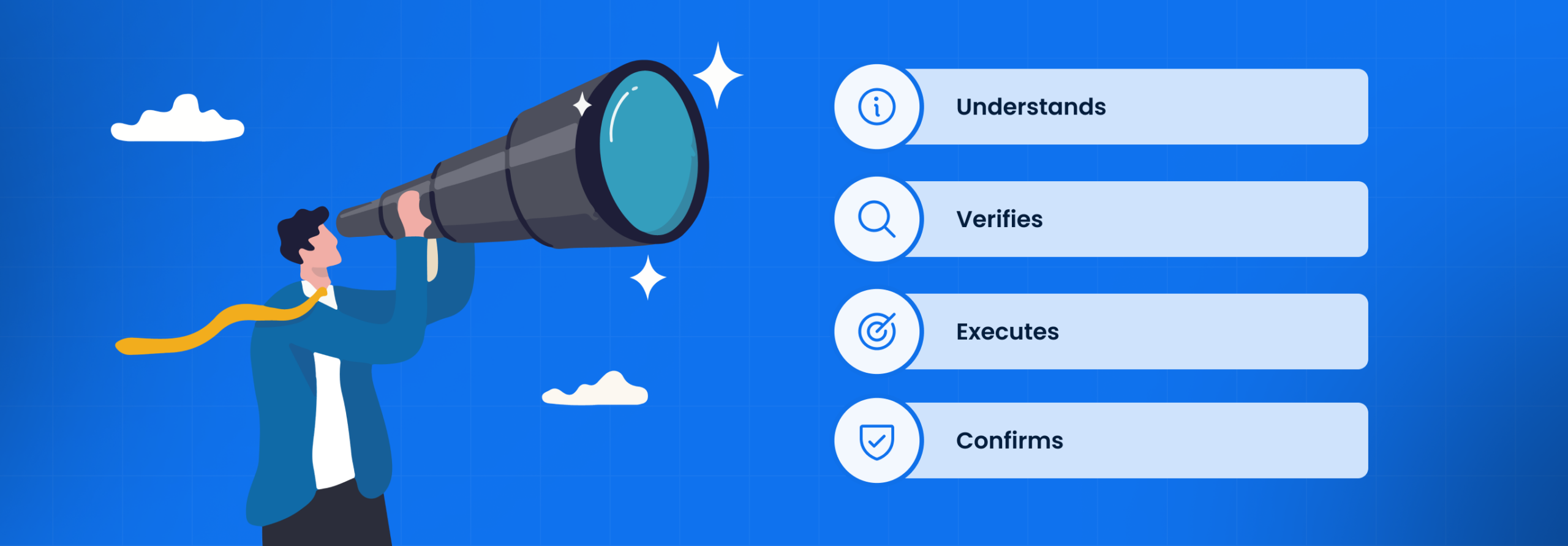
- Understands the intent (address change).
- Verifies the new address against policy (using artificial intelligence automation logic).
- Executes the update across Workday, ADP, and the internal directory simultaneously.
- Confirms the outcome to the employee.
There is no ticket created for a human to review. The outcome is immediate. This is the operational standard for 2026.
Leena AI: The “AI Colleague” Approach
At Leena AI, we believe that the term “automation” is often too passive. We don’t just build tools that wait for input; we build AI Colleagues that actively resolve work.
Our approach to ai and automation is designed to solve the “Last Mile” problem for large enterprises. We don’t want your employees to feel like they are submitting a ticket to a black box. We want them to feel like they are asking a knowledgeable coworker for help.
Integrating Intelligence, Not Just Interfaces
Leena AI’s platform distinguishes itself by focusing on resolution, not just routing.
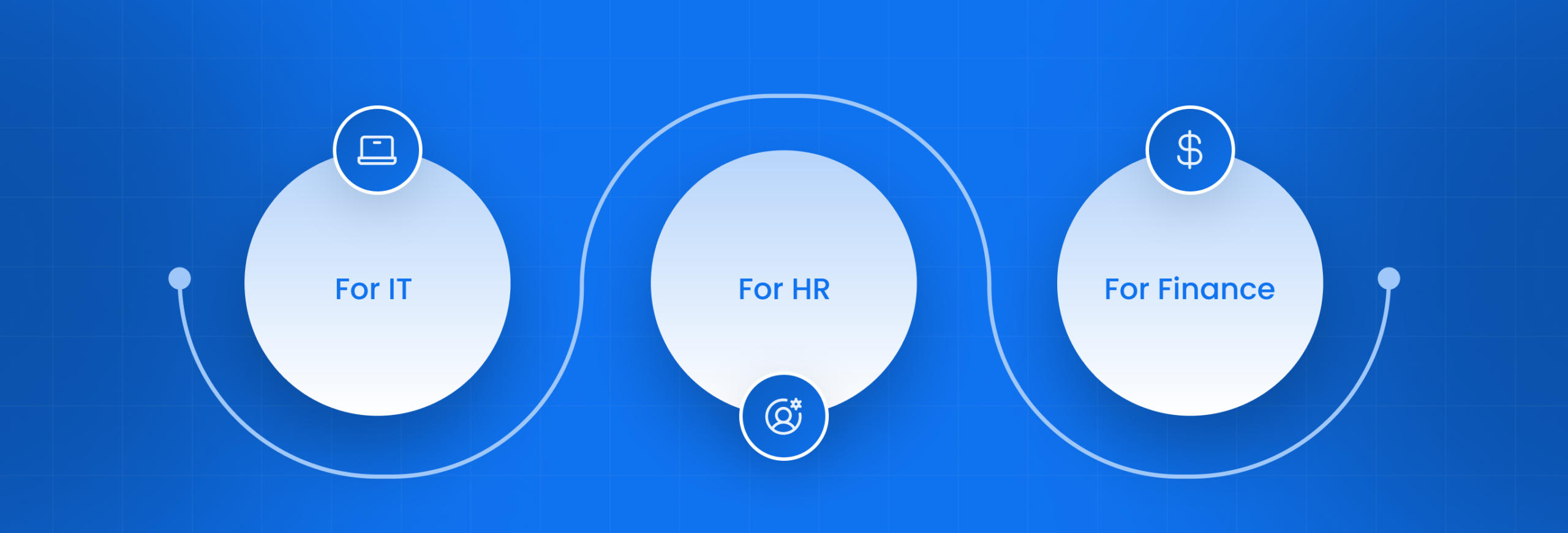
- For IT: Our AI Colleague doesn’t just log a ticket for a software crash; it connects to the endpoint, runs a diagnostic, and clears the cache often fixing the issue before a human agent even opens the dashboard.
- For HR: We automate the complex, multi-step journeys like maternity leave requests or benefits enrollment that typically drown HR BPs in paperwork.
- For Finance: We handle the “noisy” work of vendor onboarding and invoice status checks, allowing your finance team to focus on cash flow strategy rather than email management.
By embedding deep artificial intelligence automation into the core of these functions, Leena AI helps you remove the “human glue” from your back office. We ensure your systems talk to each other so your people don’t have to.
Conclusion: Making the Hard Decisions
As a technology leader, your inbox is likely full of vendors promising the moon with ai and automation. The key to cutting through the noise is to stop looking at the features and start looking at the friction.
Does this tool require more management from your team, or less? Does it solve the problem end-to-end, or does it just hand it off to a human halfway through?
The enterprises that win in the next operational cycle won’t be the ones with the most AI tools. They will be the ones that have used artificial intelligence and automation to build a silent, seamless operational layer one where the “green dashboard” actually matches the reality of the employee experience.
Frequently Asked Questions
What is the difference between RPA and ai and automation?
RPA (Robotic Process Automation) is a software robot that mimics human clicks and keystrokes. It is excellent for rigid, repetitive tasks but fails if the process changes. Ai and automation combines this execution capability with intelligence, allowing the system to understand context, handle exceptions, and adapt to changes without crashing.
How do I know if my organization is ready for advanced ai automation?
You don’t need perfect data to start. The best approach is to identify a high-friction “vertical” pain point like IT password resets or employee onboarding and deploy artificial intelligence automation there first. If the solution can resolve 60%+ of requests without human intervention, you are ready to scale.
Will artificial intelligence and automation replace my current IT service desk?
No, it will liberate them. Ai automation handles the Tier 0 and Tier 1 requests (the “I forgot my login” tasks) that currently consume 40-50% of your service desk’s time. This frees your human agents to focus on complex Tier 2 and Tier 3 issues that actually require empathy and technical expertise.
Is artificial intelligence automation secure for finance and legal data?
Yes, provided you choose the right partner. Enterprise-grade ai and automation platforms are built with “Privacy by Design.” They use role-based access control (RBAC) and do not train their public models on your private proprietary data, ensuring your sensitive financial information remains isolated and secure.
Why do so many artificial intelligence and automation projects fail?
They fail because they focus on “output” (sending emails, logging tickets) rather than “outcome” (fixing the problem). They also often fail due to a lack of integration. If your ai automation tool can’t talk to your legacy ERP, it creates more work for your team, not less.
How quickly can we see value from an ai and automation deployment?
Unlike massive ERP overhauls that take years, a targeted ai and automation solution like an AI Colleague can typically go live in weeks. You should expect to see a reduction in ticket volume and an improvement in “Time to Resolution” within the first quarter of deployment.
Can ai automation work with our custom legacy applications?
Modern artificial intelligence automation platforms use a mix of API connectors and advanced UI interaction methods. This allows them to “read” and interact with legacy screens just like a human user would, bridging the gap between your modern cloud apps and your older, on-premise systems