

Automation and AI: Measuring the Correction Cost of Errors
It is a standard Monday in the enterprise. Your new autonomous agent processes a transfer request for a Senior Director moving from the London office to the New York headquarters. The agent successfully updates the Human Resources Information System, provisions a US laptop, and changes the tax domicile.
Three days later, the payroll run fails for the entire New York executive team.
The root cause? The agent correctly updated the tax code but failed to switch the currency field in the secondary compensation table, causing a data type mismatch that crashed the batch process.
Now, your Tier 3 engineers are pulling an all-nighter to rebuild the payroll file manually. The cost of this transaction was not the $0.50 of compute time you budgeted. It was thousands of dollars in engineering overtime, potential regulatory fines for late payroll, and a massive hit to trust.
This is the “Correction Cost.”
As we race to deploy automation and ai at scale, we often fixate on the “Deflection Rate” , the percentage of tickets the machine handles. But in 2026, deflection is a vanity metric. The metric that determines the true solvency of your strategy is the cost of cleaning up the mess when the machine gets it wrong.
If you are a technology leader responsible for the backbone of a large US enterprise, here is how you need to rethink the economics of ai Automation Assistant to account for the risk of autonomy.
The Hidden Economics of Automation and AI
For the last decade, the business case for technology investment was simple. If a human takes 15 minutes to reset a password, and a script takes 5 seconds, the ROI is obvious. This is the classic definition of automation meaning in the IT stack: replacing manual labor with static scripts.
However, the introduction of automation and ai changes the equation because it introduces judgment. Unlike a static script that breaks if the input is wrong, an AI agent attempts to “figure it out.” Sometimes, it figures it wrong.
When AI automation works, it is magical. When it fails, it does not just fail to do the work; it often creates negative work.
Beyond Simple Automation: The Risk of Autonomy
To understand Correction Cost, we must distinguish between standard automation and automated intelligence. The risk profiles are fundamentally different.
Table 1: Traditional Automation vs. AI Automation
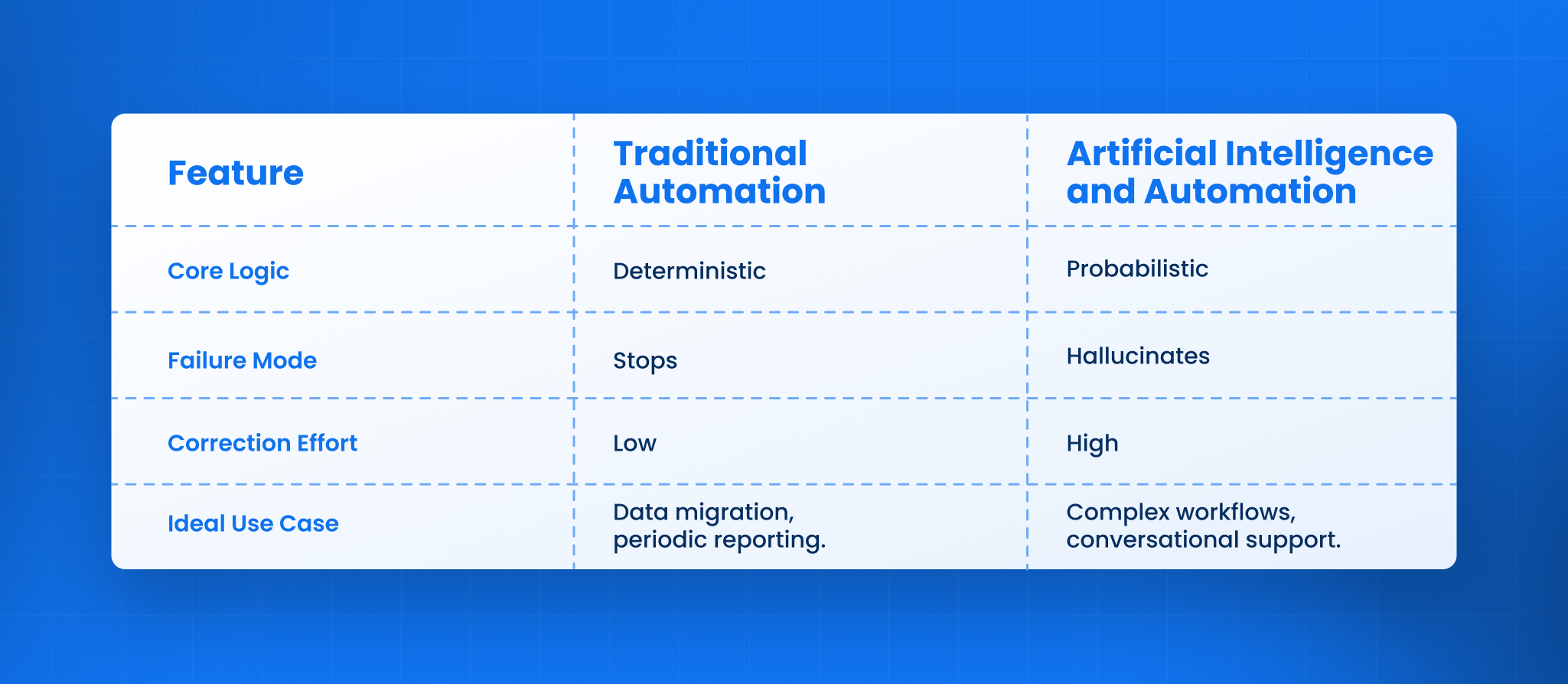
The risk profile of automation and AI is symmetric. A successful resolution saves you $25 in service desk labor. A “hallucinated” resolution like an agent casually promising a severance package that violates company policy can cost legal fees, settlements, and hours of leadership time.
We need to stop treating AI and automation as a pure efficiency play and start treating it as a risk management discipline.
Calculating the Correction Cost of AI Automated Errors
How do you quantify this metric? It is not enough to look at “reopened tickets.” You need a formula that captures the full operational drag of an automated error.
The formula for Correction Cost is:
CorrectionCost=(Td×Rh)+(Tr×Re)+Oc
- Td (Time to Detect): How long did the bad data exist before a human noticed?
- Rh (Rate of Human Reviewer): The hourly cost of the analyst investigating the anomaly.
- Tr (Time to Reverse): The time spent undoing the AI’s action (e.g., restoring a database backup, revoking access).
- Re (Rate of Engineer): The cost of the senior engineer required to fix complex system states.
- Oc (Opportunity/Brand Cost): The intangible cost of employee frustration or business downtime.
When you apply this formula, you realize that for complex workflows involving artificial intelligence and automation, a 90% success rate might actually have a negative ROI if the 10% failure rate requires expensive Tier 3 intervention.
The Role of an AI Workflow in Mitigation
To lower the Correction Cost, you must design your ai workflow with “reversibility” in mind. Effective automation tools in the AI era must have “transactional memory.” They must log the state of the system before the action and the state after the action.
Key Components of a Reversible AI Workflow:
- Snapshotting: Creating a backup of the user profile or database row before the agent touches it.
- Audit Logging: Recording the specific “Chain of Thought” the artificial intelligence copilot used to justify the change.
- One-Click Rollback: Enabling a human admin to revert the entire transaction sequence instantly via the admin dashboard.
Without these safeguards, your ai for automation strategy is effectively playing Russian Roulette with your infrastructure.
Governance Strategies for Automation and AI
If the cost of correction is high, the goal of governance is to prevent the error from executing in the first place. This requires a shift in how we select and configure automation and ai platforms.
Selecting the Right AI Automation Tools
Not all ai automation tools are created equal. When evaluating vendors, look for “Confidence Thresholds.” You should be able to configure specific risk profiles for different workflows.
Table 2: The Enterprise AI Governance Matrix
If the system lacks this granularity, it is not ready for artificial intelligence and automation at scale.
What is AI Automation Governance?
You might see threads on ai reddit or industry forums where engineers complain about “over-governed” bots that refuse to do anything. This is a misunderstanding of what is AI automation governance.
Good governance does not stop the AI; it “steers” the AI. It involves implementing a “Human-in-the-Loop” operational pattern for high-stakes decisions.
- If the automation and ai system calculates a Correction Cost potential above $1,000 (e.g., a bulk change to payroll), it should automatically pause.
- The ai workflow routes the proposed action to a human approver.
- The AI prepares the work, but the human pulls the trigger.
This captures the efficiency of automation while mitigating the risk of automated intelligence.
The Cultural Impact of Correction Cost
Finally, we must address the human element. When an ai automated process fails and creates a mess, it damages the reputation of the IT organization.
Employees remember the one time the bot deleted their files; they forget the 100 times it successfully scheduled their meetings. High Correction Costs lead to “Shadow IT,” where business units bypass your sanctioned automation and ai tools in favor of manual workarounds because they “don’t trust the bot.”
Minimizing Correction Cost is, therefore, an adoption strategy. By proving that your artificial intelligence copilot is safe, that it fails gracefully and rarely breaks things you earn the trust required to expand automation and AI into more complex, high-value domains.
Leena AI: Engineered for Low Correction Cost
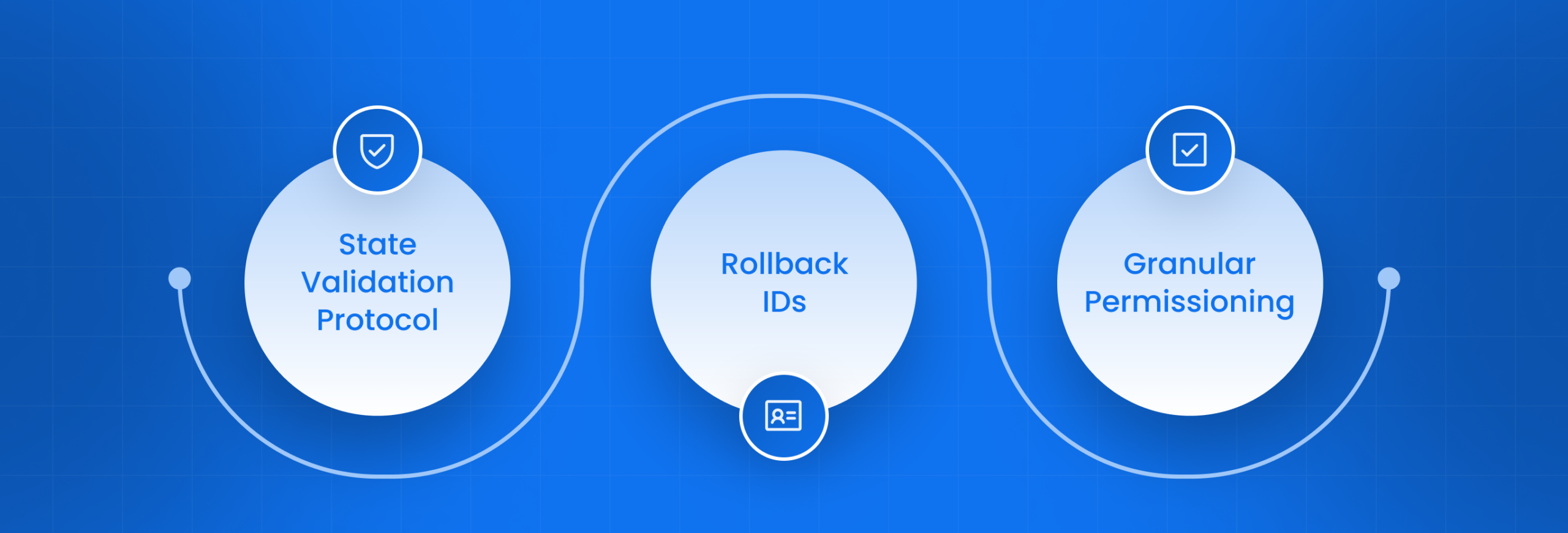
At Leena AI, we understand that for a CIO, reliability is the ultimate feature. We designed our automation and ai platform to minimize Correction Cost through a “Verify, Then Act” architecture.
Unlike generic models that rush to execute, Leena AI’s autonomous agents utilize a proprietary approach to safety:
- State Validation Protocol: Before committing a change to your backend systems whether it’s Workday, ServiceNow, or SAP the agent simulates the outcome. If the simulation detects a conflict or a high-risk anomaly (like a salary change exceeding 20%), it halts and escalates to a human expert.
- Rollback IDs: Every action taken by a Leena AI agent is logged with a unique transaction ID. This allows your support team to reverse complex, multi-step workflows instantly, reducing the “Time to Reverse” from hours to seconds.
- Granular Permissioning: We allow you to set strict boundaries on ai for automation, ensuring agents only have “write” access to the specific fields they need, enforcing the Principle of Least Privilege.
We enable you to reap the benefits of artificial intelligence automation without betting your operational stability on a black box.
Frequently Asked Questions
What is the difference between automation and ai in this context?
Automation typically refers to following pre-defined rules (if X, then Y) with zero deviation. AI involves probabilistic reasoning (inferring X based on context). Automation and ai combined means systems that can reason about a task and then execute it autonomously.
What is automation meaning for the future workforce?
For your staff, automation meaning shifts from “machines taking jobs” to “machines removing drudgery.” When you lower the Correction Cost, your staff spends less time fixing bot errors and more time on strategic initiatives.
Should we avoid ai for automation in high-risk workflows?
Not necessarily. You should use ai for automation in high-risk areas (like offboarding) but wrapped in a “Human-in-the-Loop” workflow. The AI does the heavy lifting (form filling, revocation prep), and the human does the final review.
Where can I find real-world examples of automation failures?
Communities like ai reddit (specifically subreddits devoted to sysadmins or DevOps) are often excellent, unfiltered sources of information on how automation automation goes wrong in production environments.
What is ai automation’s biggest hidden cost?
Beyond the Correction Cost discussed here, the biggest hidden cost is often data sanitization cleaning up your legacy data so the artificial intelligence copilot doesn’t learn from bad historical examples.
Can ai automation tools fix their own errors?
We are seeing the emergence of “Self-Healing” ai automation tools. However, in 2026, these are mostly effective for technical glitches (like retrying a failed API call). They are not yet reliable for correcting logic errors (like undoing a mistaken policy application)
How does artificial intelligence and automation impact insurance?
Enterprise liability insurance providers are beginning to ask about artificial intelligence and automation governance. Being able to demonstrate a low Correction Cost and robust audit logs can help in negotiating premiums for cyber and E&O policies.