


The “Chat” Trap: A 2026 Strategic Inflection Point
We have reached a critical maturity threshold. Three years ago, the enterprise obsession was “fluency” could the bot sound human? Today, the metric that keeps CIOs awake isn’t fluency; it’s friction. We spent millions deploying Conversational AI Chatbots that can hold a conversation, but we are finding that employees don’t actually want to converse. They want to be done.
The strategic dilemma for technology leaders in 2026 is simple: Are we optimizing for engagement, or are we optimizing for execution? The former creates noise; the latter creates value. The most sophisticated Conversational AI Chatbots today are paradoxically the ones that say the least. They have moved from being talkative assistants to silent executors, handling back-office tickets in Finance and HR without forcing the user into a five-turn dialogue loop.
This shift requires a fundamental rethinking of the interface. We must stop treating the “chat box” as the destination and start viewing it merely as a command line for a broader agentic architecture.
The Efficiency Paradox of Modern Conversational AI Chatbots
When we analyze the performance of standard Conversational AI Chatbots, we often see high engagement metrics masking low productivity. An employee spending ten minutes “chatting” with a bot to reset a password or query a policy is not a success story; it is a failure of automation.
The 2026 enterprise architecture demands that Conversational AI Chatbots function as routing layers, not just conversation partners. If a user says, “I need to approve the Q3 vendor invoices,” the system should not ask, “Which invoices would you like to see?” It should present the pending list with an “Approve All” button.
Key Shifts in Bot Utility (2024 vs. 2026)
If your Conversational AI Chatbots are still asking clarifying questions for routine tasks, they are adding cognitive load rather than removing it.
Designing a High-Velocity Conversational AI Service
Moving toward silent execution requires treating your Conversational AI service as an integration hub rather than a text generator. The goal is “Zero-UI” where the AI anticipates the need or solves it with minimal user input.
This transition relies heavily on context awareness. A robust Conversational AI service in 2026 doesn’t need to ask who the user is, what department they are in, or what software license they likely need. It pulls this from the identity graph.
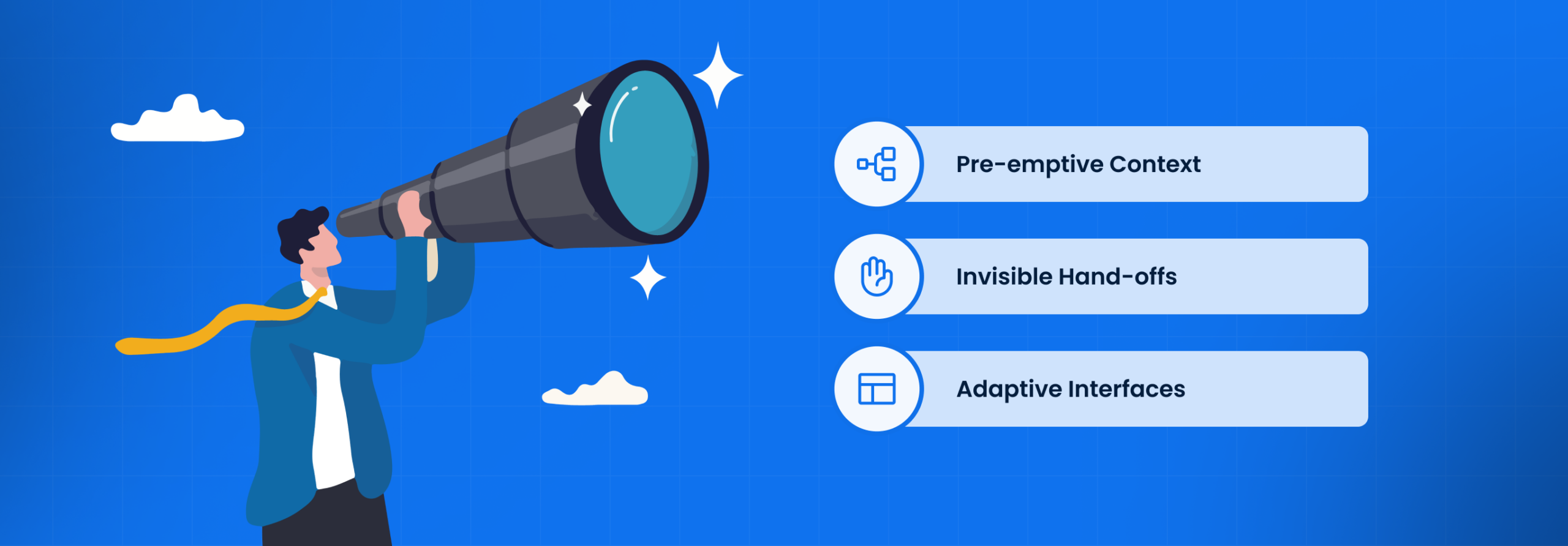
- Pre-emptive Context: The system knows the user is a traveling salesperson and automatically prioritizes expense reporting workflows.
- Invisible Hand-offs: If the AI cannot solve the issue, it routes the ticket silently to a human queue without the user needing to restate the problem.
Adaptive Interfaces: The service generates dynamic UI elements (buttons, forms) rather than forcing text input.
Governance and Risk in Autonomous Conversational AI Chatbots
As Conversational AI Chatbots move from informational to transactional, the risk profile changes. A bot that hallucinates a policy answer is annoying; a bot that hallucinates a wire transfer is catastrophic.
Governance in 2026 is about bounding the autonomy of Conversational AI Chatbots. We need “guardrails of action” rather than just content filters. If a bot is empowered to execute workflows, it must have strict permissioning layers that mirror the organization’s approval matrix.
The “Human-in-the-Loop” for Transactions
- Threshold-Based Autonomy: Conversational AI Chatbots can auto-approve software requests under $50 but require manager approval for anything higher.
- Audit Trails: Every silent execution must generate a log identical to a human action, ensuring compliance with SOX and GDPR.
- Reversibility: System architects must build “undo” buttons for AI actions, a feature often overlooked in standard deployments.
A Real-World Conversational AI Example: The “Silent” HR Request
Consider the difference between a legacy interaction and a modern Conversational AI example regarding PTO (Paid Time Off).
The Old Way (Conversational Fatigue):
User: “I want to take leave.”
Bot: “Sure, for what dates?”
User: “Next Friday.”
Bot: “Is that for a full day or half day?”
User: “Full.”
Bot: “Checking balance… You have 10 days. Confirm?”
The 2026 Way (Silent Execution):
User: “Book off next Friday.”
Bot: [Checks calendar context, sees standard work hours, checks balance]
Bot: “I’ve scheduled PTO for Friday, Oct 12th. Calendar updated. [Undo Button]”
This Conversational AI example demonstrates how reducing the “conversation” actually improves the “experience.” The user didn’t want a chat; they wanted a day off.
Why the “AI Bot” Must Become an Agent
The terminology is shifting from “chatbot” to “agent.” An ai bot in the traditional sense waits for input. An agent acts. In the back office, this means the ai bot monitors systems for anomalies like a stalled invoice or a missing compliance document and nudges the user only when necessary.
This changes the ai bot from a reactive support tool into a proactive productivity engine.
- Proactive Nudging: “You have 3 approvals pending. Click here to clear them.”
- Status Synching: The bot updates the ticket status in ServiceNow/Jira without user prompting.
- Cross-Platform Action: The user speaks to the bot in Slack, but the bot executes the work in Oracle.
Evaluating the Best AI Chatbots for Business
When selecting the best ai chatbots for business, ignore the Natural Language Processing (NLP) benchmarks. In 2026, LLMs are commoditized; they are all smart enough to understand text.
The differentiator for the best AI chatbots for business is their “Action Framework.”
- API Maturity: Can it natively write to your specific version of SAP or Workday?
- Latency: Does the execution happen in milliseconds, or does the agent “think” for 10 seconds?
- Orchestration: Can it chain multiple actions (e.g., reset password AND unlock account AND notify manager) in one flow?
The Hidden Cost of Chatty Conversational AI Chatbots
There is a tangible cost to verbosity. Conversational AI Chatbots that require long prompts and multiple turns consume more tokens and computing power. But the real cost is employee time.
If an ai chat app saves IT support costs but increases the time employees spend typing, you have merely shifted the cost center, not eliminated it. The goal of any enterprise ai chat app should be to minimize the “time-on-glass.”
Metrics That Matter
- Zero-Touch Resolution %: The percentage of requests handled without human intervention OR complex dialogue.
- Steps-to-Execute: The number of user inputs required to finish a transaction.
- Correction Rate: How often a user has to rephrase a prompt because the Conversational AI Chatbots misunderstood the intent.
The Role of the AI Conversation Assistant in Change Management
Implementing silent execution requires a culture shift. Employees are used to the ai conversation assistant being a search engine. We must retrain them to treat it as a command center.
This involves positioning the ai conversation assistant not as a “help desk” but as a “co-pilot.”
- Trust Building: Users must trust that “silent execution” actually worked. Confirmation receipts are vital.
- Error Handling: When the ai conversation assistant fails, it must fail gracefully and loudly, alerting a human immediately.
Future-Proofing Your Conversational AI Agents
The technology stack for AI conversational agents is evolving rapidly. To avoid technical debt, ensure your architecture is modular. You should be able to swap the underlying LLM without breaking your integration logic.
Conversational AI agents built on rigid, proprietary stacks will become the legacy nightmares of 2028.
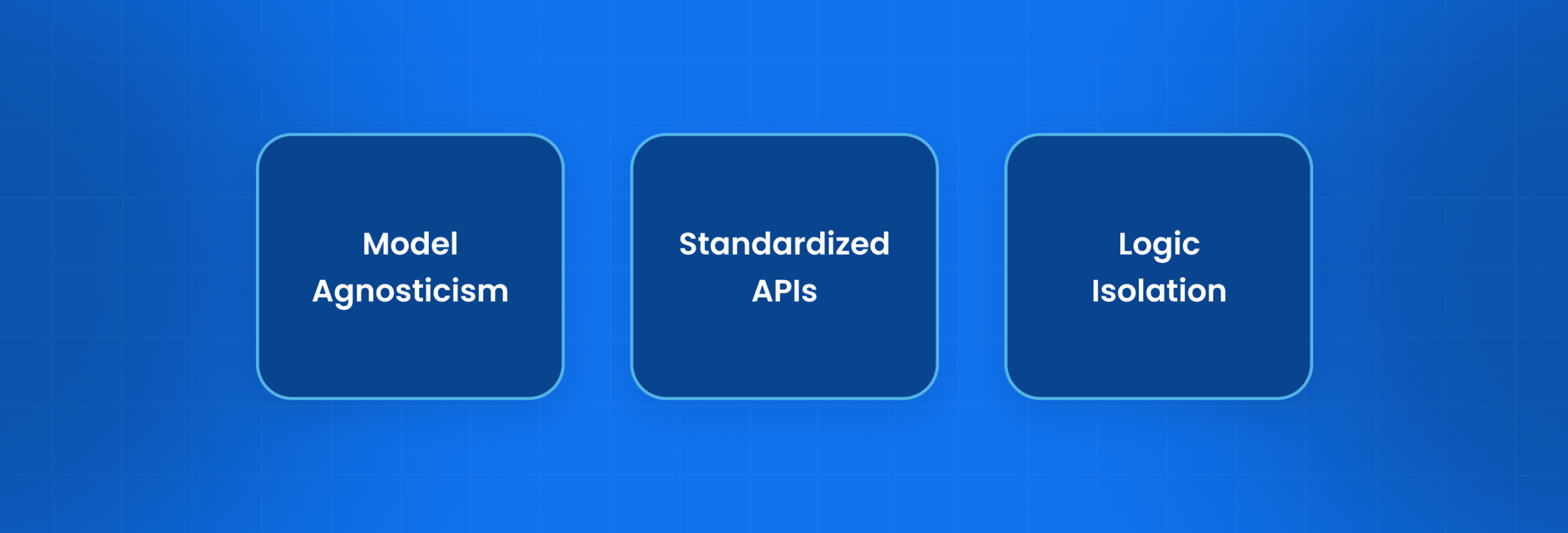
- Model Agnosticism: Use an abstraction layer.
- Standardized APIs: Force vendors to use standard REST/SOAP protocols for actions.
- Logic Isolation: Keep your business rules (who can approve what) separate from the AI’s conversation logic.
Integrating a Specialized AI Chatbot for Conversation
Sometimes, you do need a specialized ai chatbot for conversation specifically for complex advisory roles (e.g., HR benefits counseling). In these cases, the “chat” is valuable.
However, distinguish these use cases clearly.
- Transactional Bot: “Reset password.” (Short, silent, fast)
- Advisory ai chatbot for conversation: “Explain my maternity leave options.” (Long, detailed, empathetic)
Do not force a transactional intent into a conversational flow
Leena AI’s Perspective: The Operating System for Work
At Leena AI, we view the “chatbot” merely as the surface layer of a much deeper operating philosophy. We do not strive to build the most talkative AI; we build the most effective integration engine.
Our approach in 2026 focuses on the “Action Layer.” We believe that for 80% of enterprise requests, the best conversation is the one that never happens. We map the intent directly to the backend resolution.
We architect our system to be the invisible wiring between your employee’s intent and your enterprise’s complex backend, prioritizing speed and accuracy over chat.
Conclusion and Next Steps
The era of the “chatty” bot is ending. As we look toward the remainder of 2026, the mandate for Conversational AI Chatbots is clear: less talk, more action.
Key Takeaways for Leadership:
- Audit Your Friction: Review your current bot logs. If simple tasks take more than two turns, you have a design failure.
- Prioritize Integrations: Invest in the API layer. A smart brain (LLM) with no hands (API access) is useless in the back office.
- Redefine Metrics: Stop measuring engagement. Start measuring “Time to Resolution” and “Transactions per Session.”
- Differentiate Intents: Separate “Advisory” (chat-heavy) from “Transactional” (chat-light) workflows.
Frequently Asked Questions
What are Conversational AI Chatbots?
Conversational AI Chatbots are software applications that use natural language processing (NLP) to understand human language and trigger actions or responses, automating tasks in IT, HR, and Finance.
How does a Conversational AI service differ from a standard chatbot?
A standard chatbot typically follows a rigid decision tree, while a Conversational AI service utilizes Large Language Models (LLMs) and deep backend integrations to understand context and execute complex workflows dynamically.
What is a good Conversational AI Example for the enterprise?
An employee types “I need a verification of employment letter,” and the AI instantly generates the PDF from the HRIS and emails it to the user without asking any follow-up questions.
Why are Conversational AI Agents replacing traditional support teams?
They offer instant scalability and 24/7 availability, handling repetitive Tier-1 tickets (password resets, status checks) so human agents can focus on complex strategy and employee relations.
Can an ai bot handle sensitive financial data securely?
Yes, provided the architecture uses enterprise-grade encryption, role-based access control (RBAC), and does not use sensitive data to train public models.
What is the best ai chat app for internal employee support?
The best app is one that integrates seamlessly into tools employees already use (like Slack or Microsoft Teams) and focuses on executing transactions rather than just answering FAQs.