

What is AI Automation?
AI Automation (often used interchangeably with Intelligent Automation) is the use of artificial intelligence technologies such as Machine Learning, [Computer Vision], and Natural Language Processing to automate tasks that previously required human cognitive abilities.
Unlike traditional automation, which follows a strict, pre-defined set of rules (e.g., “If X happens, do Y”), AI Automation is probabilistic and adaptive. It can handle ambiguity, interpret messy data (like handwriting or voice), and make logic-based decisions without needing to be explicitly programmed for every single variation.
Simple Definition:
- Traditional Automation: Like a Player Piano. It plays a beautiful song, but it can only play exactly what is on the paper roll. If the paper rips, the music stops.
- AI Automation: Like a Jazz Musician. They know the song, but they can improvise, adapt to the tempo of the band, and keep playing even if someone misses a beat.
2. Key Features
To move beyond simple scripting, the system must demonstrate these five core capabilities:
- Cognitive Processing: The ability to “understand” content, not just move it. It knows that a document is an “Invoice” and not a “Receipt” by reading the text, not just the file name.
- Unstructured Data Handling: It can process data that isn’t in rows and columns such as email bodies, PDF contracts, images, and audio recordings.
- Continuous Learning: The system improves over time. Every time a human corrects an error, the AI updates its model to avoid making that mistake again.
- Predictive Triggers: It doesn’t just wait for input; it can trigger actions based on trends (e.g., “Inventory is dropping faster than usual; order more now”).
- Human-in-the-Loop: It intelligently identifies when it is confused and routes only those specific cases to a human, automating the rest.
3. Traditional vs. AI Automation (Scenario Matrix)
This table compares how each technology handles real-world complexity.
| The Scenario | Traditional Automation (Rule-Based) | AI Automation (Cognitive) |
| Invoice with a coffee stain | Fails: OCR cannot read the exact pixels it expects, so the bot crashes or outputs garbage. | Solves: AI infers the missing letters based on context, just like a human would. |
| Customer email uses sarcasm | Misinterprets: Sees “Great job” and categorizes it as Positive, missing the angry context. | Understands: Sentiment analysis detects the sarcastic tone and flags it as a complaint. |
| Vendor changes website layout | Breaks: The “Submit” button moved, so the script fails to click it. | Adapts: Computer Vision looks for the button labeled “Submit” anywhere on the screen and clicks it. |
| Sudden volume spike | Bottlenecks: Script runs sequentially and creates a backlog. | Scales: AI spins up parallel processing instances to handle the load instantly. |
4. How It Works (The Intelligence Cycle)
AI Automation operates in a continuous loop of sensing and acting:
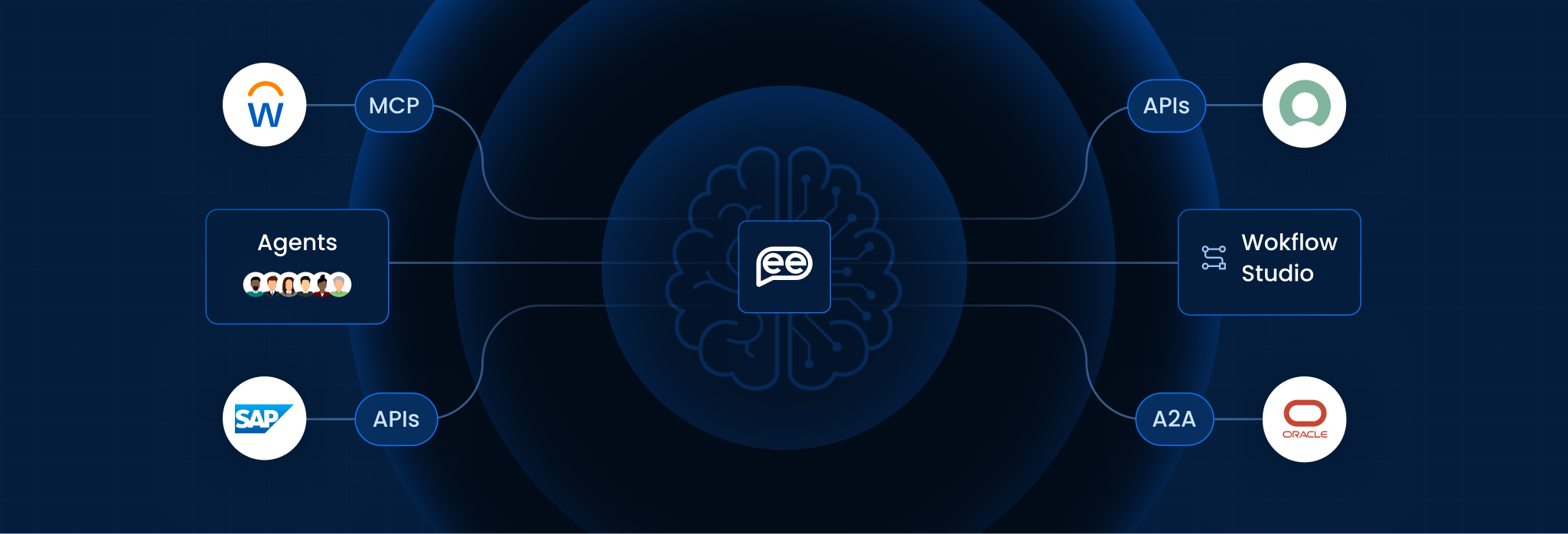
- Ingest: The system accepts raw input (Documents, Chats, Sensor Data).
- Perceive: Using [Natural Language Processing] or Vision, it converts the raw data into a structured format.
- Decide: The AI Model applies logic. (e.g., “This looks like a fraudulent transaction based on past patterns.”)
- Act: It triggers an RPA bot or API to execute the decision (e.g., Block the card).
- Refine: The outcome is logged. If successful, the confidence score for that pattern increases.
5. Benefits for Enterprise
Strategic analysis from Gartner and Forrester highlights that AI Automation is the primary driver for “Hyperautomation” strategies in 2026:
- Operational Resilience: Processes become robust. They don’t break every time a minor variable changes, reducing maintenance costs by up to 30%.
- Unlock Dark Data: It allows companies to finally use the 80% of their data that is “unstructured” (emails, call logs) to drive business insights.
- Employee Elevation: By taking over the “thinking” tasks (reviewing forms, classifying emails), it frees employees to focus on creative problem solving and strategy.
Frequently Asked Questions
Is AI Automation the same as Artificial Intelligence?
Not exactly. AI is the broad science (the “Brain”). AI Automation is the practical application of that science to perform a specific job (the “Worker”).
Is it expensive to implement?
The initial cost is higher than basic scripting because it requires model training. However, the long-term ROI is significantly higher because the automations break less often and cover more complex tasks.
Will it make mistakes?
Yes, initially. AI works on probabilities (e.g., 98% confidence). This is why “Human-in-the-Loop” is essential during the early stages to verify decisions and help the model learn.
Can I add AI to my existing automation tools?
Yes. Most major RPA platforms (like UiPath or Automation Anywhere) now have “AI Skills” you can drag and drop into your existing workflows to make them smarter.
Is it secure?
Enterprise-grade AI Automation runs in private environments. Your data is not shared with public models (like ChatGPT), ensuring compliance with strict data privacy laws.
What is the biggest challenge?
Data quality. AI needs good examples to learn from. If your historical data is messy or inconsistent, the AI will struggle to learn the correct patterns (“Garbage in, Garbage out”).
Want To Know More?
Book a Demo