

What is Conversational Ticketing?
Conversational Ticketing is the integration of enterprise service desk functionality directly into corporate messaging platforms like Slack, Microsoft Teams, or WhatsApp. It allows employees to create, view, manage, and approve support tickets completely within the chat interface, without ever logging into a separate web portal.
Instead of forcing users to visit a complex dashboard (like Jira or ServiceNow) to report an issue, Conversational Ticketing brings the helpdesk to where the users are already working. It uses a [Chat Bot] as the bridge, synchronizing messages between the chat app and the backend ticket database in real-time.
Simple Definition:
- Traditional Ticketing: Like going to the Post Office. You have to leave your house (your workflow), go to a specific building, fill out a paper form, and wait in line to send a package.
- Conversational Ticketing: Like Texting a Courier. You send a text message from your couch, and the courier comes to you to pick up the package. You never stop what you are doing.
Key Features
To successfully replace the web portal, a Conversational Ticketing solution must offer these five capabilities:
- Bi-Directional Sync: It ensures that every comment made in Slack is instantly copied to the ServiceNow ticket, and every agent reply in ServiceNow is instantly sent to the user in Slack.
- In-Chat Forms: Instead of sending a link to a webpage, the bot opens a mini-form directly inside the chat window to collect necessary details (e.g., “Which software is crashing?”).
- Rich Media Support: Users can paste screenshots of error messages or drag-and-drop log files directly into the chat, which are automatically attached to the ticket.
- Proactive Notifications: The bot alerts the user immediately when the status changes (e.g., “Your request has been approved”), eliminating the need to refresh email.
- One-Click Actions: It allows stakeholders to perform tasks like “Approve Budget” or “Close Ticket” by clicking a single button in the chat stream.
Portal-Based vs. Conversational Ticketing
This table compares the user experience of a traditional web portal versus a chat-based workflow.
|
The Scenario |
Web Portal Ticketing (Traditional) |
Conversational Ticketing (Modern) |
|
Reporting an Issue |
Friction: User must stop work, find the portal URL, log in, search for the right form, and fill it out. |
Fluid: User types “Help” in Slack. The bot creates the ticket instantly based on the chat. |
|
Approving a Request |
Delays: Manager receives an email, ignores it, and forgets to approve the new laptop request for 3 days. |
Accelerates: Manager gets a DM in Teams with an “Approve” button. They click it in 2 seconds. |
|
Status Updates |
Opaque: User has to log back into the portal repeatedly to see if anyone has replied. |
Transparent: The bot pings the user the moment an agent updates the ticket. |
|
Agent Communication |
Slow: Agents email users for more info. Users miss the email in their cluttered inbox. |
Real-Time: Agent replies land in the user’s chat app. Users reply instantly, just like texting a colleague. |
How It Works (The Sync Bridge)
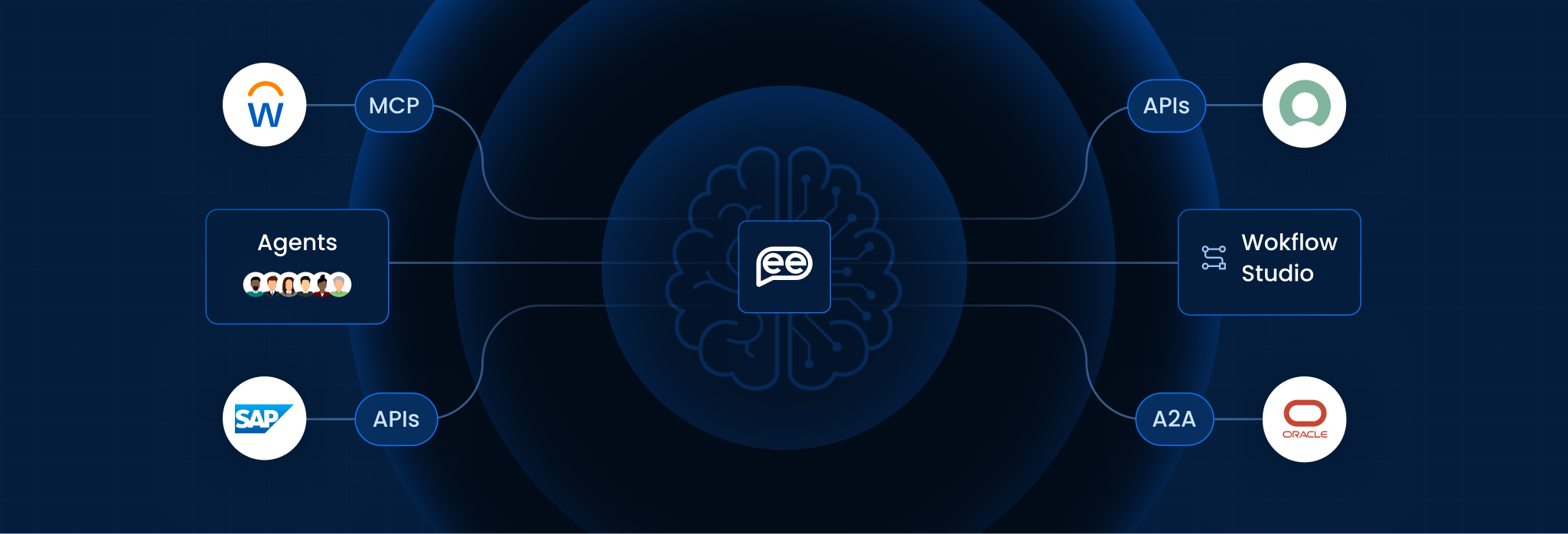
Conversational Ticketing operates as a middleware layer between the Chat App and the Service Desk:
- User Trigger: Employee types “@Helpdesk My VPN is broken” in Slack.
- Parsing: The [NLU Engine] identifies the intent (Incident) and Category (Network).
- Creation: The bot uses an API to create a ticket in the backend (e.g., Jira Service Management).
- Confirmation: The bot replies in Slack: “Ticket #123 created. I’ll let you know when an agent picks it up.”
- Resolution: When the agent fixes the issue, the bot sends a final DM: “Fixed! Please confirm you can connect.”
Benefits for Enterprise
Strategic analysis from Gartner and Forrester highlights that “Meeting users where they work” is the top driver for Employee Experience (EX) in 2026:
- Adoption Rates: Web portals often have low adoption (users email IT instead). Chat apps have 100% adoption. Moving ticketing to chat centralizes all requests.
- Reduced Mean Time to Resolution (MTTR): Because users and agents reply faster via chat than email, the back-and-forth lag time is eliminated, resolving tickets 40-50% faster.
- End of “Shadow Support”: It captures the “DM to the IT guy” requests. Instead of messaging an engineer privately, users message the bot, ensuring the work is actually tracked and measured.
Frequently Asked Questions
Does this replace the ITSM tool (like ServiceNow)?
No. It is a frontend interface. ServiceNow is still the database and engine where the tickets live. Conversational Ticketing is just a faster way to interact with that engine.
Is it secure?
Yes. Enterprise tools use OAuth and “Least Privilege” access. The chat bot never stores your data; it passes it encrypted directly to the secure ITSM backend.
What if the issue is too complex for chat?
The bot can provide a “Deep Link.” If a user needs to fill out a 50-question compliance form, the bot will say, “This requires more detail,” and provide a link to the specific portal page.
Can it handle attachments?
Yes. Modern APIs allow users to drop screenshots, PDFs, and logs into the chat, which the bot automatically uploads to the ticket attachments field.
Does it work for non-IT teams?
Absolutely. It is widely used for [HR Service Delivery] (Payroll questions), Facilities (Broken chair), and Legal (Contract review requests).
Do agents have to use chat too?
Not necessarily. Agents can stay in their preferred console (ServiceNow/Jira). Their notes are auto-forwarded to the user’s chat. However, “Swarming” features allow agents to join the chat if needed.
Want To Know More?
Book a Demo