
What is an Enterprise Graph?
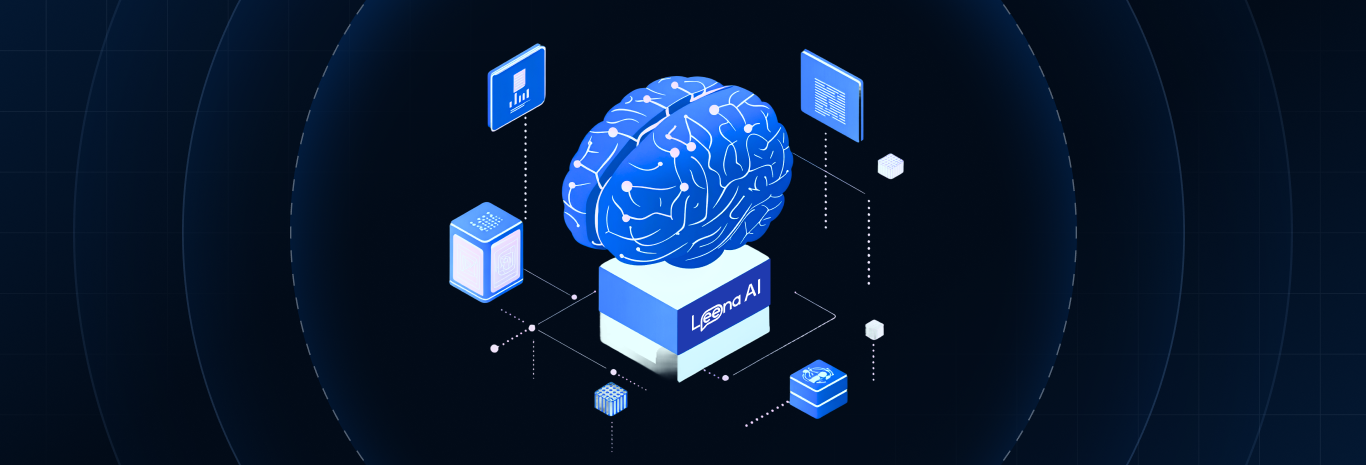
An Enterprise Graph is a unified data structure that represents an organization’s entire knowledge domain as a network of interconnected entities (nodes) and their relationships (edges). Unlike a traditional database that stores data in isolated tables, an Enterprise Graph focuses on how “things” (customers, products, employees, locations) are related across the whole company.
By creating a [Semantic Layer] over existing systems, an Enterprise Graph allows businesses to query complex questions that span multiple departments such as “Show me all customers in New York who bought Product X and have an open support ticket.” It acts as the “Company Brain,” providing the essential context that modern AI needs to be accurate and grounded.
Simple Definition:
- Traditional Database: Like a Phone Book. It’s a list of names and numbers. If you want to know if two people are neighbors, you have to read every single page and compare addresses manually.
- Enterprise Graph: Like a Social Network Map. You can instantly see who is friends with whom, where they work, and what they’ve bought. The “lines” between the people are just as important as the people themselves.
Key Features
To function as a true “Knowledge Graph” at scale, the architecture must include these five elements:
- Entities (Nodes): The fundamental “nouns” of the business, such as Customer, Part Number, Contract, or Shipment.
- Relationships (Edges): The “verbs” that connect entities, such as Purchased, Located In, Reports To, or Component Of.
- Ontology & Semantics: A shared vocabulary that defines what things mean (e.g., ensuring “Client” in Sales and “Subscriber” in Marketing are mapped to the same entity).
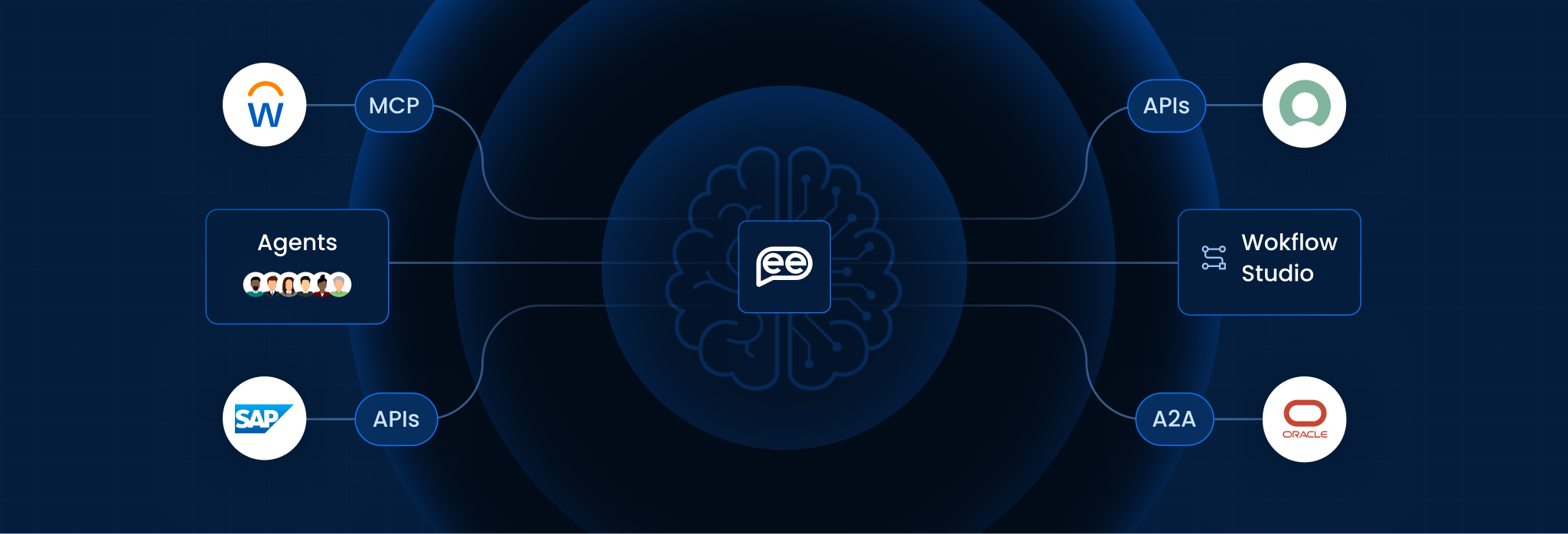
- Data Virtualization: The ability to query data where it lives (e.g., in SAP or Salesforce) without necessarily moving it all into a new central warehouse.
- Inference Engine: The ability for the graph to “discover” new facts (e.g., if a supplier provides a part and a product uses that part, the system infers the supplier is a critical dependency for that product).
Relational Database vs. Enterprise Graph
This table contrasts the rigid “table” approach with the flexible “network” approach.
|
Feature |
Relational Database (SQL/Tables) |
Enterprise Graph (Graph/Nodes) |
|
Data Structure |
Rigid Rows/Columns: Excellent for simple, structured transactions. |
Flexible Network: Excellent for complex, deeply connected relationships. |
|
Joining Data |
Slow: Requires “Joins” that become exponentially slower as you link more tables. |
Fast: Uses “Pointer Traversal,” allowing you to hop across 10+ relationships in milliseconds. |
|
Context |
Fragmented: Data is siloed. It’s hard to see how an HR record affects a Sales lead. |
Unified: Data is a “single source of truth” where every department’s data is linked. |
|
AI Readiness |
Low: LLMs struggle to “read” thousands of separate tables without getting lost. |
High: Provides a “Map” (GraphRAG) that tells the AI exactly where to find the right context. |
|
Schema Changes |
Difficult: Adding a new type of data requires rewriting the database structure. |
Easy: You can add new nodes or relationship types instantly without breaking existing code. |
How It Works (The Knowledge Lifecycle)
The Enterprise Graph serves as a connective tissue across the technology stack:
- Ingestion & Mapping: Data is pulled (or virtualized) from silos like ERP, CRM, and raw PDFs.
- Entity Resolution: The system realizes that “John Smith” in the Billing system is the same “J. Smith” in the Support system.
- Linking: The graph creates “Edges” between resolved entities and their related objects (e.g., linking John to his specific Invoice and his Local Warehouse).
- Semantic Enrichment: Business rules are applied (e.g., “Any invoice over $10k is a High-Value Transaction”).
- Consumption: Applications (BI Dashboards, Chatbots, or Fraud Detectors) query the graph for real-time insights.
Benefits for Enterprise
Strategic analysis from Gartner and Forrester for 2026 highlights the Enterprise Graph as a primary driver of ROI in AI infrastructure:
- Eliminating Hallucinations (GraphRAG): By grounding AI in a graph, businesses ensure that GenAI responses are based on verified company relationships rather than statistical guesses.
- Customer 360: Marketing and Sales gain a complete view of the customer journey, from the first ad click to the last support call, across all platforms.
- Supply Chain Resilience: Graphs allow logistics teams to see “hidden dependencies” such as realizing five different suppliers all rely on the same single sub-factory that just went offline.
- Fraud & Risk Detection: In banking, graphs reveal “Synthetic Identities” by showing how multiple accounts share the same phone number or IP address in a suspicious web.
Frequently Asked Questions
Is an Enterprise Graph the same as a Graph Database?
Almost. A Graph Database (like Neo4j) is the tool (the engine). An Enterprise Graph is the implementation (the actual data and business logic of your specific company stored inside that engine).
Does it replace my Data Warehouse?
No. It usually sits on top of your Data Warehouse or Data Lake. The warehouse stores the “raw facts,” while the graph stores the “meaning and connections” between those facts.
What is GraphRAG?
GraphRAG is a technique where an AI model uses an Enterprise Graph to find information. It is far more accurate than standard RAG because it understands relationships (e.g., “How does X affect Y?”) rather than just searching for keywords.
How hard is it to build?
It used to take years. In 2026, AI-powered tools can now “auto-generate” much of the graph by reading your database schemas and documents to suggest the nodes and relationships for you.
Does it improve data governance?
Yes. Because it requires a “Common Language” (Ontology), it forces the company to define its terms once, creating a much cleaner and more auditable data environment.
Can it handle unstructured data?
Yes. Modern Enterprise Graphs use Extraction to pull entities out of emails and contracts, linking them to the structured data in your CRM.
Want To Know More?
Book a Demo