
What is Federated Search?
Federated Search is a search architecture that allows a user to query multiple disparate data sources such as databases, cloud storage, APIs, and document repositories simultaneously through a single search interface. Unlike traditional search, which crawls and copies data into a central index, Federated Search sends the query out to the original sources in real-time, retrieves the results, and aggregates them into a unified list.
In 2026, Federated Search is a critical component of [Retrieval-Augmented Generation (RAG)] for enterprises that cannot move their data due to strict residency laws (GDPR) or massive data volumes. It provides a “single pane of glass” view without the high cost of centralizing data.
Simple Definition:
- Unified Search: Like a Supermarket. All the items from different farms are shipped to one building. It’s fast to shop there, but the food might not be as fresh, and shipping it there was expensive.
- Federated Search: Like a Personal Shopper. You give them a list, and they drive to the bakery, the butcher, and the farm at the same time. You get the freshest items from the exact source, but you have to wait for the shopper to finish their rounds.
Key Features
To provide a seamless experience across disconnected silos, Federated Search relies on these five technical pillars:
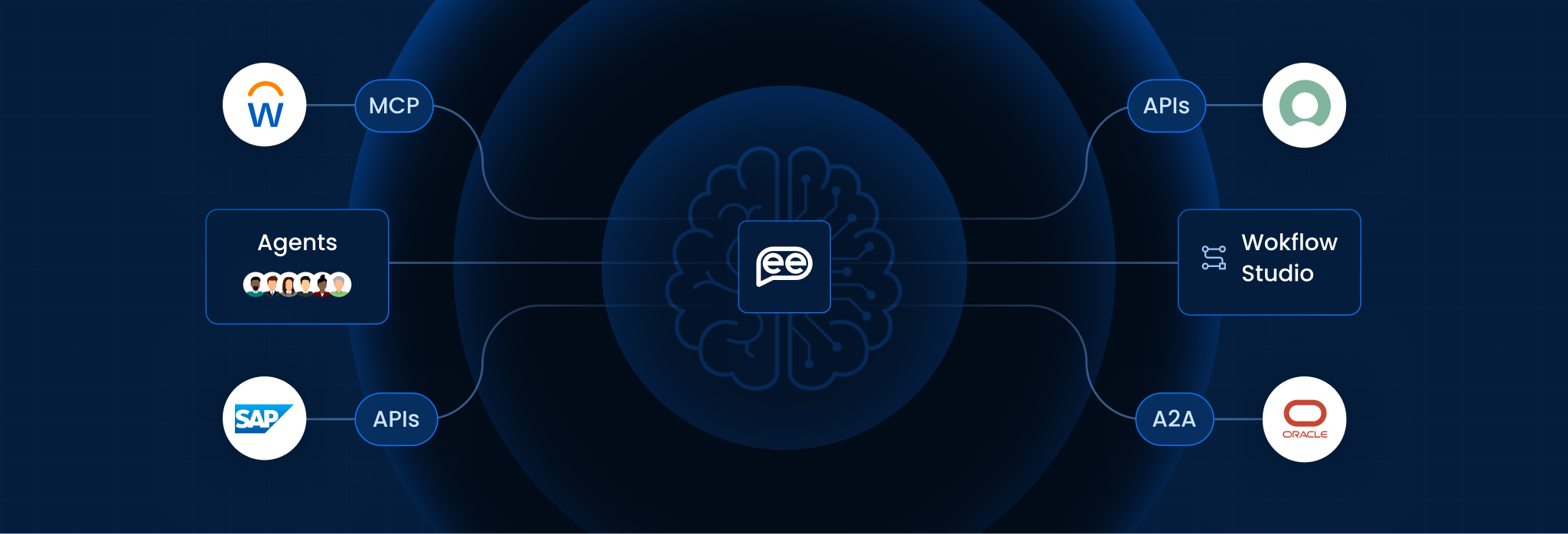
- Query Transformation: Translating the user’s natural language or keyword query into the specific “syntax” (SQL, NoSQL, API) required by each individual data source.
- Simultaneous Broadcasting: Sending the translated queries to all “federates” (connected sources) at the exact same time to minimize latency.
- Results Aggregation & Merging: Collecting diverse data types (emails, PDFs, database rows) and standardizing them into a consistent format for the user.
- Real-Time De-duplication: Identifying and removing identical results returned by multiple sources so the user doesn’t see the same file twice.
- Security & Credential Pass-through: Ensuring the search respects the user’s permissions in each source system (e.g., if you can’t see HR files in the original system, you won’t see them in the search results).
Federated Search vs. Unified Search
This table compares the “Query-in-Place” model versus the “Centralized Index” model.
|
Feature |
Federated Search (Query-in-Place) |
Unified Search (Centralized Index) |
|
Data Residency |
Stay-Put: Data never leaves its original secure location. Ideal for GDPR compliance. |
Centralized: Data is copied and moved to a central search server. |
|
Data Freshness |
Real-Time: You always see the “Live” version of the file or record. |
Delayed: You see the version from the last time the “Crawler” ran (minutes or hours ago). |
|
Search Speed |
Variable: Only as fast as the slowest connected system (The “Tail Latency” problem). |
Instant: Blazing fast because the search happens on a single local index. |
|
Setup Cost |
Lower: No need for massive storage for a second copy of all your data. |
Higher: Requires significant storage and compute to maintain the central index. |
|
Relevance |
Basic: Hard to rank results because every system uses a different “Scoring” logic. |
Advanced: AI can rank the entire company’s data using a single consistent algorithm. |
How It Works (The Retrieval Loop)
The federated engine acts as a “Coordinator” between the user and the data silos:
- User Input: The user types “Q3 Project Phoenix Report” into the search bar.
- Routing: The Federation Manager identifies that “Project Phoenix” data exists in Slack, SharePoint, and Snowflake.
- Broadcasting: It sends three tailored queries out via gRPC or REST APIs.
- Local Execution: Each system searches its own data using its own engine.
- Aggregation: The results come back to the Manager, which removes duplicates and applies a “Normalized Rank.”
- Presentation: The user sees a single list showing the Slack conversation and the SharePoint PDF side-by-side.
Benefits for Enterprise
Strategic analysis for 2026 highlights why Federated Search is essential for Agentic AI and modern Knowledge Management:
- Zero-Copy Architecture: Enterprises avoid the “Data Tax” of paying for double storage and the security risk of having sensitive data sitting in two places.
- Compliance & Sovereignty: For global firms, Federated Search allows a user in the US to search German data without the data ever crossing the border, satisfying local privacy laws.
- Agility: You can add a new data source (like a newly acquired company’s database) to your search in minutes by simply adding a “Connector,” rather than waiting months for a full data migration.
Frequently Asked Questions
Is Federated Search slower than Google?
Yes. Because it has to wait for multiple remote systems to respond over a network, it will always be slower than searching a single, pre-indexed database.
What is Hybrid Federated Search?
It is the gold standard for 2026. It indexes your frequently used data (for speed) but uses federated queries for highly sensitive or rapidly changing data (for freshness).
Does it work with AI (RAG)?
Yes. GraphRAG and Federated Search are often used together. The AI uses the federated engine to “browse” the company’s live data to find the context it needs to answer a question.
What is Tail Latency?
This is the biggest drawback. If you search 10 systems and 9 respond in 1 second but 1 system is slow and takes 5 seconds, the user has to wait 5 seconds. The “Tail” (the slowest system) dictates the speed.
Can it search images and videos?
Yes, as long as the underlying source has an engine that can process them (e.g., searching a DAM system with AI-tagging).
How is it different from Data Virtualization?
They are cousins. Data Virtualization is usually for structured data (SQL/BI). Federated Search is for unstructured data (Documents/Chat/Content) intended for human or AI consumption.
Want To Know More?
Book a Demo