

What is Governed Self-Service?
Governed Self-Service is an operational model in data analytics and AI that provides non-technical business users with the tools to access, analyze, and visualize data independently, but within a strictly defined framework of “Guardrails” set by IT. It is the “middle ground” of data democratization: it grants the freedom to explore data while ensuring that the data being used is accurate, secure, and compliant.
In a governed environment, IT and Data Stewards act as “Platform Architects” who curate trusted data sets and definitions, while business users act as “Analytic Pilots” who use that data to drive decisions. This prevents the “Wild West” scenario where different departments report different numbers for the same KPI.
Simple Definition:
- Traditional BI: Like a Full-Service Restaurant. You must ask the waiter (IT) for everything. It takes time, but the meal is guaranteed to be safe.
- Wild West Self-Service: Like a Communal Kitchen. Anyone can cook anything, but someone might leave the stove on, or use expired milk, leading to a mess.
- Governed Self-Service: Like a High-End Salad Bar. All the ingredients are pre-washed, fresh, and labeled (by IT). You have the freedom to build your own bowl exactly how you like it, but you can’t accidentally add something poisonous.
Key Features
To empower users without losing control, a governed self-service ecosystem requires these five pillars:
- Certified Data Sources: A “Checkmark” or “Badge” system that tells users which datasets are verified by IT and which are “experimental” or “sandbox” data.
- Semantic Layer: A business-friendly translation layer that ensures everyone uses the same definition for terms (e.g., “Revenue” always means Gross Sales minus Returns).
- Role-Based Access Control (RBAC): Automated permissions that ensure a Marketing Manager can see campaign spends but not the payroll data of their team.
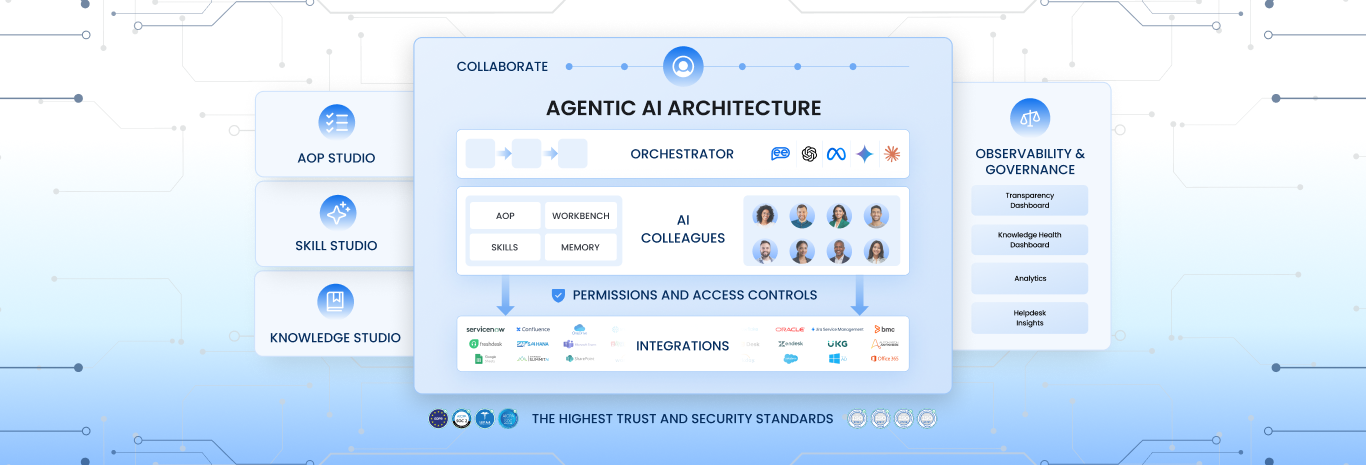
- Data Catalog & Discovery: A searchable “Storefront” where users can find the data they need, read its description, and see who “owns” it.
- Automated Audit Trails: Background logging that tracks who accessed what data, which filters they applied, and where they shared the results.
The Spectrum of Data Control
This table compares the three primary ways organizations manage their data workflows.
|
Feature |
Traditional IT-Led BI |
“Wild West” Self-Service |
Governed Self-Service |
|
Speed to Insight |
Slow: Requires a ticket; takes weeks for a report. |
Fast: Users pull data immediately. |
Fast: Users query certified sets in minutes. |
|
Trust in Data |
High: IT verifies every number manually. |
Low: Every department has a different “Total Sales” figure. |
High: Everyone uses a shared [Semantic Layer]. |
|
Security Risk |
Minimal: Data is locked behind IT. |
Critical: Sensitive data is leaked or exported to local PCs. |
Managed: [Guardrails] prevent illegal exports or access. |
|
User Autonomy |
None: Users only consume static PDF reports. |
Total: Users can change logic and definitions at will. |
Balanced: Users can explore data but cannot change core logic. |
|
Scalability |
Low: IT becomes a bottleneck as the company grows. |
High: But creates “Data Debt” and chaos. |
High: IT scales the platform; users scale the insights. |
How It Works (The Enablement Loop)
Governed Self-Service shifts the role of IT from “Gatekeeper” to “Enabler”:
- Curation: IT prepares a “Clean Room” of data, applying security and standardizing definitions.
- Publishing: The clean data is published to a [Data Catalog] with clear labels.
- Self-Service Discovery: A business user searches for “Churn Rates,” finds the certified set, and builds their own dashboard.
- Sandbox Exploration: If the user needs to add their own “What-If” data, they do so in a private sandbox that doesn’t affect the official company numbers.
- Certification: If the user’s new dashboard is useful to the whole company, IT reviews the logic and “Promotes” it to an official report.
Benefits for Enterprise
Strategic analysis for 2026 highlights Governed Self-Service as a prerequisite for Agentic AI:
- Eliminating “Shadow BI”: When IT is too slow, users build their own “Shadow” systems in Excel. Governed Self-Service brings those users back into a secure, visible environment.
- Data Literacy: By giving users the tools to explore, they become more “Data Literate,” leading to higher quality questions and more sophisticated business strategies.
- IT Resource Reclaim: IT teams stop spending 80% of their time building “simple charts” and instead focus on high-value architecture and advanced data science projects.
Frequently Asked Questions
Is this the same as Self-Service BI?
Traditional “Self-Service BI” often focused just on the tools (like Tableau or Power BI). Governed Self-Service focuses on the rules and trust that make those tools safe for the enterprise.
What is a Certified Dataset?
It is a dataset that has been vetted for quality and accuracy. In a governed system, a “Certified” stamp is the only way a user knows they are looking at the “Single Source of Truth.”
Does it prevent people from making mistakes?
It prevents data mistakes (using the wrong source), but it doesn’t prevent logic mistakes (interpreting a chart poorly). This is why training and “Data Stewardship” are still required.
What is the role of a Data Steward?
A Data Steward is usually a business-side expert who is responsible for the quality and definition of a specific domain (e.g., a “Sales Steward” ensures the sales data in the graph is correct).
How does AI change this?
Modern AI-driven platforms use Natural Language Querying to let users ask questions in plain English. Governance ensures the AI only draws answers from certified, secure sources.
Can I implement this with existing tools?
Yes. Most modern platforms (Power BI, Tableau, Qlik, Looker) have built-in governance features like “Content Certification” and “Lineage Tracking” that just need to be configured.
Want To Know More?
Book a Demo