
What is Grounding?
Grounding is the process of connecting an Artificial Intelligence model to a specific, reliable source of “truth” such as a company’s private database, real-time web search, or a set of uploaded documents. Without grounding, an AI relies solely on its internal training data, which might be outdated, incomplete, or result in “hallucinations” (confident but false answers).
In an enterprise context, grounding acts as an “Open Book Test.” Instead of asking the AI to answer from memory, you provide it with the “textbook” (your data) and instruct it to answer only using the information found in those specific pages.
Simple Definition:
- Ungrounded AI: Like a Confident Storyteller. They have read a million books and can tell a great story, but they often mix up dates, names, and facts because they are “guessing” based on what sounds right.
- Grounded AI: Like a Research Librarian. They might not know everything by heart, but they know exactly which shelf to go to, pull the correct book, and read the specific sentence that answers your question.
Key Features
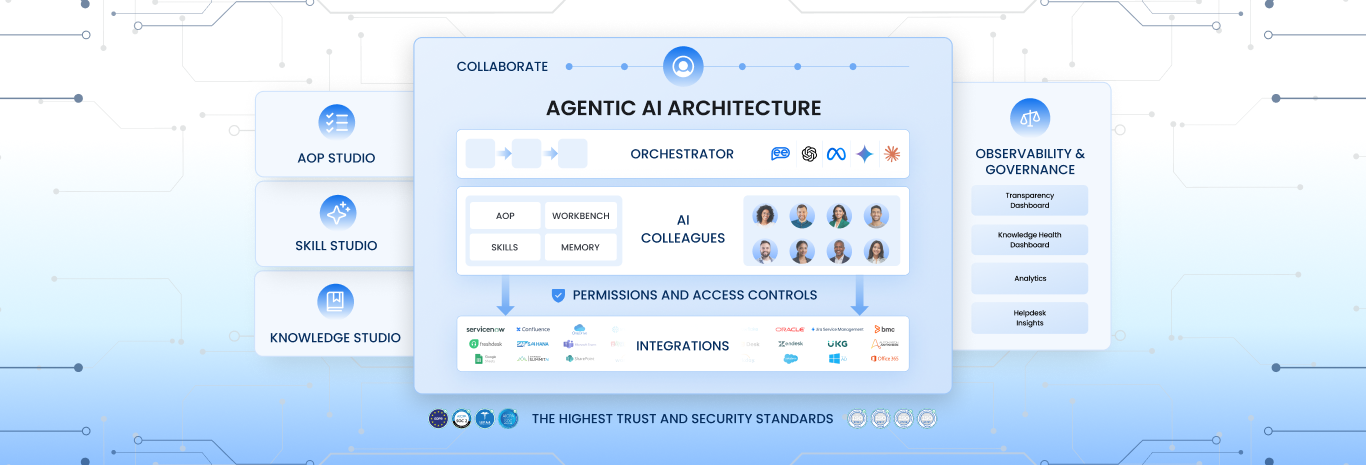
To ensure a model is properly grounded, the system architecture must support these five components:
- Retrieval-Augmented Generation (RAG): The most common method of grounding, where the system retrieves relevant document “chunks” before the AI generates a response.
- Citations & Attribution: The ability for the AI to prove its answer by pointing to the specific source (e.g., “According to Section 4 of the 2024 Employee Handbook…”).
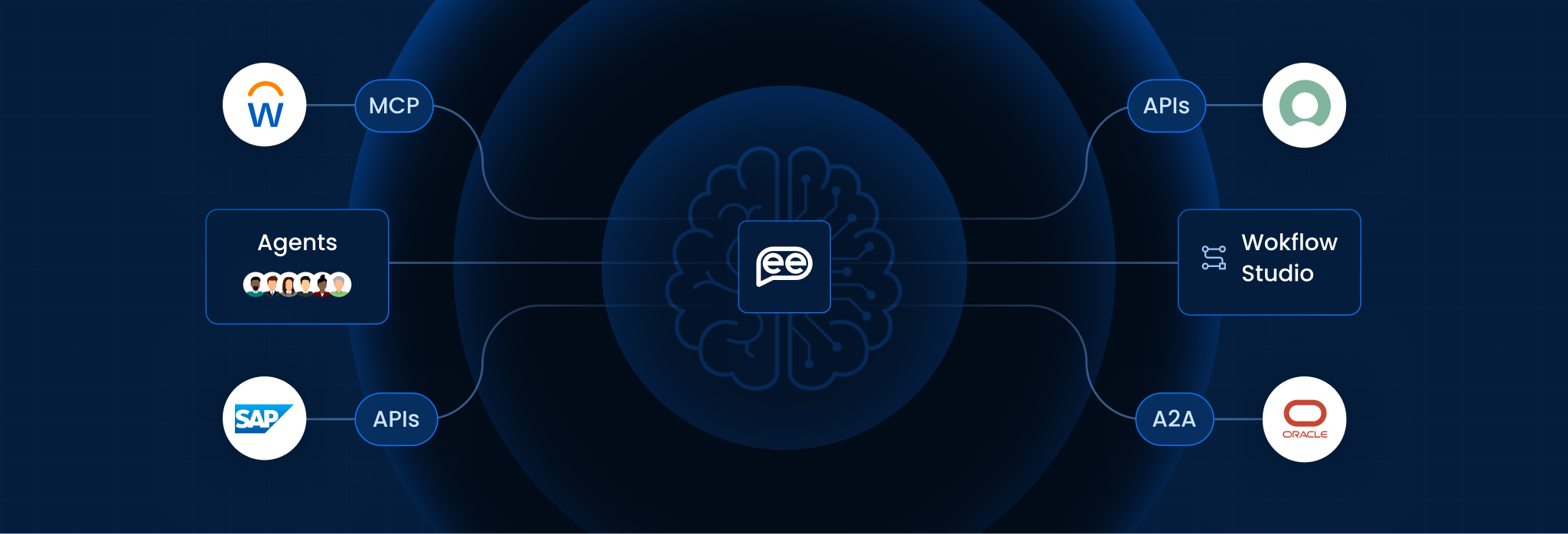
- Real-Time Data Access: Connecting the AI to live APIs (weather, stock market, inventory) so its knowledge is current to the second.
- Semantic Search: Using [Vector Databases] to find information based on meaning rather than just matching keywords.
- Source Constraining: A set of instructions (System Prompt) that tells the AI: “If the answer is not in the provided documents, say ‘I don’t know’ rather than guessing.”
Ungrounded vs. Grounded AI
This table compares a “naked” model versus one integrated with an Enterprise Knowledge base.
|
Feature |
Ungrounded AI (Base Model) |
Grounded AI (Enterprise Ready) |
|
Knowledge Source |
Static: Limited to what it learned during training (e.g., up to 2023). |
Dynamic: Includes today’s news, your private emails, and live data. |
|
Fact Checking |
None: The model “hallucinates” to fill in gaps in its memory. |
High: The model verifies every claim against the provided documents. |
|
Privacy |
Public: Uses general internet knowledge. |
Private: Accesses your internal [Enterprise Graph] securely. |
|
Trustworthiness |
Suspicious: You have to “Google” its answers to see if they are true. |
Verifiable: You can click a link to see the source of the information. |
|
Best Use Case |
Creative writing, brainstorming, and general coding. |
Customer support, financial auditing, and legal research. |
How It Works (The RAG Pipeline)
Grounding transforms a simple chat into a multi-step research process:
- The Query: A user asks: “What is our company’s policy on remote work in France?”
- Retrieval: The system searches the company’s internal [Knowledge Base] for “Remote Work France.”
- Context Injection: The system finds two relevant paragraphs in an HR PDF and “pastes” them into the hidden instructions for the AI.
- Augmented Prompt: The AI receives the user’s question and the specific HR text.
- Grounded Response: The AI summarizes the HR text: “According to the 2025 Global Policy, employees in France can work remotely 2 days per week.”
Benefits for Enterprise
Strategic analysis for 2026 highlights Grounding as the “Bridge to Trust” for corporate AI adoption:
- Elimination of Risk: For legal and medical firms, grounding is the only way to ensure the AI doesn’t give dangerous, incorrect advice.
- No Retraining Required: Instead of spending millions to [Fine-Tune] a model every time your prices change, you simply “ground” it in your live pricing database.
- Personalization: Grounding allows a single AI model to give different, correct answers to different users based on their specific permissions and files.
Frequently Asked Questions
Is Grounding the same as Fine-Tuning?
No. Fine-Tuning is like teaching the AI a new skill (like a new language). Grounding is like giving the AI a reference book to look at while it works.
Does grounding stop all hallucinations?
It reduces them by 90-95%, but not 100%. The AI can still occasionally “misinterpret” the document you give it. This is why human review is still recommended.
What is Vector Search?
It is the technology behind grounding that allows the AI to find “related” topics even if the words aren’t an exact match (e.g., finding “vacation policy” when the user asks about “time off”).
Can I ground an AI in my own emails?
Yes. By connecting the AI to your Outlook or Gmail API, the AI is “grounded” in your personal communications and can answer questions about your schedule or past conversations.
What is Attribution?
Attribution is when the AI provides a link or a footnote to the source. This is a key requirement for Explainability in high-stakes industries.
Does grounding make the AI slower?
Slightly. Because the system has to “search” your files before it can “talk,” it usually adds a few hundred milliseconds to the response time.
Want To Know More?
Book a Demo