

What is an LLM?
A Large Language Model (LLM) is a type of Artificial Intelligence trained on vast datasets of trillions of words from books, websites, and code to understand, summarize, generate, and predict new content. At their core, LLMs are massive neural networks based on the Transformer Architecture.
The “Large” in LLM refers to two things: the enormous size of the training dataset and the number of Parameters (the internal variables the model uses to make decisions), which often range from billions to trillions. Unlike traditional software that follows strict “If-Then” rules, an LLM uses probability to determine the most likely next word (or “token”) in a sequence, allowing it to mimic human reasoning and creativity.
Simple Definition:
- Standard Search Engine: Like a Librarian. You ask a question, and they point you to a book that contains the answer.
- LLM: Like an Expert who has read every book in the library. They don’t just point to a source; they synthesize everything they’ve learned to answer your question, write a poem, or debug your code in real-time.
Key Technical Pillars
To process and generate human-like language, LLMs rely on these four foundational technologies:
- Transformers: The underlying architecture that allows the model to process words in relation to all other words in a sentence, rather than one by one.
- Self-Attention: A mechanism that helps the model “focus” on the most relevant parts of a prompt (e.g., knowing that “it” refers to “the ball” and not “the bat” in a complex paragraph).
- Tokenization: The process of breaking down text into smaller chunks (tokens) like characters or words so the computer can process them mathematically.
- Parameters: The “synapses” of the AI. Generally, more parameters allow the model to capture more complex nuances in language and logic.
The LLM Training Pipeline
This table outlines the stages required to move a model from “Raw Code” to a “Helpful Assistant.”
|
Stage |
Process |
Goal |
Outcome |
|
1. Pre-training |
Unsupervised learning on the “whole internet.” |
Learn grammar, facts, and reasoning. |
A Base Model (Great at predicting text, bad at following orders). |
|
2. [Instruction-Tuning] |
Training on specific (Question/Answer) pairs. |
Teach the model to follow commands. |
A Chat Model (Like ChatGPT or Claude). |
|
3. [RLHF] Alignment |
Human feedback to rank “good” vs “bad” answers. |
Ensure safety, politeness, and accuracy. |
A Polished Assistant ready for public use. |
How It Works (The Transformer Loop)
The LLM operates by converting language into high-dimensional math to predict the next logical step:
- Input: The user enters a prompt (e.g., “The capital of France is…”).
- Embedding: The words are converted into numerical vectors in a multi-dimensional space.
- Attention Pass: The model looks at the context of “Capital” and “France” to narrow down the probability.
- Probability Map: The model calculates that “Paris” has a 99.9% probability of being the next word.
- Generation: The model outputs “Paris” and then re-runs the process to decide the next punctuation mark or sentence.
Use Cases for Enterprise
In 2026, LLMs have moved beyond “chatting” into core business operations:
- Knowledge Orchestration: Using LLMs to search across thousands of internal PDFs to answer an employee’s HR question instantly.
- Automated Coding: Software engineers use LLMs to generate boilerplate code, reducing development time by up to 50%.
- Sentiment Analysis: Scanning thousands of customer reviews to identify the specific emotional “pain points” of a new product launch.
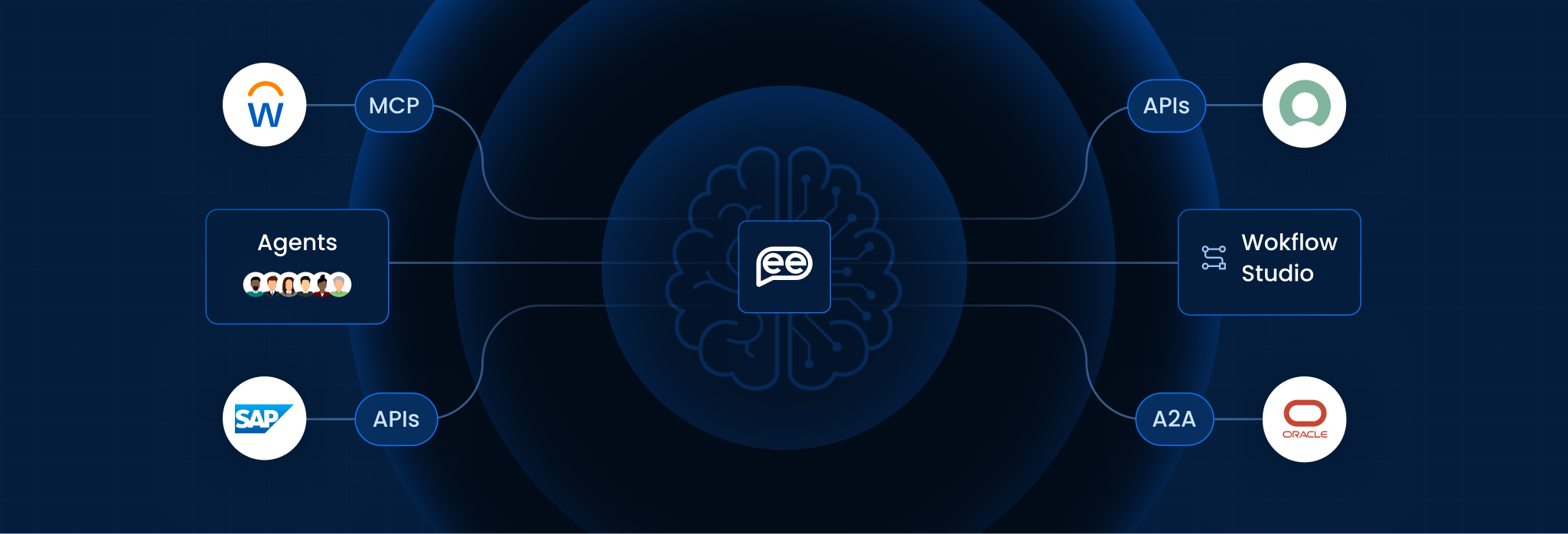
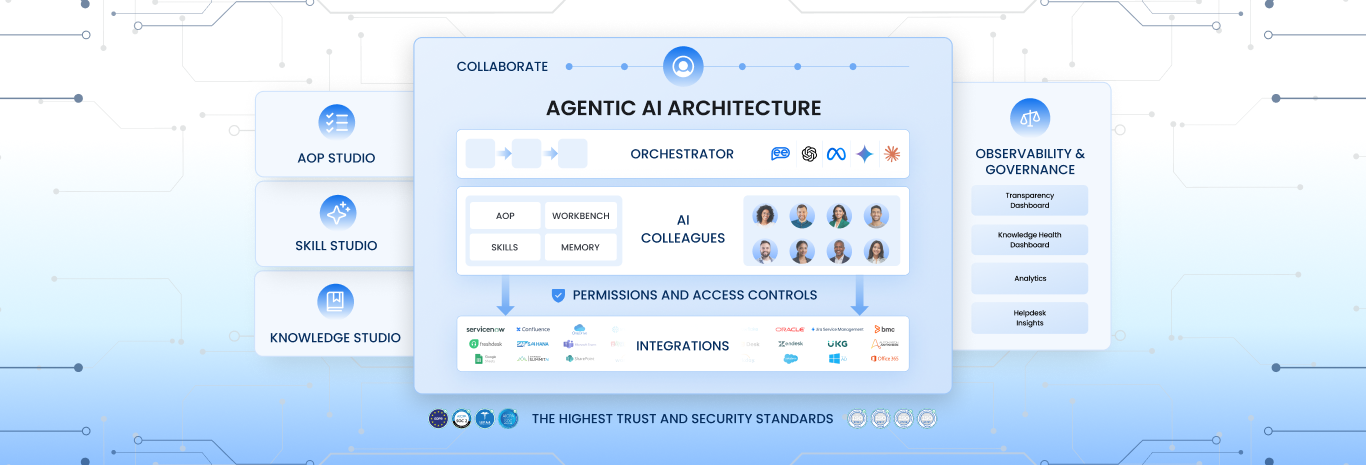
- Agentic AI: Using the LLM as the “brain” for an autonomous agent that can book meetings, send emails, and update CRM records.
Frequently Asked Questions
Do LLMs know things?
No. They don’t have a database of facts. They have a mathematical “map” of how words relate to each other. When they “state a fact,” they are simply predicting the most probable truthful sequence of words
What is a Parameter?
Think of parameters as the model’s “memory capacity.” A model with 175 billion parameters (like GPT-3) has more “connections” to store complex patterns than a model with 7 billion parameters.
What is Hallucination?
This occurs when the model’s probability math leads it to a confident-sounding but factually incorrect answer because it is “guessing” based on patterns rather than retrieving a verified fact.
Can an LLM be Small?
Yes. These are called SLMs (Small Language Models). They are trained for specific tasks (like medical coding) and can run locally on a phone or laptop without needing a massive data center.
What is the Context Window?
This is the amount of information the LLM can “hold in its head” at one time. A larger context window allows you to upload an entire 500-page book and ask questions about it.
Is LLM the same as Generative AI?
LLMs are a subset of Generative AI. While Generative AI includes images, video, and music, LLMs specifically focus on Text and Language.
Want To Know More?
Book a Demo