
What is a Multi-Agent System?
A Multi-Agent System (MAS) is a computational framework where multiple autonomous or semi-autonomous AI agents interact within a shared environment to achieve specific goals. While a single AI agent is like a talented freelancer, a Multi-Agent System is like a high-functioning corporate department. Each agent is a specialist—one might be an expert at searching the web, another at writing code, and a third at reviewing work for errors.
In 2026, MAS is the “gold standard” for enterprise automation. We have moved beyond simple chatbots toward Agent Swarms and Orchestrated Crews. By breaking a massive problem into smaller sub-tasks and delegating them to specialized workers, MAS can handle complexity, scale, and reasoning depth that would overwhelm any single “monolithic” model.
Simple Definition:
- Single-Agent System: Like a Swiss Army Knife. It’s handy and can do many things, but it’s not the best tool for building an entire house.
- Multi-Agent System: Like a Construction Crew. You have a plumber, an electrician, and a foreman. They communicate, coordinate, and use their specialized tools to build a complex structure together.
The Four Pillars of the Agent Stack
To function effectively in 2026, a multi-agent system relies on these core components:
- Specialized Agents: Individual “actors” with a defined role, a specific persona, and access to unique tools (e.g., a “Financial Analyst” agent with access to Bloomberg terminals).
- Shared Environment: The workspace where agents “live” and interact. This could be a shared memory space, a Slack channel, or a digital twin of a factory floor.
- Communication Protocols: The language and rules agents use to talk. In 2026, this often involves Message Passing or Agent Communication Languages (ACL) like FIPA.
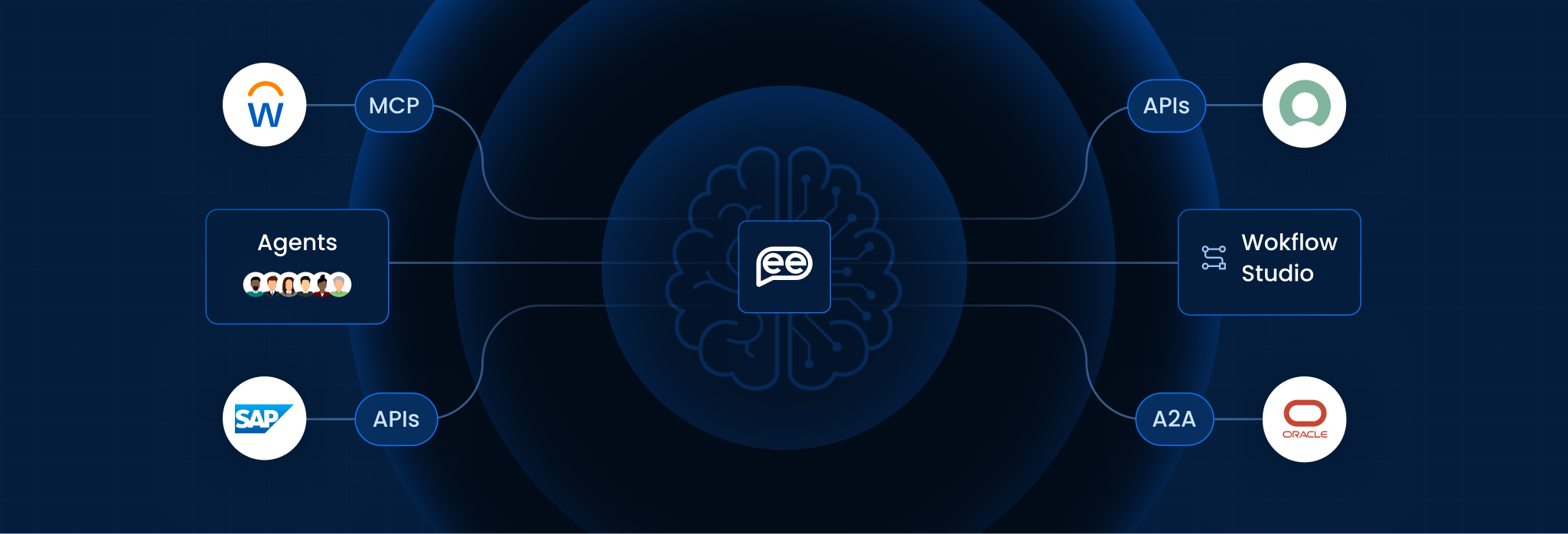
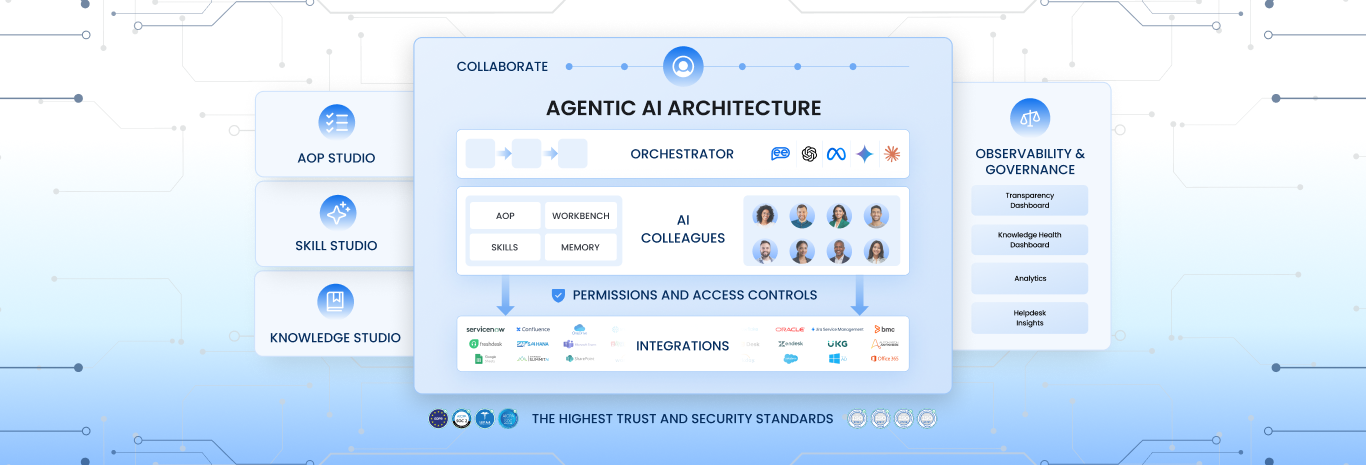
- Orchestration Engine: The “Brain” or “Foreman” (using frameworks like LangGraph, CrewAI, or Sarvam Arya) that decides the order of operations and manages handoffs between agents.
Centralized vs. Decentralized (Architectural Matrix)
In 2026, choosing the right architecture is critical for balancing speed and reliability.
|
Feature |
Centralized (Hub-and-Spoke) |
Decentralized (Peer-to-Peer) |
|
Control |
A “Lead Agent” manages all tasks. |
Agents collaborate as equals. |
|
Complexity |
Simpler to design and debug. |
High; requires emergent logic. |
|
Reliability |
Single point of failure (the Lead). |
High; if one fails, others adapt. |
|
Decision Making |
Top-down. |
Consensus-based. |
|
Best For |
Structured business workflows. |
Swarm robotics & dynamic trading. |
|
Error Containment |
Strong: Errors are caught by the lead. |
Moderate: Errors can cascade. |
How It Works (The 2026 Agentic Loop)
The MAS workflow is designed to optimize reasoning through “Task Decomposition”:
- Decomposition: A user provides a complex goal. The Orchestrator breaks it into sub-tasks.
- Delegation: Tasks are assigned to specialized agents based on their “Skill Profiles.”
- Execution: Agents work in parallel. For example, the “Searcher” finds data while the “Architect” builds a code structure.
- Synthesis: A “Reviewer” or “Aggregator” agent collects all outputs and checks for consistency and “Hallucinations.”
- Final Delivery: The system presents a polished, multi-faceted result to the user.
Benefits for Enterprise
- Parallelization: MAS can execute five sub-tasks at once, significantly reducing the “Time-to-Response” for complex research or data processing.
- Context Isolation: By giving each agent only the information it needs, you prevent the “Context Window” from becoming cluttered, which improves model accuracy and reduces costs.
- Fault Tolerance: If a “Translation Agent” goes offline, the system can automatically route the task to a backup model without stopping the entire workflow.
- Distributed Development: Different teams can build and maintain different agents independently (e.g., the Legal team maintains the “Compliance Agent” while HR maintains the “Recruiter Agent”).
Frequently Asked Questions
Does More Agents always mean better performance?
No. In 2026, researchers have identified a “Sequential Tax.” For simple, step-by-step tasks, the overhead of coordinating multiple agents can actually make the system slower and more prone to errors than a single agent.
What is Agent Handoff?
This is the moment one agent finishes its task and transfers the state and data to the next agent. In 2026, “Smooth Handoffs” are the most difficult part of MAS engineering.
Can agents argue with each other?
Yes. This is called “Multi-Agent Debate.” In 2026, we often have two agents take opposing sides of an argument to “stress-test” a decision before presenting it to a human.
How do you prevent a Loop of Death?
This happens when two agents keep passing a task back and forth. Modern 2026 frameworks like LangGraph use “Max Iteration” guardrails to force a stop and ask for human help.
Is MAS expensive to run?
It can be. Every interaction between agents requires a model call. To save money, enterprises use “Small Model Routing,” where simple sub-tasks are handled by cheap, tiny models and only the hard work goes to a frontier model like GPT-5.
What is a Holonic system?
A 2026 advanced pattern where an agent is itself made up of a smaller multi-agent system, allowing for “nested” levels of complexity.
Want To Know More?
Book a Demo