
What is a Multi-Turn Conversation?
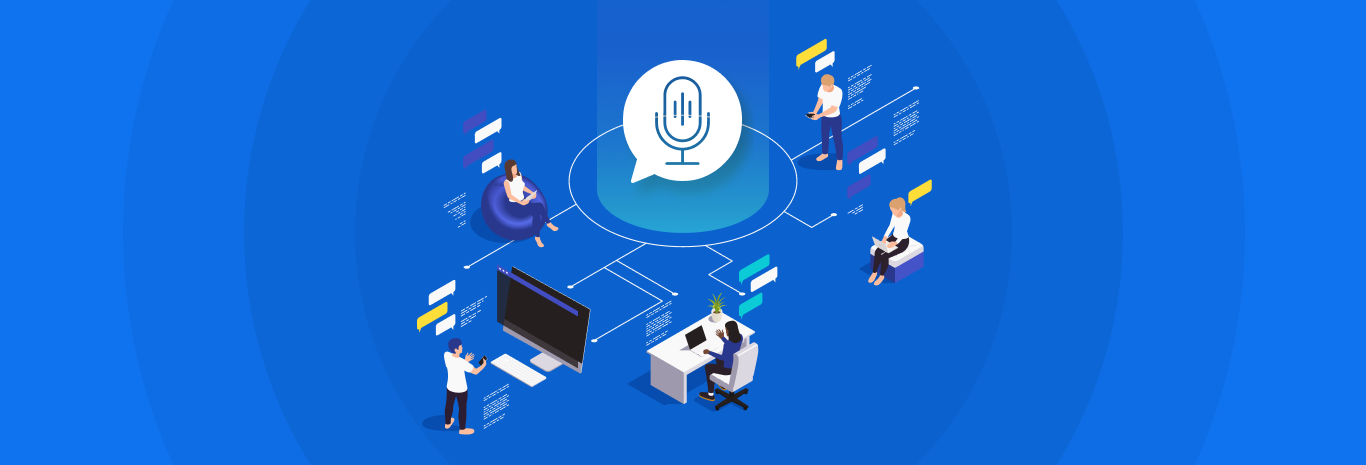
A Multi-Turn Conversation is an interaction between a human and an AI system that spans multiple back-and-forth exchanges (or “turns”) rather than ending after a single prompt and response. In this model, the AI maintains a “Conversational State,” allowing it to remember what was discussed previously and use that information to inform its future answers.
Without multi-turn capabilities, an AI treats every message as a “blank slate.” With them, the AI can handle follow-up questions, resolve ambiguous pronouns (like “it” or “that”), and guide a user through a complex, multi-step journey such as troubleshooting a device or booking a vacation without the user having to repeat their information at every step.
Simple Definition:
- Single-Turn (Transactional): Like a Vending Machine. You press a button (the prompt), it drops a snack (the answer), and the interaction is over. The machine has no memory of who you are or what you bought 10 seconds ago.
- Multi-Turn (Conversational): Like a Barista at your local café. You say, “I’ll have a latte.” Then you say, “Actually, make that a large.” The barista knows “that” refers to the latte. They remember the context and build upon it to give you the right result.
Key Technical Components
To successfully “carry a conversation,” an AI system relies on these four internal mechanisms:
- Dialogue State Tracking (DST): The AI’s “working memory” that jots down key details (e.g., your name, your order number, or your current mood) as the chat progresses.
- Context Window: The specific amount of previous text the AI can “see” at once. If a conversation is too long, the AI might “forget” the beginning if it falls outside this window.
- Anaphora Resolution: The linguistic ability to understand that pronouns like “he,” “she,” “it,” or “those” refer back to specific nouns mentioned in earlier turns.
- Dialogue Policy: The set of rules or logic that decides the AI’s next move (e.g., “Should I ask a clarifying question or provide the final answer now?”).
- Intent Refinement: The process of narrowing down a user’s goal through multiple turns (e.g., starting with “I’m hungry” and ending with “Order a pepperoni pizza from Joe’s”).
Single-Turn vs. Multi-Turn
This table defines why multi-turn capability is the benchmark for “True” Conversational AI.
|
Feature |
Single-Turn (Q&A) |
Multi-Turn (Dialogue) |
|
Memory |
Amnesiac: Every message is a fresh start. |
Persistent: Remember prior context and data. |
|
Complexity |
Best for simple facts (e.g., “What’s the weather?”). |
Best for complex tasks (e.g., “Help me fix my WiFi”). |
|
Context |
Requires “Full Specification” in one prompt. |
Supports “Ellipsis” (fragmented follow-ups). |
|
User Effort |
High: Users7 must restate details if they follow up. |
Low: The user talks naturally like they would to a person. |
|
Logic |
Linear and transactional. |
Non-linear: Can handle side-tracks and tangents. |
How It Works (The Context Loop)
Multi-turn AI treats the conversation as an evolving “Thread” rather than isolated points:
- Turn 1: User: “Check my flight to NYC.” AI retrieves flight info and stores it in the State.
- Turn 2: User: “Is it on time?” The AI looks at the State, sees “it” = “Flight to NYC,” and provides the status.
- Turn 3: User: “Change my seat for that.” The AI knows which flight “that” is and triggers the seat-change tool.
- Turn 4: User: “Thanks!” The AI acknowledges the completion and closes the “Goal” in its memory.
5. Benefits for Enterprise
In 2026, multi-turn intelligence is the “must-have” for customer-facing automation:
- Higher Resolution Rates: AI can actually solve problems by asking for missing info (e.g., “I need your serial number to help with that”) instead of just giving up.
- Personalization: By remembering a user’s preferences mentioned earlier in the chat, the AI can make tailored recommendations that feel “thoughtful” rather than generic.
- Reduced Human Escalation: Because the AI can handle complex, multi-step workflows, fewer customers need to be handed off to expensive human agents.
- Data Richness: Companies can analyze the “Paths” users take during multi-turn chats to identify where their products or instructions are confusing.
Frequently Asked Questions
Is Multi-Turn the same as Chat?
Not necessarily. You can have a “Chat” interface that is single-turn (it forgets everything you said previously). Multi-turn refers specifically to the capability of the AI to maintain context.
What is a Turn?
A turn consists of one user input and one AI response. A 10-turn conversation means there were 10 back-and-forth exchanges.
What is Context Drift?
This happens when an AI gets confused during a long conversation and starts mixing up details from earlier turns (e.g., thinking you want to fly to Paris when you actually changed your mind and said NYC).
Does more Turns mean more cost?
Usually, yes. In 2026, most AI APIs charge based on “Tokens.” Because a multi-turn AI has to “read” the entire conversation history for every new turn, longer chats consume more tokens.
Can an AI forget on purpose?
Yes. This is called Session Clearing. For privacy or security (like in banking), an AI might be programmed to “forget” everything once the goal is reached or the user logs out.
What is Slot Filling?
This is a multi-turn technique where the AI has a “form” to fill (e.g., Name, Date, Destination). It will keep the conversation going until all the “slots” are filled with the info it needs to finish the task.
Want To Know More?
Book a Demo