

What is an AI Service Desk?
An AI Service Desk (often called an Automated Service Desk or Virtual Support Agent) is an intelligent software platform that resolves employee support requests autonomously using artificial intelligence.
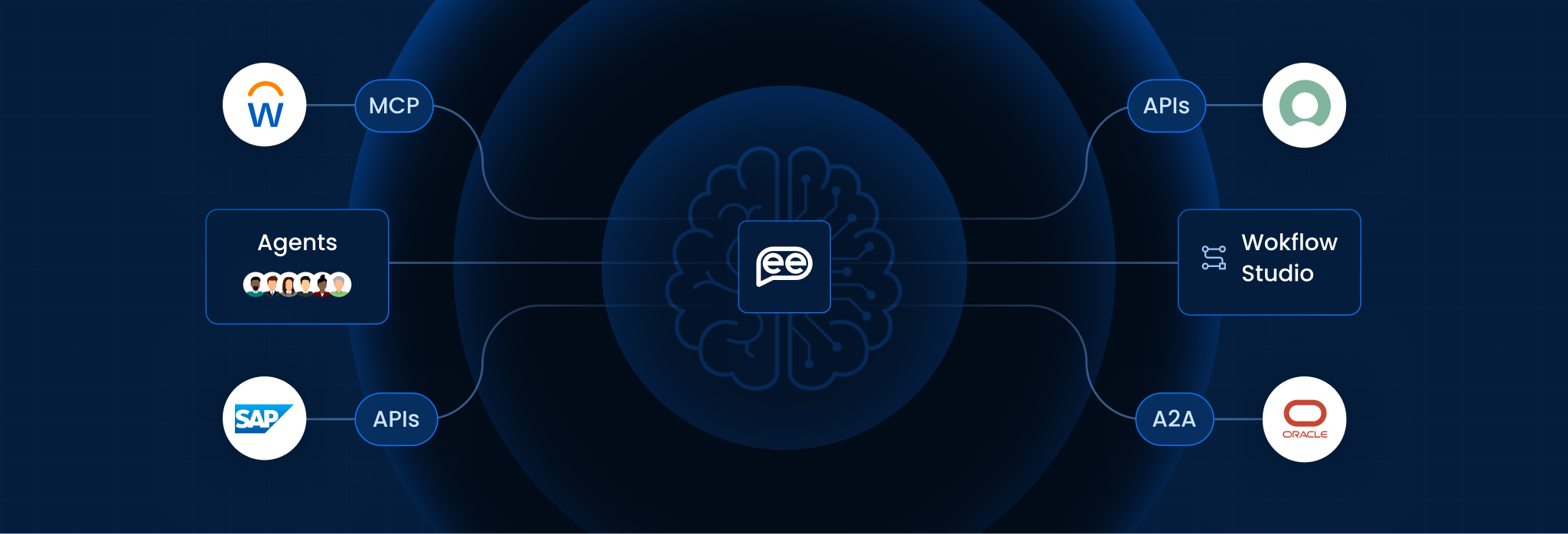
Unlike a traditional helpdesk that simply logs a ticket into a queue for a human agent to pick up, an AI Service Desk understands the user’s intent, connects directly to enterprise backend systems (like [Identity Management] or HRIS), and executes the resolution instantly.
Simple Definition: It is a “self-driving” helpdesk. It doesn’t just record your problem; it fixes it immediately.
Key Features of an AI Service Desk
To be considered a true AI Service Desk (and not just a basic chatbot), the system must possess these five core capabilities:
- Autonomous Resolution: It can perform actions (e.g., reset a password, install software, update leave balance) without human approval.
- 24/7 Availability: It operates continuously, ensuring support for global teams across all time zones without staffing night shifts.
- Omnichannel Support: It lives where employees work, accessible via [Slack], Microsoft Teams, WhatsApp, or the Intranet.
- Context Awareness: It knows who the user is (e.g., “This is a Sales Manager in the NY office”) and personalizes the response accordingly.
- Smart Escalation: If the AI cannot solve the issue, it intelligently routes the ticket to the correct human specialist, passing along the full chat history.
AI Service Desk vs. Traditional Helpdesk
The core difference lies in Execution vs. Documentation.
| Feature | Traditional Helpdesk | AI Service Desk |
| Primary Action | Creates a ticket. | [Resolves the Ticket]. |
| Wait Time | Hours or Days (Queue-based). | Seconds (Instant). |
| Human Role | Manually fixes the issue. | Supervises the [AI Agent]. |
| Cost Per Ticket | High ($20–$30 avg). | Low (<$1 avg). |
How It Works (The “Resolve” Loop)
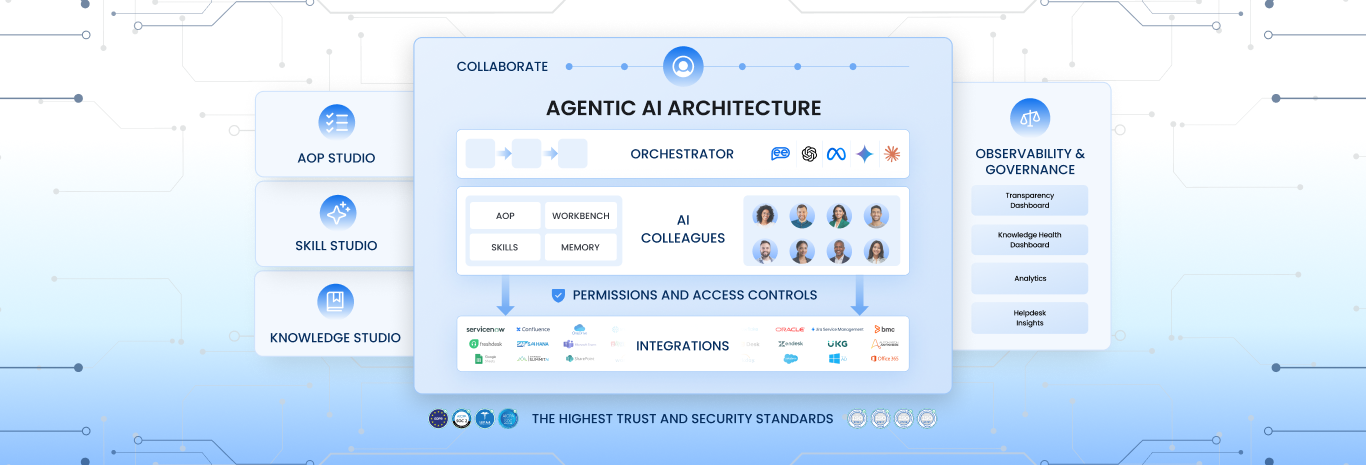
Leading platforms utilize an [Agentic AI] architecture to handle requests in a three-step autonomous loop:
- Intent Recognition: The AI uses Natural Language Understanding (NLU) to parse the employee’s request (e.g., “I can’t access Jira”).
- Autonomous Action: It checks the user’s permissions in [Active Directory] and triggers an API call to grant access.
- Verification: It confirms with the user, “I’ve granted access. Does it work now?” to close the loop.
Why Enterprises Are Switching (Benefits)
According to Gartner, by 2026, over 40% of service desk interactions will be handled by autonomous agents. The shift is driven by three key metrics:
- Cost Efficiency: Drastically reducing the operational cost of IT and HR support by removing Tier-1 labor.
- Productivity: Employees get back to work in seconds, not days.
- Scalability: The desk can handle 10,000+ simultaneous requests during peak times (like Open Enrollment) without crashing.
Frequently Asked Questions
Does an AI Service Desk replace human support agents?
No. It replaces Tier-1 support (repetitive tasks like password resets, FAQ answers, and access requests). This frees up human agents to focus on complex Tier-2 and Tier-3 issues that require empathy and deep technical troubleshooting.
Is an AI Service Desk secure for enterprise data?
Yes. Enterprise-grade AI Service Desks use Role-Based Access Control (RBAC) to ensure the AI only performs actions the user is authorized to do. Furthermore, they typically do not store sensitive PII on public models, ensuring compliance with GDPR and SOC2.
How long does it take to implement an AI Service Desk?
With modern “low-code” platforms, a basic deployment can be live in 4–6 weeks. However, fully integrating it with complex legacy systems (like on-premise ERPs) typically takes 3–4 months for full enterprise maturity.
Can it integrate with my existing ticketing system?
Yes. An AI Service Desk is designed to coexist with systems like ServiceNow, Zendesk, Jira, and Freshservice. It acts as the “front door” for employees, while the ticketing system remains the “system of record” in the background.
What happens if the AI cannot understand the user?
The system uses a protocol called “Human-in-the-Loop.” If the AI’s confidence score is low, it automatically creates a ticket and hands the conversation over to a live human agent, ensuring the employee is never left stuck
Does it support multiple languages?
Yes. Leading platforms like [Leena AI] support 100+ languages natively. This allows a global enterprise to provide support to employees in Japan, Germany, and Brazil simultaneously without hiring local language support staff.
Want To Know More?
Book a Demo