

Two questions every CIO should ask before signing up for OpenAI Presence
This week OpenAI launched Presence. OpenAI calls it a product. Today it is delivered as a service. In their own words, it is “not yet available as a self-serve product.” Their engineers come in, pick one workflow like billing or IT support, wire it into your systems, set the guardrails, and run it. Voice and chat. It is in limited access today, built account by account.
The problem it targets is real and worth watching. But it launched days ago. The one number OpenAI cites, 75% resolution, is on its own phone support, not proof it works in your business. Customers are still testing. So I will not tell you Presence is good or bad. Nobody knows yet. I will tell you what it costs to say yes, because that is not on the launch page.
What I am seeing across the industry
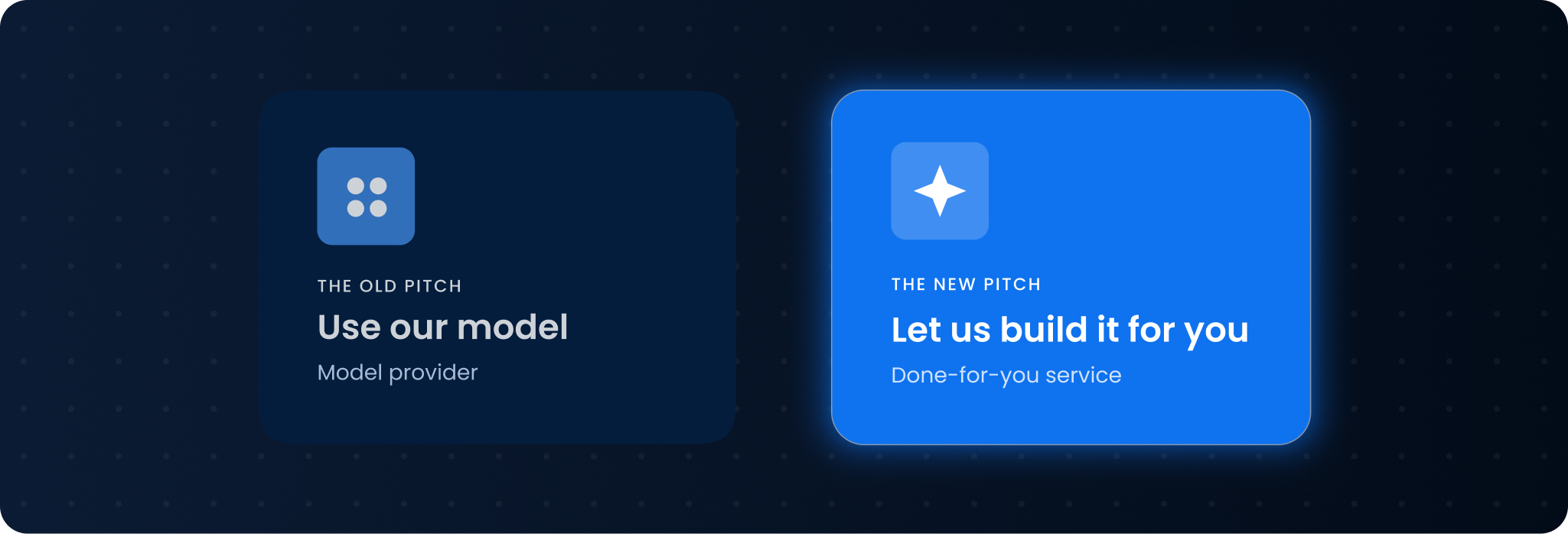
Every model lab is moving in the same direction. They started as model providers. Now they want to own the deployment too. The pitch has quietly shifted from “use our model” to “let us build it for you.” Presence is the clearest example yet, but it will not be the last. When the model companies decide services is where the value is, the whole category feels it.
This is not a surprise. It is the natural move for any company that has the best model and wants to capture more of the value sitting on top of it.
What we are hearing from CIOs
I talk to a lot of CIOs and CTOs. Right now, almost every one of them wants to build. The instinct is understandable. The models are astonishing, the demos are magic, and the board is asking what the AI strategy is. “We will build it ourselves with OpenAI” sounds like the confident, in-control answer.
Presence is aimed exactly at that instinct. It takes the CIO who wants to build and says, we will build it with you. That is a strong offer. It is also where I would slow down and ask two questions.
Question one: in three years, who owns your model decision?
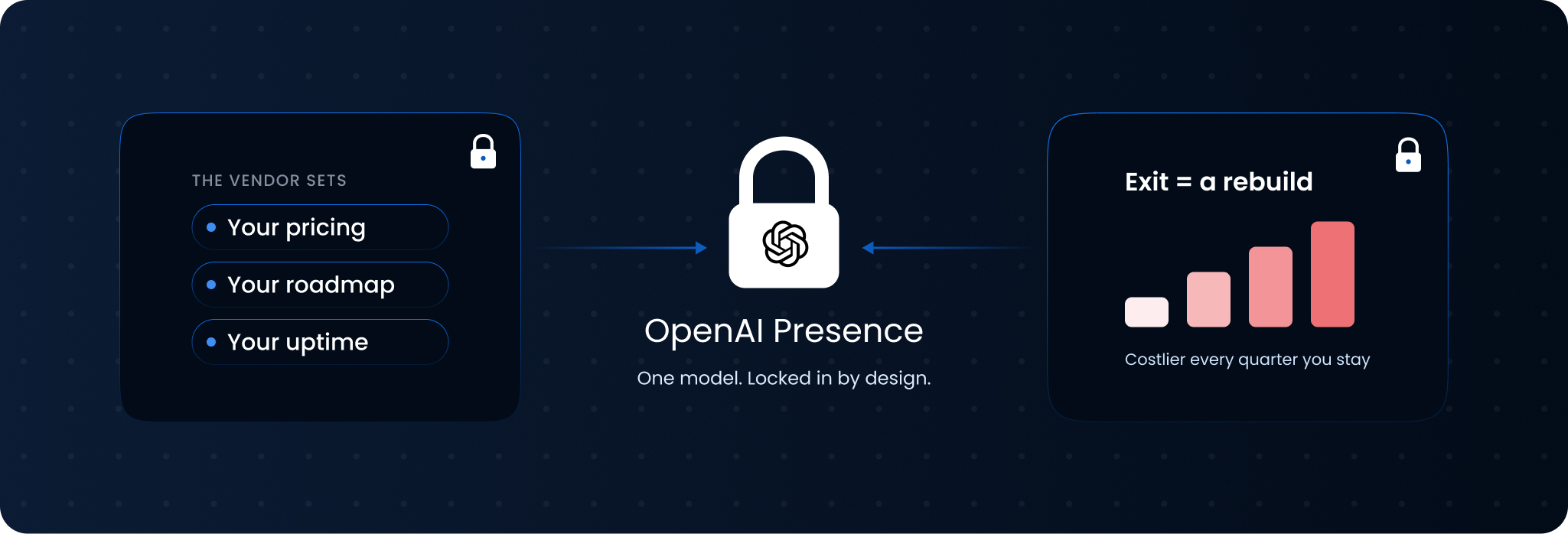
Presence runs on OpenAI models. That is the whole point of the offering, and it means the most strategic decision in your AI stack, which intelligence powers your employee and customer conversations, is tied to a single supplier by design. You are not choosing the best model for each job. You are choosing OpenAI for all of them.
Think about what that means over time. The vendor sets your pricing. The vendor sets your roadmap. The vendor sets your uptime. And because your workflows, your policies, and your integrations were all built inside their service, leaving is not a switch you flip. It is a rebuild. That is practical lock-in, and the exit gets more expensive every quarter you stay.
I have watched enterprises spend a decade untangling themselves from a single infrastructure vendor they were happy with on day one. Model choice is going to matter more than any of those decisions did. The models are improving and repricing every few months. Tying your enterprise to one of them, at the start of the fastest-moving technology cycle in our industry, is a bet I would not want to be forced into.
Question two: how long, and how much?
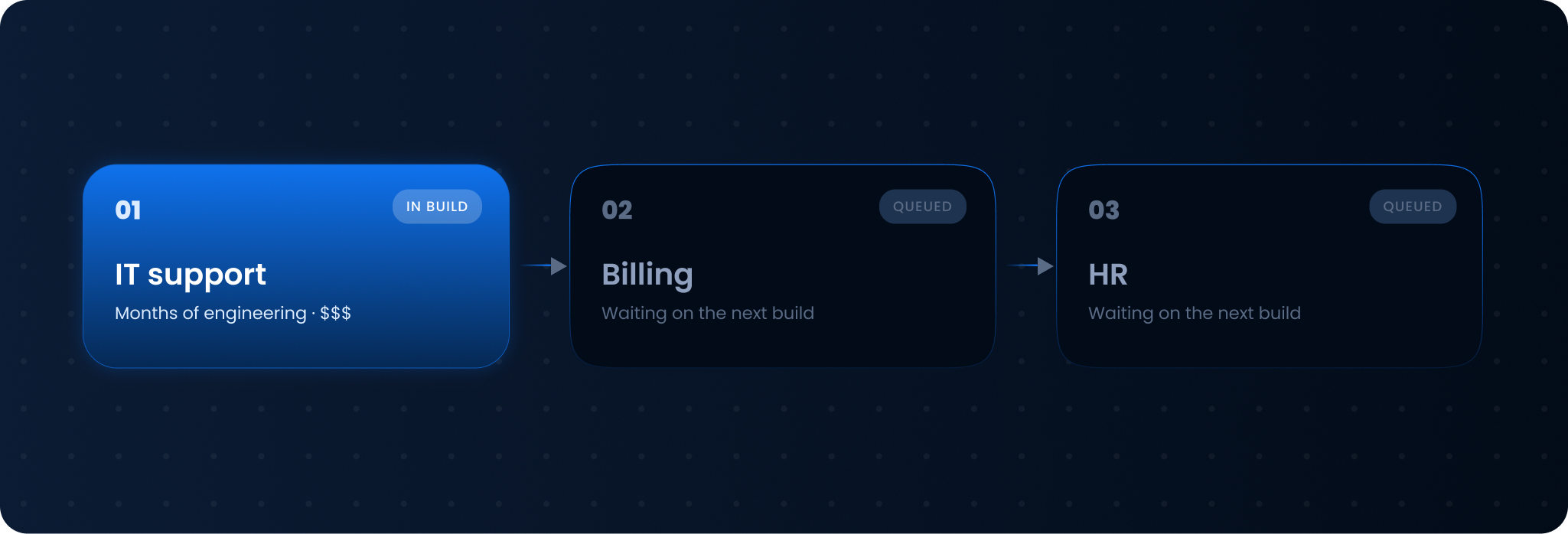
The second thing to understand is how you actually get Presence. OpenAI’s forward-deployed engineers (FDEs) and their integration partners build each workflow by hand, one at a time, for your account. Every new use case is another engagement. Every new system you want to connect is more custom work.
That is slow, and it is expensive, by design. You are not buying software that already does the job. You are funding a build. Picture it in practice: one workflow, months of engineering, and you still have not touched the next department. Then you start over for the one after that. When a build is done, you own a single workflow, deeply customized, running on a service you cannot move.
Now put the two answers together, because the combination is the real story. You spend heavily and wait months for a hand-built deployment. At the end of it, you are locked to the one vendor who built it. High cost, long timelines, and no exit. That is not a tool you bought. That is a dependency you will spend years managing.
What I actually believe
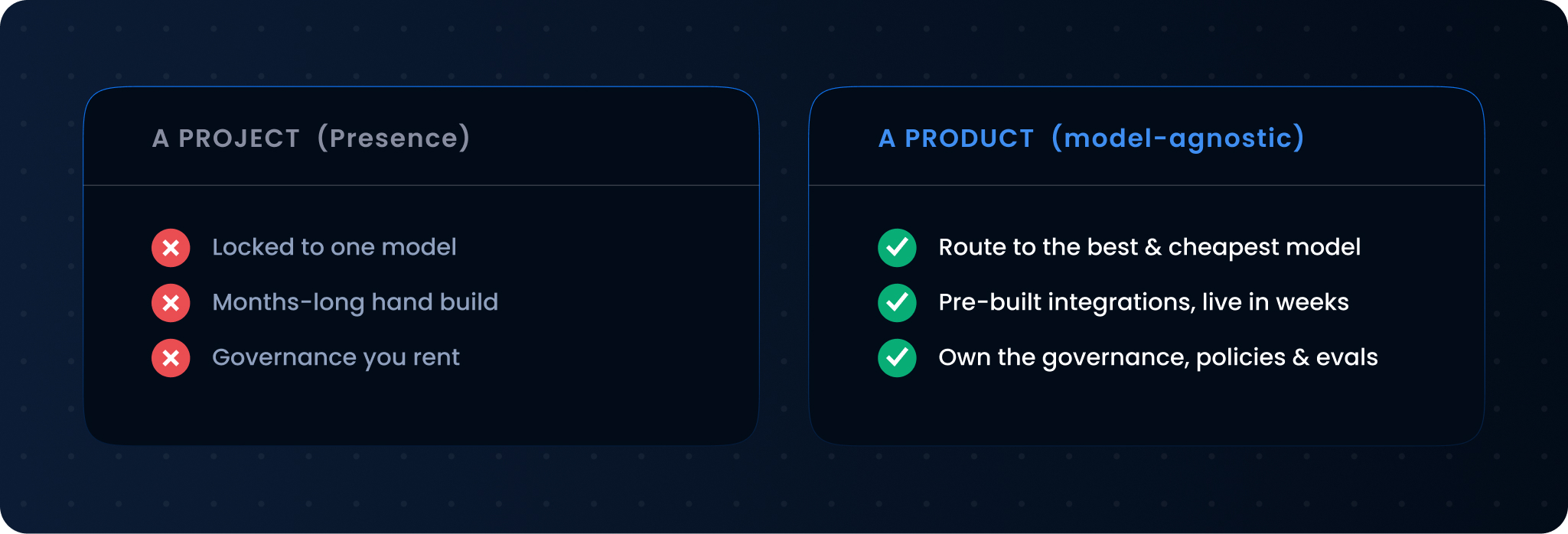
Enterprises do not need to choose between frontier intelligence and their own freedom. That is a false trade, and Presence quietly asks you to accept it.
The better model is simple. Buy a product, not a project. Stay model-agnostic on purpose, so you can always route to the best and cheapest model for the job as the market moves. Use pre-built integrations to your core systems so workflows go live in weeks, not after a services engagement. Keep the governance, the policies, and the evals as part of the product you own, not as custom work you rent.
That is the principle we have built Leena AI around, and I will admit that is not a neutral statement. But the principle stands on its own, whoever you buy from. The company that keeps its options open will out-adapt the company that locked itself in, especially in a market that reprices every quarter.
The one line I would leave a CIO with
We do not yet know how well Presence works. We do know how it is structured, and structure is a choice you can evaluate today. The question is not whether OpenAI is capable. It is who holds the leverage in three years. Before you sign a deal that answers that question for you, make sure you meant to.